
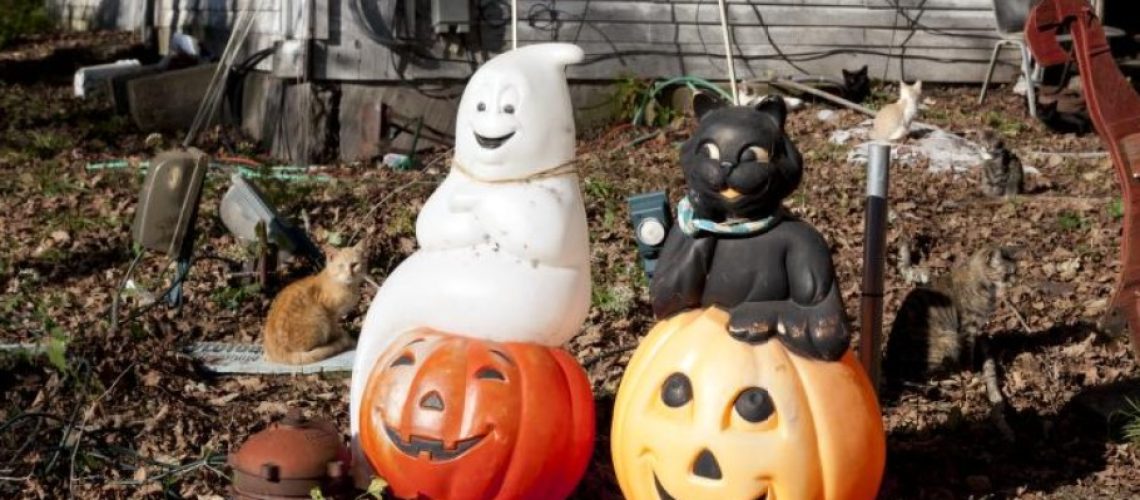
A trifecta of special days takes place at the end of every October. And Catholic parents trying to raise their children counter-culturally would do well to instruct and involve their family in all three of these days!
Halloween, All Saints Day, and All Souls Day are all connected by their roots in Catholicism and in their association with departed souls. Instead of focusing on the secularized, commercialization-aspect of Halloween, faithful Catholic parents should teach their sons and daughters about the Christian aspect of Halloween.
It starts by explaining how Halloween is technically “All Hallows Eve.” We can certainly celebrate October 31 as a fun night. But it is also a time of preparation for the upcoming two days of remembering saints and our deceased relatives and friends.
All Hallows Eve / Halloween
Pope Gregory III designated November 1 as All Saints Day back in the 700s, and October 31 eventually became known as All Hallows Eve. But the celebration of Halloween as we know it today started primarily in the U.S.
According to History.com, “By the 1920s and 1930s, Halloween had become a secular but community-centered holiday [in the U.S.], with parades and town-wide Halloween parties as the featured entertainment.”
In the U.S., and in other countries, various local traditions and beliefs about honoring the dead and mocking evil, some Christian and some not, all became intertwined with Halloween by the early 1900s.
For instance, during the Middle Ages, on All Souls day poor people in some Scottish communities begged for “soul cakes.” Upon receiving these doughnut-like treats, they would agree to pray for departed souls. (This is one of three theories on how the modern day “trick-or-treating” came about.)
Some Catholics and other Christians, however, do not believe in celebrating Halloween. They see the holiday as demonic and associated with evil and witchcraft. But if mom and dad keep the October 31 focus on innocent fun and healthy reminders of death, this holiday transforms into a type of holyday.
The extreme, adult-parts of Halloween that have grown into big business in modern society are what should be avoided. But being a Christian does not mean that families cannot have Halloween fun. Catholic parents can encourage their youngsters to dress up as a saint for their Halloween costumes. It can be very inspiring and educational when a mini-Saint Francis or a young-Saint Lucy rings a neighbor’s doorbell on Halloween night.
All Saints Day
There are thousands of canonized saints. These are individuals officially recognized by the Church as holy men and women worthy of imitation. The Church fully examined their lives and found them holy.
Miracles are also associated with these saints. Thus, these saints are prime examples of holiness, and powerful intercessors before God on our behalf.
There are also many patron saints who are guardians or protectors of different areas of life. For instance, Saint Vitus is the patron saint against oversleeping. It may sound crazy to have a patron saint against oversleeping, but keep in mind the Church has something meaningful for every area of our human lives.
We celebrate these saints throughout the year on their own feast days, whether it is Saint Louis, the patron saint of masons and builders, on August 25, or Saint Louise, the patron saint of social workers, on May 9.
We have information about many saints whom we honor on specific days. But we have few to no details about other unknown or unsung saints. All Saints Day provides an opportunity to celebrate all of these holy men and women, and to ask for their prayers and intercessions.
The saints in Heaven are constantly interceding on our behalf. Thus, every November 1 Catholics honor those human beings who have left this life and are now in heaven with God – the ones whose names we know, and the ones whose names we don’t know.
We celebrate All Saints Day as a “solemnity,” which is higher than a typical feast day in the Church. A solemnity holds the highest rank among Church celebrations. Some of the 24 days marked as solemnities on the annual liturgical calendar along with All Saints Day include Christmas, Easter, Pentecost, Corpus Christi, and the Immaculate Conception.
In addition, attending Mass on All Saints Day is a requirement for Catholics in the United States. It is one of just six holy days of obligation (not counting every Sunday). Attending Mass on November 1, used to be a given for every Catholic family. Sadly, today it seems like only the most authentically Catholic families act counter-culturally and go to Mass on All Saints Day.
All Souls Day
All Soul’s Day follows All Saints Day. On this day we remember and offer prayers on behalf of the faithful departed whom we are not assured are in Heaven. Because of the hecticness and specialness of October 31 and November 1, it can be difficult for Catholic families to remember to also commemorate November 2.
Some counter-cultural actions parents can take on All Souls Day include attending Mass, visiting relatives’ gravesites, and recalling memories of deceased loved ones. Some families make a point to prominently display photos of deceased family members throughout the entire month of November.
Furthermore, All Souls Day offers a perfect opportunity for parents to teach their children about the Spiritual Work of Mercy, praying for the dead. The Requiem Prayer is commonly said at a Catholic funeral. Many also pray it on November 2 and other days for deceased grandparents and the like.
All Souls Day especially remembers all the Holy Souls in Purgatory. We pray this day for their purification. Assuming they have not already gone to Heaven, we pray they soon will be purified and attain this ultimate goal. We pray that they will achieve the Beatific Vision which is the supreme happiness of beholding Our Lord face-to-face and finding perfect fulfillment.
“Eternal rest grant unto them, O Lord, and let perpetual light shine upon them. May the souls of the faithful departed, through the mercy of God, rest in peace.”
The Trifecta
It is important to note the difference between All Saints Day and All Souls Day, and to whom and for what we are praying on each unique holy day. All Saints Day celebrates all of the faithful who are in Heaven. This includes the famous, capital-S Saints such as Saint Louis, and the unknown, lower-s saints, which hopefully includes our grandpa and great-great grandma.
Our prayer time on November 1, should be to thank God for the examples and inspirations of all holy men and women, as well as to ask these Saints for their intercession on our behalf.
And there is one way of bringing all three days together. The Church teaches that the saints in heaven can pray for the souls in Purgatory. Therefore, to jumpstart on All Souls Day on November 2, we can pray to the saints on All Hallows Eve and on All Saints Day and ask them to intercede for our souls and for all the souls in Purgatory.


Thank you for this thoughtful reflection on Halloween, All Saints’ Day, and All Souls’ Day. I especially appreciated the emphasis on remembering our spiritual heritage and teaching younger generations the importance of faith, remembrance, and preparation. Just as these holy days encourage reflection and planning for the future of our souls, students today also benefit from guidance and preparation when pursuing their educational goals. For those seeking opportunities to continue their academic journey, scholarship resources and application guidance can make a meaningful difference. Thank you for sharing such an inspiring and educational perspective.