
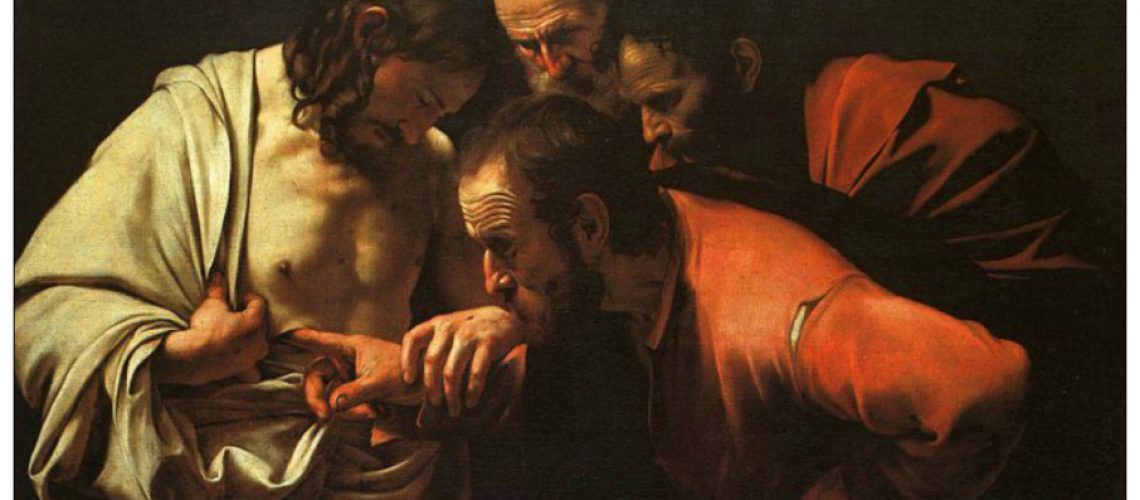
In the Upper Room, after His resurrection, Jesus extended His hands to Thomas, inviting him to touch His wounds. “Put your finger here,” He said, “and see my hands. Reach out your hand and put it into my side” (John 20:27). For generations, Christians have pondered the audacity of this moment. Here is the risen Christ, victorious over death, yet still bearing the marks of His suffering. Why didn’t He erase them? Why not rise in a body unscathed?
The answer lies at the heart of the Paschal Mystery: the life, death, and resurrection of Jesus. The wounds of Christ are not remnants of failure or weakness—they are the visible signs of His love, transformed through the power of the Resurrection. They are His triumph. In this act of vulnerability, Christ shows us that redemption does not bypass suffering; it transforms it. He invites us to do the same with our wounds, trusting that God’s grace can make them a source of strength and hope.
The Paschal Mystery—the journey from death to life—is rooted in vulnerability. Consider the moments of raw humanity in Christ’s life: His weeping at Lazarus’s tomb, His agony in the Garden of Gethsemane, and His cry of abandonment on the cross. These moments reveal a Savior who does not shy away from suffering but fully embraces it, trusting in the Father’s plan.
Nowhere is this vulnerability more evident than in the Crucifixion. Stripped, beaten, and mocked, Jesus did not hide His wounds. Instead, He offered His very self—body and blood—for the salvation of the world. His death was not a defeat but the ultimate act of love, and His Resurrection sealed that love in victory.
The Resurrection does not erase the wounds of Good Friday. It redeems them. This is the paradox of our faith: through the Cross, Christ brings life. Through His vulnerability, He reveals His strength. And through our own vulnerability, we are invited into the same mystery of redemption.
St. Paul reminds us that God’s power is made perfect in weakness: “Therefore I will boast all the more gladly about my weaknesses, so that Christ’s power may rest on me” (2 Cor. 12:9). The Church’s tradition echoes this truth. St. Augustine wrote of the beauty of confession, where we lay bare our sins and discover the mercy of God. St. Gregory of Nyssa spoke of the “dazzling darkness” where we encounter God in our deepest struggles. And Pope Benedict XVI reminds us: “Man can only accept himself if he is accepted by another… Ultimately we need a sense of being accepted unconditionally. Only if God accepts me, and I become convinced of this, do I know definitively: it is good that I exist.”
These teachings point to a profound reality: vulnerability is not a weakness to be overcome but a path to grace and communion. When we risk being honest—whether in confession, relationships, or prayer—we allow God to enter into our brokenness and bring healing.
For years, I hid my wounds. Like a lot of people let alone men, I believed that to show weakness was to fail. It wasn’t until my life fell apart—until I was forced to confront my own brokenness—that I began to understand the power of vulnerability. In the darkness of struggle, I experienced the isolation that comes from believing no one could understand my hardships. Yet it was precisely in that darkness that I began to feel God’s presence.
I remember a night when I felt utterly lost, staring at my reflection in the bathroom mirror. I saw someone unrecognizable—a man hollowed out by pain. In that moment, I heard a voice, clear and unmistakable: “Kenn, you have a choice. Continue down this path, or step into the light.” It was a turning point, not because my pain vanished, but because I realized I didn’t have to carry it alone. God was with me, even in the depths.
Since that night, I’ve learned that sharing my struggles is not a sign of failure but an act of trust. Vulnerability has allowed me to connect with others, to find healing in community, and to experience the life changing power of God’s grace. Like Thomas, I have touched the wounds of Christ—not in theory but in the reality of my own life. And I have found that His wounds lead to resurrection.
The Resurrection does not erase our scars. It transforms them. This is the hope of Easter: that our pain, when united with Christ’s, becomes a path to new life. When Jesus invites us to touch His wounds, He is not inviting us to dwell in suffering but to see it in light of His redemptive love.
This requires risk. It means opening ourselves to God, to others, and to the possibility of healing. It means entering the dazzling darkness of faith, trusting that God’s love is present even when it feels hidden. It means baring our wounds, not because they define us but because they testify to the God who redeems.
The Church calls us to be witnesses to the Resurrection. This doesn’t mean pretending our lives are perfect; it means showing the world how God’s grace works through our imperfections. It means being vulnerable enough to say, “Me too,” to those who are hurting. It means trusting that our wounds, like Christ’s, can lead others to faith.
So this Easter, let us follow the example of the risen Christ. Let us bare our wounds—not as a sign of weakness, but as a testament to the God who transforms them into glory. Let us take the risk of vulnerability, knowing that the Paschal Mystery assures us: in Christ, our wounds are not the end of the story. They are the beginning of new life.


What a beautiful reflection, thank you for your openness!