
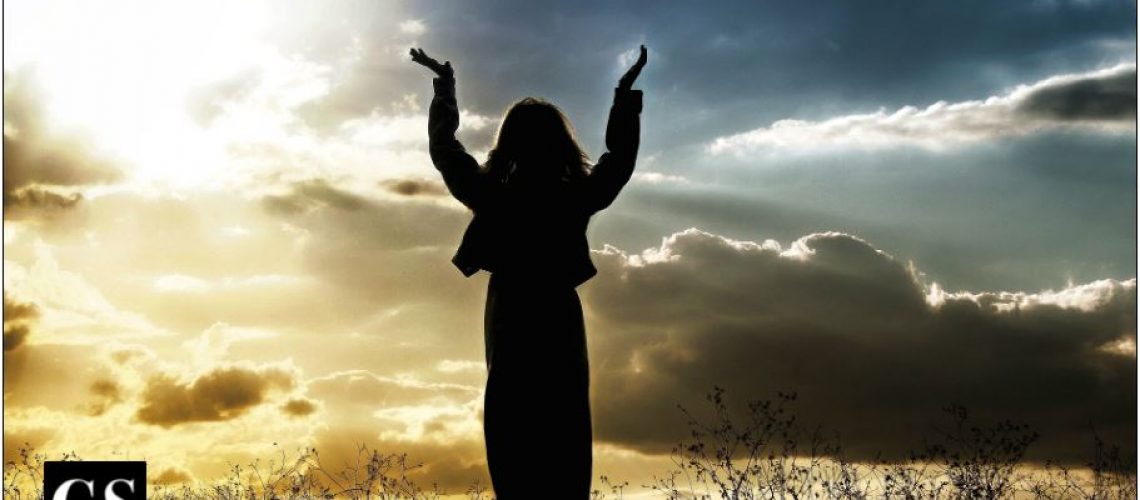
The Lectors in my parish have a scheduled practice session that takes place every Thursday. On one such occasion, while waiting for others to join in, one of the members posed a question to the group, saying, “Why do some people raise their hands while praying in the adoration chapel?”
As expected, there were two schools of thought. One group wondered why indeed. The other group argued, why not. Some claimed to get distracted by these gestures; others alleged that those who do so were merely showing off to be ‘more spiritual’ than others.
Not surprisingly, the discussion soon deteriorated into finger-pointing and needless accusations towards those in favour. The gist of the matter was that some people think that there is a better disposition for praying in the Adoration Chapel and that people should pray in silence with hands folded. It is tempting to ask whether the raising of hands is considered as a noisy gesture, but that would re-ignite an unnecessary nasty argument. In this piece, I wish to present a case in favour of praying silently with hands raised.
It is Common Practice in the Bible
A quick search reveals 146 Bible mentions of hands raised in prayer to God. The Psalms lead in this model posture, but there are also individuals who were noted to the practice of this posture. The raised hands may signify my acknowledgment of God (Psalm 63:4 & Psalm 88:9); my pleas for mercy and my cries for help (Psalm 28:1); my promises to God (Psalm 119:48); my sacrifice of praise (Psalm 134:2 & Psalm 141:1-2); and my confessions of love (Psalm 143:6). It may denote my personation of Solomon (2 Chronicles 6:12-13), Ezra’s grief and shame (Ezra 9:5); my act of worship (Nehemiah 8:6); Jeremiah’s weeping (Lamentations 3:41); my response to St. Paul’s imploring…
Therefore, I want the men in every place to pray, lifting up holy hands, without anger and dispute. (1 Timothy 2:8, NASB).
In other words, it is as if the heart first lifted up the hands, and then with the hands mounted up in prayer to God. My outward expression which in this case is the lifting of hands must be caused by the emotion that is stirring within me.
It is my expression of worship and prayer
Most times it is difficult for me to make a clear distinction between worship and prayer. I cannot recall a time when I was able to worship God without ever praying to Him. Even my silent prayer is itself a form of worship. A deep desire makes me joining my heart with my hands and helps me to pray seriously and fervently. I make the assumption and conclude it to be reasonable, that the most appropriate place for my hands is to be lifted towards heaven irrespective of the gravitational pull or any physical exhaustion. The heart must go along with it; and if it doesn’t, then the act is of no avail.
This people honours Me with their lips, but their heart is far away from Me. And in vain do they worship Me, Teaching as doctrines the commandments of men. (Matthew 15:8-9, NASB).
This means that there has to be the ascending of my soul unto Him. The purpose is for my soul to be lifted up to God, in earnest desire after Him, in affection and love to Him, in faith and dependence upon Him, and in hope and expectation of good things from Him.
It is my idea of full-bodied worship
This is me being glad to worship God with mind, body, and soul. It is my attempt at engaging my mind and understanding. My love for God demands that I should know Him better. Lifting my hands in prayer is my way of pouring out my soul to God (cf. Psalm 42:4), loving Him (cf. Deuteronomy 6:5), and boasting in him with my soul (cf. Psalm 34:2). It is one thing for me to know and declare true things about God (cf. James 2:19); it is yet another when I cherish and treasure the truth about Him because I cherish and treasure Him (cf. Psalm 37:4 & Ephesians 5:19).
and though you have not seen Him, you love Him, and though you do not see Him now, but believe in Him, you greatly rejoice with joy inexpressible and full of glory, (1 Peter 1:8, NASB)
The Lord God created my physical reality. When I worship Him, I want to do it with my whole being. When I raise my hands, I want to honour and adore Him with my body. My raised hands declare God’s worth. My presenting them to Him is my spiritual worship (cf. Romans 12:1). But I must worship with understanding. I must think rightly of God. I must love Him with all my heart, with all my soul, and with all my mind (Matthew 22:37). As I engage my hands, I look forward to having a glorified body in which to honour and adore God for all eternity.
It is to declare my state of mind
The human hand gives visible expression to many of our beliefs, feelings, and intentions. In anger, I clench the fist and threaten to do harm to another. In guilt, I hide my hands and /or withhold incriminating evidence from view. In unease, I sit on them to obscure my inner self. In worry, I wring them (don’t ask!). In fear, I use them for cover or to hold tightly to someone or something for protection. In desperation or frustration, I throw them wildly in the air to show resignation or dismay. In confusion, I extend them in bewilderment asking for advice and direction. In generosity, I use them to warmly receive those in my presence. In suspicion, I use them to keep others at bay or point an accusing finger in their direction.
It is my surrender
When I lift my hands in worship, I surrender to the Lord God, who is a higher authority. It is my way of yielding to God’s will and ways. It is me submitting to his guidance and power and purpose in my life. It is saying, “O God, I am yours to do with as you please.”
It is my vulnerability
This is how I express utter vulnerability. This is saying, “Lord, I have nothing to hide. I come to you with open hands, concealing nothing. The life I have is yours to search for and sanctify. I am not holding back anything. I give you my heart, my soul, my spirit, my body, my will, and my being. I am an open book to you.”
It is my dependence
Lifting my hands in worship indicates my need for help. It is my confession of absolute dependence on God for everything. It is me crying out, “O God, I entrust my life to you. Take hold and uplift me. If not, I will surely sink into the abyss of sin and death. I have confidence in your strength alone. Please preserve me. Please sustain me. Please deliver me. Please…”
It is my posture of receiving
My hands are lifted in worship like one who happily and expectantly receives a gift from another. It is my declaration to the Lord God that I gratefully embrace all He wants to give me. I recognize myself as a spiritual beggar. Here I am with nothing to offer other than my need of everything. My need for all that He is for me. That He may be glorified by satisfying me wholly with Him alone.
It is my pointing to the Saviour
This is my way of directing attention away from myself and unto the Lord, my Saviour. It is me saying that all glory, and honour, and worship, and power and majesty belong to God alone. It is me acknowledging, “Yours is the kingdom, O Lord, and you are exalted as head above all” (1 Chronicle 29:11). It is me joining in the heavenly worship (cf. Revelation 7:11-12).
It is me being the Beloved of God
As the beloved of God, I cannot help it but say tenderly and intimately to the Love of my soul, “Abba, Father. Hold me. Protect me. Reveal your heart to me. I am totally yours, and You are mine! Draw near and enable me to know you. Allow me to feel the affection in your heart for my sinful one. I love you!”
Pros and Cons of Physical Expression
This physical expression does have some benefits. I get to magnify the glory of God (Psalm 108:1-2). I follow the Scriptural example. I somehow encourage others who have so far suppressed their own physical expressions in prayer. I embolden my own heart to pray even deeper. We however should be wary of the limitations of such physical expression. It may not assure that worship is taking place in the heart (cf. Matthew 15:8-9). It can be self-deceiving (cf. Amos 5:23-24). It can lead to self-glorifying and self-gratifying (cf. 1 Corinthians 12:7 & 1 Corinthians 14:12). It is also possible to have hindrances to physical expression of worship. Perhaps from a lack of clear biblical instruction. Or for fear of what our fellow man might think, say or do. It could be because of some traditions or cultures. It might even be out of concern for others.
Take Home
In the end, what matters is to remember that the Lord God hears our prayers regardless of the position of our hands or body. As for me praying with hands lifted up, this is not meant to distract you from doing your own praying. It should not cause you to take notice of my praise of God or my prayers of desperation. It is but my confession of what is in my heart, to God. It should not be of any external motivation. It should be that the Lord God gets to have my all – mind, thoughts, will, feet, eyes, ears, tongue, heart, affections, desires, wishes, …and yes, my hands. So, try it. Worship the Lord…with hands raised up in silent prayer!


Dear PK,
You are absolutely correct on posturing during the Mass; but I think you read this article with a closed mind. This article is not about participation in the Holy Mass. It is about personal prayer in a public place like the Adoration Chapel or a prayer garden. Not about communal prayer and certainly not about the Orans posture in the Holy Mass.
I am also not clear on what “further doubts” I apparently must be having and that you suggest I should check with some Deacon somewhere.
Yes in personal private prayer at home or in church by yourself. Matthew Chapter 6, Jesus’ instructions on how to pray direct us differently in His own words verses 1-4. Check it. Hand gymnastics and assuming the Orans posture during the Holy Sacrifice of the Mass is in error. The priest is present in Persona Christi… he is gathering our prayers as a community to offer them up… when individuals confuse their role as laity and assume the Orans posture during Mass they make the Mass about them individually and not about the community the priest is leading to the Eucharist. If you have further doubt pay careful attention to any Deacon during Mass. He stands with his hands in the praying position together especially during the Our Father.
[…] Limit – Fr. Zed What Holding a Grudge can do to You – Octavia Messias at Aleteia With Hands Raised in Silent Prayer – Pamela Mandela at Catholic Stand Months After China Detains Xinxiang’s Bp. Zhang, […]