
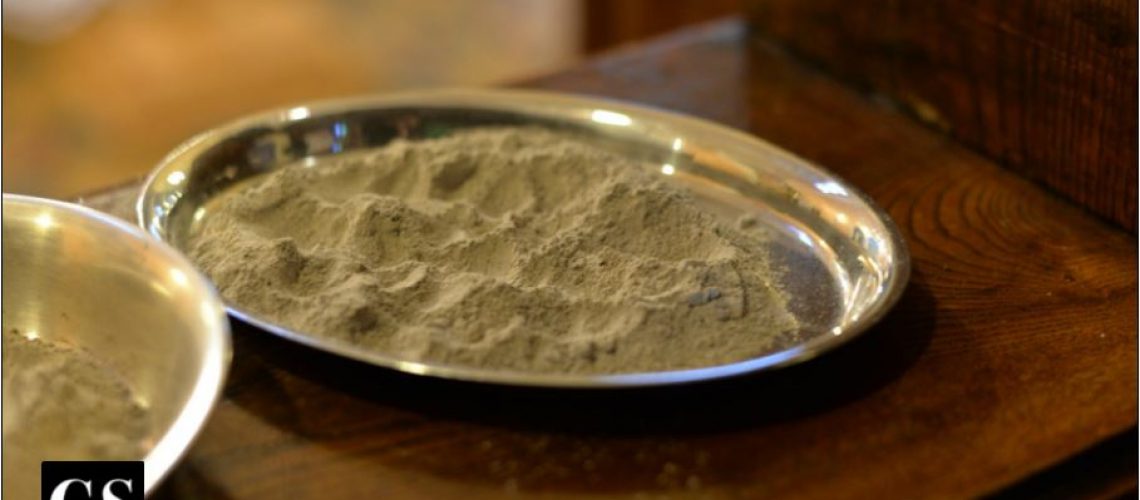
Ash Wednesday, this week (March 5), marks the beginning of the Lenten season. But for some reason, Lent often seems to sneak up on us.
For many, Lent seems to creep its way through the weeks of ordinary time right after the end of Christmas. All of sudden, it’s Lent.
The 40 days of Lent remind us of Christ’s forty days in the desert, Elijah’s 40 day-and-night walk to Horeb, and the Israelites’ 40-year sojourn in the desert. As these were times of prayer, fasting, and penance, so our Lenten journey uses the same means to grow closer to God.
What if life is always like Lent?
In actuality, the Lenten season is only a part of the year. However, recently people from across the globe – friends, family, and acquaintances – have taken to letting me know about the difficulties they encounter in their parishes. I get the impression that for many of them, their time in the parish is like a perpetual Lent!
Many of these difficulties center around priests. And sometimes these difficulties stem from the personality of the priest. Well, here’s a newsflash – we priests really are a diverse bunch!
Just as you find a great range of personalities, likes, and dislikes among classmates or co-workers, there is also a great range of temperaments, preferences, and styles among priests.
Our society is an increasingly globalized one, and the Catholic Church in the United States is international as well. Many priests in the U.S. come to serve from India and Africa. This adds a whole new aspect to parish dynamics due to significant cultural and social differences.
Those Mysterious Priests
My favorite book by Fulton Sheen (even more so than “The World’s First Love”) is “Those Mysterious Priests.” Sometimes, I feel that he could have written this book because, to be honest, priests can be a strange group. Yet, this is precisely part of human nature: not to be strange, but to be unique.
The first high priest was, of course, Jesus Christ Himself. Yet even though He was divine and perfect, people still found plenty to complain about. In fact, they even put Him to death because they couldn’t stand His preaching.
This does not mean that whatever priests do is okay or perfect, however. On the contrary, I have heard many stories that make me shake my head and pray. I hear complaints that one priest turns the heat up too high in the Church, and that another is too loud. Indeed, people have complained that I smile too much! When it comes to personality quirks or preferences, people are easily annoyed and even sometimes offended.
So then, what can we do?
Our Response
First and foremost, we need to pray for our priests. It is difficult enough to just be a Christian in the world. It is even more so to be the head of a community and representative of Christ. Priests need prayers.
Secondly, we need to recall the words of the Letter to the Hebrews 5:1-4.
“Every high priest is taken from among men and made their representative before God, to offer gifts and sacrifices for sins. He is able to deal patiently with the ignorant and erring, for he himself is beset by weakness and so, for this reason, must make sin offerings for himself as well as for the people. No one takes this honor upon himself but only when called by God, just as Aaron was. “
The author presents the line, “For he himself is beset by weakness” as a good thing! The priest can be patient, because he too, knows weakness.
As Fulton Sheen noted, God didn’t choose the angels to be priests. This is because they cannot be compassionate, or understand what it is like to be tired, weak, hungry, lonely, and sinful. Only humans can grasp these things because they experience them first-hand.
“No one takes this honor upon himself but only when called by God” is another point to bear in mind. Why did God call this man to be a priest?
A vocation is a mystery, and so we will never be able to fully understand it. What we do know, however, that is God has called this man to be another Christ. Instead of looking at his defects and failings it might be helpful to look for his goodness and talents. Each priest is like a diamond that, in some way, reflects an aspect of God’s infinite goodness and love.
Horrible Homilies
The other frequent complaint I hear regards homilies. Some are too long, others too confusing, and others are hard to understand. But as the Church tells us, the homily is important. It “breaks the bread of the Word” for us.
In Protestant churches, oftentimes poor preachers find themselves unemployed! And even in the Catholic Church, where we have the sacraments, sometimes the homily does sometimes lose its importance, and poor preaching continues.
But I don’t think firing priests because they are poor preachers is an answer to the poor preaching problem. Still, it’s true that sometimes parishioners hear homilies that are too long, or that ramble, or that are unintelligible. In such instances parishioners are subjected to tedious homilies rather than being uplifted by them.
Sadly, not enough priests are eloquent speakers. So, what can we do?
A Solution
Again, prayer is always part of the answer. Yet rather than get upset (which is understandable), there are some helpful resources that can make sure that, no matter what, we get something out of the homily.
In 2015, the Congregation (now Dicastery) for Divine Worship and the Discipline of the Sacraments released the Homiletic Directory. This little known, but extremely valuable, resource is a treasure-trove of homiletics.
Divided into two parts and two appendices, the first part gives an overview of the importance of the homily as well as the best means to prepare for it. The second part has as its purpose “to provide concrete examples and suggestions to help the homilist put into practice the principles presented in this document by considering the biblical readings provided in the liturgy through the lens of the Paschal Mystery of the crucified and risen Christ” (37).
These aren’t sample homilies, notes the Directory, but rather proposed ways of addressing and understanding the readings. In what follows, the Dicastery has gone through all the Sundays as well as major solemnities, explaining what the principal themes are. As if this were not enough, the first appendix, entitled “The Homily and the Catechism of the Catholic Church,” provides references in the Catechism related to the readings for every Sunday in the year, in all three cycles.
Commentaries
Likewise, there are many excellent commentaries on Scripture. Two quickly come to mind.
The first is Saint Thomas Aquinas’ Catena Aurea (the Golden Chain), which provides the commentaries of the Fathers of the Church on each of the four Gospels, chapter by chapter, and almost line by line. It also has the advantage of being available online and for free.
The second resource, while expensive, is the excellent series “Ancient Christian Commentary of Scripture.” Published for every book of the Bible, the text gives the commentary of the Doctors of the Church, saints, and early Christian writers on the Biblical text, almost line by line. Both resources can us help to consider the Gospels and to feed our souls, if the homilies are not doing so.
The Difficulties
It is not easy being in the desert. The desert can be a desert of homilies that don’t feed us, or a desert accompanied by less than civilized human companions. But the desert can also be a place of spiritual growth and love, if we know how to use the time and opportunity well.


[…] When the Lenten Season becomes a Lenten Life – Father Nathaniel Dreyer at Catholic Stand […]
[…] CatholicPro Tips for Living the Lenten Season Well as a Family – National Catholic RegisterWhen the Lenten Season becomes a Lenten Life – Fr. Nathaniel Dreyer at Catholic StandAbnegation: For Spiritual Fitness – Christopher […]
Thank you for these resources! Our pastor’s homily yesterday was replaced by the Bishop’s Lenten Appeal, which while important, was a disappointment.
Hi Susanne,
Thanks for your comment! Yes, I agree: those appeal homilies do talk about all the important works in the diocese but, alas, we miss hearing a “breaking of the bread of the Word.”
Have a blessed Lent, and God bless!
Fr. Nate