
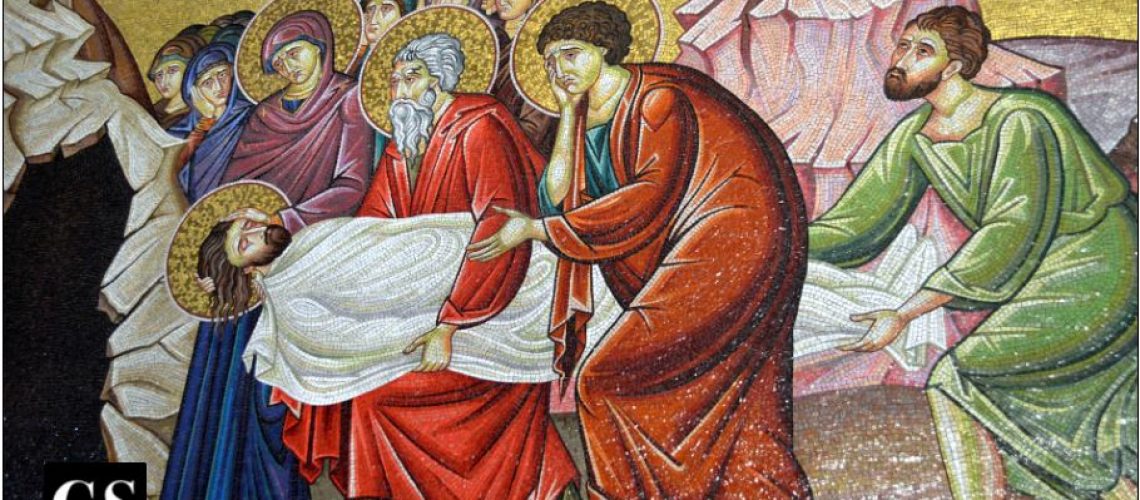
The death of a loved one is perhaps the most difficult of life’s circumstances. It’s a pain that never goes away. I know this for a fact: I lost my father twenty-one years ago to liver cancer, and recently, an elder brother of complications resulting from Covid-19. Not a day passes that I don’t think of them.
When someone dear to us is dying or has died, we feel pity for them, we suffer and get frustrated feeling helpless that we can’t do anything to change their lot.
Many people think it morbid to talk about death – our loved ones’ and our own – much less write about it. I know a close relative who changes the topic of conversations whenever they veer to the subject about prices of plots in memorial parks, or signing up for a funeral or burial package for family members, or purgatory or hell. (We respect her convictions, otherwise, we’d be in hot water.)
Like weddings
According to the late Fr. Benedict Groeschel, author of Arise from Darkness, many people pretend that death will not come to them even though television shows and films are replete with accounts of murder and violent deaths! He says that funerals that are conducted like weddings where everyone is so happy are an example of a denial of death. He says: “not only is a ‘happy’ funeral celebration an insult to the deceased, but it leaves the real mourners with a great weight of unexpressed grief in their hearts.”
(If Fr. Groeschel ever had the chance to visit the Philippines, he’d probably get the shock of his life. Most funerals and wakes in my country are held with the participation of marching bands, balloons being flown up in the air, karaoke sessions, gambling, drinking and much more, even among the poorest of the poor!)
Acceptance
In many ways, we deny everything mysterious about death. Psychologists and psychiatrists often point out the natural process of grief in five stages – denial, anger, bargaining, depression, and acceptance.
Personally, I think an authentic Christian need not go through the first four stages. All he/she has to do is accept, period – accept that a death we can’t do anything about is somehow taken up into God’s will. Certainly, we cannot fully understand His will and that’s why this painful event of a loved one’s death calls for more faith on the part of those left behind.
A Christian need not ask why. Fr. Groeschel writes: “Life is filled with many unanswered questions…Mystery gives suffering humanity its greatest dignity.” His advice: we need to remember that God Himself took up the heavy burden of a painful, miserable, horrible death by torture. “While we complain, we know that he has suffered this before us. It does not answer all the questions, but the Cross does put them in perspective,” he says.
Fr. Groeschel simply tells us that when everything seems to fall apart – when we’re experiencing spiritual desolation, and we think there’s no way out of our emotional turmoil and even physical pain – we should spend some time on our knees before the Crucifix and remember His words: “Do not let your hearts be troubled. Trust in God, and trust also in me” (John 14:1).


Dear Lilia BA, Thank you for making me think. Of late I have experienced some of those stages some refer to as “5 stages of grief,” but I am seeing more and more for us who believe, and hope, it is more like 7 Stages of Hope & Faith. For those who don’t believe in our all-loving all-caring God, the “5 stages of grief” can be nothing more than a dead end 9pun intended). God bless you. Guy, Texas
[…] Is She St. Robert Bellarmine, the Hammer of Heretics – Kevin Di Camillo at The Daily Register The Need for More Faith When a Loved One Dies – Lilia Borlongan-Alvarez at Catholic Stand Catholic Priest Explains How to Ask for Donations […]