
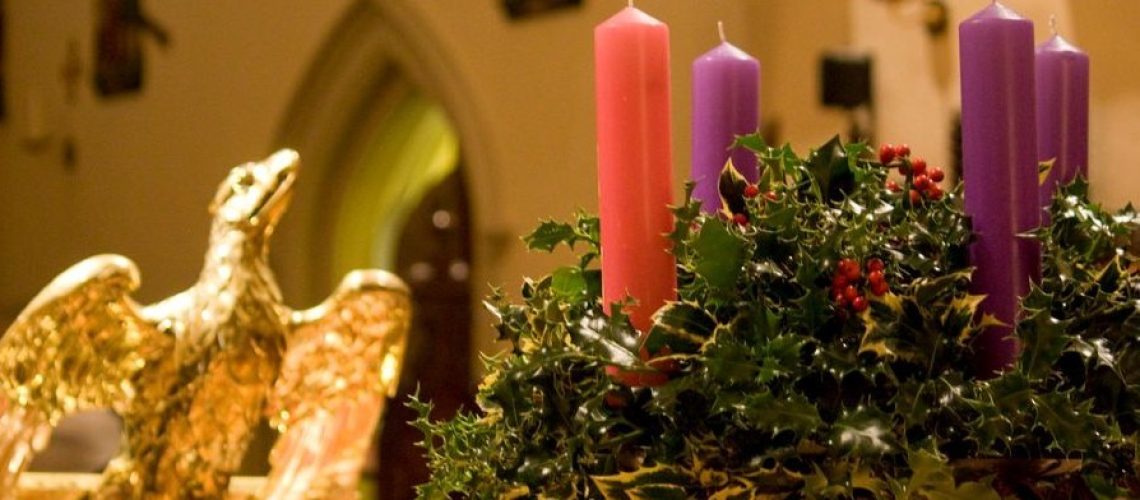
Let’s continue our Advent journey in the next few days because December brings a unique tension that shapes the modern Christian spirit. While society celebrates the festive season with lights and commercial cheer, the Catholic Church quietly shares a deeper, more profound message. This is Advent, a distinct and demanding season—a sacred pilgrimage of ascent. Observing Advent means undertaking a spiritual climb—an intentional, often challenging journey away from worldly distractions toward a divine encounter at the summit. It is a time for waiting, transformation, and hope. Believers, like dedicated climbers, prepare, ascend through disciplined effort, and focus on the approaching dawn of Christ, the true Light of the World. This spiritual ascent resembles a mountain climb, with four stages: Basecamp, Ascent, Summit, and Descent.
The Basecamp: Preparation as Spiritual Discipline
Every meaningful ascent starts with deliberate preparation, not on the slopes but at basecamp. The world is quick to encourage us to skip this phase and to indulge in celebratory consumption immediately. Advent, in stark contrast, urges us to take a purposeful pause. The Church’s liturgy for the First Sunday of Advent sets the tone with a clear call to spiritual awareness.
Besides this, you know what time it is, how it is now the moment for you to wake from sleep. For salvation is nearer to us now than when we became believers; the night is far gone, the day is near. Let us then lay aside the works of darkness and put on the armour of light (Romans 13:11-12).
This is the essential act of preparing our spiritual gear. It involves a thorough examination of conscience, a deliberate turning away from the “darkness” of distraction, pettiness, and sin that burden the soul, and a conscious choice to live honourably as in the day. St. Paul urges us not to make provision for the flesh to gratify its desires, but instead to put on the Lord Jesus Christ (Romans 13:14). This preparation is an active, vigilant waiting.
In the Gospel (Year A), the Lord Jesus instructs us to stay awake, for we do not know on what day the master of the house will come (Matthew 37:42). Nor do we know the time – in the evening, at midnight, at cockcrow, or at dawn; for He may come suddenly and find us sleeping (Mark 13:35-36). The Advent watchfulness is not passive idleness but alert readiness, like a climber checking equipment and studying the route before first light. It requires us to create inner space amid external noise, asking the piercing question posed by the season, “If Christ arrived today, would you even notice?”
We are inspired because this preparation itself is an act of hope. For the pilgrims of hope, it is a conviction that the journey is worthwhile because the promise is certain (Psalm 145:17). Those who wait upon the Lord are truly blessed, renewing their strength, mounting up with wings like eagles, running without growing weary, and walking without fainting (Isaiah 40:31) because the God of justice waits to be gracious and rises to show mercy (Isaiah 30:18). Therefore, we let our hearts take courage and stay strong while waiting for the Lord (Psalm 27:14). Mother Church ritually marks these weeks with the lighting of the Advent wreath, which grows light against the purple of penance and anticipation. We, the Church, physically embody this patient, hopeful preparation that symbolises the many years from Adam to Christ in which the world awaited its Redeemer.
The Ascent: Conversion and the Encounter with the Word
With feet set within the gates of the New Jerusalem, we purpose to ascend to the house of the LORD. So, with our hearts prepared, we earnestly begin to journey along a path of ongoing conversion, a continuous turning towards God that requires effort and endurance. We have the liturgical readings as our guidebook and trail markers. On the Second Sunday of Advent, we meet the central figure of John the Baptist emerging from the wilderness like a seasoned prophet (Matthew 3:1-12). His voice cutting through the thin air of complacency reveals the one of whom the prophet Isaiah spoke.
A voice cries out: “In the wilderness prepare the way of the Lord, make straight in the desert a highway for our God” (Isaiah 40:3).
His message is one of repentance. He asks us to clear away the debris of ego and sin to create a highway for God in our hearts. Our conversion is guided and illuminated by the prophetic Word. The Advent liturgy, rich with the poetry of Isaiah, presents visions that offer both the destination and the sustenance for the climb. He promises that for those who walk in God’s way, the Lord will provide the bread they need and the water for which they thirst (Isaiah 30:20). He foresees a transformed reality where harmony and peace reign.
The seemingly impossible becomes real—as the wolf lies down with the kid, the calf and the lion together, and a little child leads them. A place where the cow and the bear graze side by side, the lion eats grass like the ox, the nursing child plays over the hole of the asp, and the weaned child touches the adder’s den. He promises a glorious future era where God’s divine knowledge eradicates evil, bringing comprehensive peace and safety to His people and the entire world, a vision of God’s ultimate plan for humanity’s redemption (Isaiah 11:6-9). As for the climber, a prophecy of spiritual refreshment is made, reflecting the physical relief of discovering a spring on a mountainside (Isaiah 30:25). These streams are the living waters of God’s promise, found in prayer and scripture, that revive the weary traveller.
The ascent reaches its peak in the profound mystery celebrated in the final, intense days of Advent, focusing on preparing for Christmas with specific readings, the O Antiphons. These ancient prayers are like climbing a series of breathtaking vistas, each revealing a different facet of the summit we strive for. In them, we address Christ with the majestic Messianic titles foretold in Isaiah: “O Wisdom, O Lord of Might, O Root of Jesse, O Key of David, O Dayspring, O King of the Nations, and O Emmanuel.” This spiritual ascent gradually names and claims the saving power of the one we seek. With each title, we deepen our hope and increase our longing until we cry out with the whole Church, “O Come, O Come, Emmanuel!” This liturgical journey makes present this ancient expectation of the Messiah, enabling the faithful to renew their passionate desire for His second coming.
The Summit: Arrival at Incarnation
The challenging journey of preparation and transformation reaches its triumphant peak at the summit, culminating in the celebration of the Incarnation at Christmas. For us, this is not merely a remembrance of a historical birth. It is the revealing of the divine pinnacle itself – God becomes flesh, and dwells among us. This cosmic reality is expressed in the Prologue of John, read during Advent.
In the beginning was the Word, and the Word was with God, and the Word was God. He was in the beginning with God. All things came into being through him, and without him not one thing came into being. What has come into being in him was life, and the life was the light of all people. The light shines in the darkness, and the darkness did not overcome it (John 1:1-5).
This is the dawn we have been striving to witness. It is the Dayspring we have called upon, and it is unveiled as the eternal Light entering human history. This moment transforms everything, as the hope of Advent is vindicated and fulfilled. The infant in the manger is the Sun of Justice, whose light far surpasses any worldly celebration as prophesied (Isaiah 30:26). To reach this summit is to experience the complete joy of God’s kingdom, to have our vision cleansed and our purpose clarified. We see, not sentimental nostalgia, but the true meaning of Christmas – the world-altering event of the incarnation, where God enters the world to change it from the inside.
The Descent: The Call to Mission
No climber remains forever on the summit. The encounter with the divine Light requires a descent—a return to the world transformed and with a mission. The Christmas event immediately points outward. Even in the Advent readings, the Lord Jesus, moved with compassion for the harassed and helpless crowds who were like sheep without a shepherd, tells His disciples that the harvest is abundant but the labourers are few. He highlights the need for the Lord of the harvest to send out labourers into His harvest (Matthew 9:36-38). It is time to cure the sick, raise the dead, cleanse the lepers, and cast out demons. Having received the Light without cost, we are to give without cost (Matthew 10:8). We are called to become a chosen race, a royal priesthood, a holy nation, and God’s own people, charged with proclaiming the mighty acts of him who called you out of darkness into his marvellous light (1 Peter 2:9).
The Rhythm of the Climb: Prayer and Tradition
The essential rhythm of prayer is what will sustain this entire journey. It is the steady breath of the climber, the constant dialogue with the Divine Guide. We need an attitude of intense, trusting prayer (St. John Paul II) as the primary means of making room for Christ in our hearts. The Advent prayers, whether simple daily pleas, the structured journey of the Advent Novena, or the St. Andrew Christmas Novena Prayer, provide the discipline needed to maintain the ascent. These prayers acknowledge our human condition, which seeks quiet spaces to listen for God’s voice each day, while anchoring us in the hope of the destination:
Come, Lord Jesus, and dispel the darkness of our world with the light of your love.
Mother Church offers cultural traditions that, rightly ordered, can serve as handholds and fixed ropes on the climb. The Advent wreath, the Tree of Jesse, the candle-lit processions (e.g., the Las Posadas in Mexico), or the simple habit of family prayer are not empty rituals, but concrete ways to prepare your heart for Christ. They externalise the internal journey, creating a different rhythm from the world’s frenetic pace and embedding the story of salvation in our homes and communities. They help us walk in darkness, yet seeking the light (Henri Nouwen).
Take-Home Message
For the climber, Advent is far more than just a calendar season. It is the spiritual landscape of the Christian life condensed into four profound weeks. It is the annual pilgrimage of ascending the mountain of the Lord. We begin at the base camp of preparation, awakening from sleep and girding ourselves with light. We ascend the path of conversion, heeding the prophets and the Baptist, sustained by the streams of God’s promise. We reach the summit of the Incarnation, where the Word becomes flesh and dwells among us, the true Light that darkness cannot overcome. Then, filled with that Light and embodying the hope that has been both promised and fulfilled, we descend in mission to a waiting world.
In a culture that favours the instant gratification of the lowland festival, Advent emphasises the demanding, rewarding work of the climb. St. John Paul II understood it as the antidote to shallow celebration. It prepares us not for a fleeting holiday, but for a permanent reality: the abiding presence of Emmanuel, God-with-us. As we undertake this ascent, we join the timeless procession of all who wait in hope, and our lives become a living prayer, echoing the final plea of scripture and the eternal longing of the Advent heart: “Amen. Come, Lord Jesus!” (Revelation 22:20).
*NB: Unless specifically stated, all Bible quotations are from the NRSVCE.


[…] Advent:Living the Advent Journey: Climbing the Mountain – Pamela Mandela at Catholic Stand MagazineWhy Advent Ends with Joseph: Fourth Sunday of Advent – Gayle Somers at Catholic Exchange‘O Rex Gentium – The World is Quiet here […]