

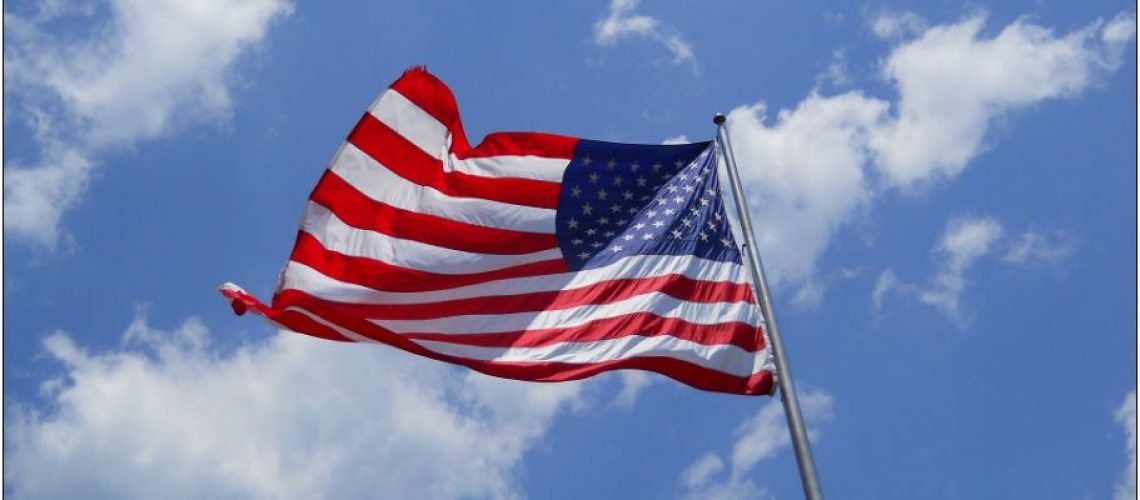
Memorial day is a day that I change from a “fun Grandpa” to a “serious Grandpa.” This is because Memorial Day is a day for reflection.
It’s been almost two weeks since Memorial Day and I’m still bothered by something that one of my grandsons shared with me. I learned this year, from my grandson, that some young people (and I suspect many adults as well) don’t think about Memorial Day as a day of reflection. I suspect they suffer from historical amnesia about this day.
I’ve always tried to have serious discussions with all my grandkids about the meaning and significance of Memorial Day. It’s a day for holding the virtues of duty and sacrifice in high esteem. And I’m proud to say they have been receptive and understand. They “get it.”
My grandson is in a public high school which, by my observations, respects our patriotic traditions. For example, on Veterans Day they hosted a lunch for fathers and grandfathers who were veterans. At a recent graduation ceremony the school district superintendent also acknowledged graduates joining the military. The superintendent even acknowledged the Veterans in the audience.
As a consequence, I assumed that most of my grandson’s generation are getting solid history lessons. And I assumed this included context for why we have Memorial day and how it is a day of reverence. As it turns out, my assumptions were faulty.
Our usual family activity on Memorial Day is to go to the town’s Veterans Memorial Park. The park always hosts a military display, such as the portable Vietnam wall. It also has flag displays where you can put up a small American flag in remembrance of a deceased veteran, and related displays.
My grandson told me he told his friends that our family activity was why he couldn’t hang with them that day. They replied that doing his activity on Memorial day sounded like a real “downer.” But when he quizzed them about what they thought the day was about, they had no answer. They saw it only as a day off for their folks and as a holiday to have fun or go shopping for bargains.
Historical Amnesia
Periodically the media reports examples of, for lack of a better term, historical amnesia. Not knowing why we have Memorial Day is an example of this lack this historical amnesia. But more recent examples are the holocaust, Pearl Harbor, or even 9-11.
A survey showing American students are deficient in both history and civics knowledge reflects this amnesia phenomena.
It would appear that a specific Memorial Day amnesia is an issue for my grandson’s friends. I realize that history is not always an exciting topic for many. However, I think we all should expect that people have some “remembrance and reverence” for certain events. Memorial Day is one such event that cuts across generations and centuries.
Besides the poor ‘schooling’ I think there is another reason for this amnesia. As mentioned in a previous post, only six percent of the adult US population are veterans and approximately one percent of all Americans are currently serving. These small percentages indicate that the majority of American families do not have relatives who have served or are serving.
The implication is that a significant majority of the population has no experience with the realities of military life. Subsequently, many have no knowledge of the costs of military combat. There is a loss of connection with the sacrifices members of the military have to make. And many make the ultimate sacrifice.
These realities help explain the unfortunate amnesia about Memorial day seen in many today, including it appears, my grandson’s friends.
The virtues of sacrifice and remembrance
The 4th of July celebrates our national founding in the pursuit of freedom. Memorial Day is the national holiday that reminds us of the human costs of securing those freedoms. It can viewed as the ultimate history and civics lesson for us as citizens – at an emotional and personal level. It is especially the case if you have comrades in arms under a cemetery cross.
“Freedom is not free” is a phrase many in the military have used for decades. It is even engraved on the Korean War Memorial in Washington DC. Its origins are not known, but Thomas Jefferson expressed the concept when he said, “The tree of liberty must be refreshed from time to time with the blood of patriots and tyrants.”
The thousands of crosses in Arlington National Cemetery or the American cemetery in Normandy, and standing for the playing of taps are testaments of that phrase. It is to grasp a sense of being an American. I think it helps to recognize how privileged we are and that we have obligations.
To shed a tear or more at such occasions is a grace that tells me I still have my God-given humanity. We should never become so comfortable in our liberties that we forget to express our reverent gratitude for the sacrifices made by others.
Beyond national sacrifice to Christ’s sacrifice
While Memorial Day is a secular holiday commemorating the sacrifices of many for political freedom, there is a parallel memorial day occurring every day through the sacrifice of the mass. In this instance we are remembering the sacrifice of Christ for our spiritual freedom.
We celebrate and commemorate Christ’s sacrifice at each and every Mass. Many of the prayers in the Eucharistic liturgy express a gratitude for that sacrifice. Similarly, the eulogies given on Memorial Day acknowledge the sacrifices of the men and women in the military.
But, just as with Memorial Day amnesia we can suffer from the amnesia that the Mass is a sacrifice as well. It can be easy to attend Mass and participate in its rituals without fully expressing the gratitude for Chris’s sacrifice. In that sense it can be a similar process seen in the lack of reverence for Memorial day.
However, as Catholics we are beholden to fully appreciate and be grateful since we believe in the true presence of Christ in that Eucharistic sacrifice. In consuming His body and blood with reverence we are recognizing that “our freedom from sin is not free.”
“No one has greater love than this, to lay down one’s life for ones friends” (John 15:13).


[…] According to Catholic Prophecy – A. Stine, Ph.D.The Priests of D-Day – Catholic ArenaMemorial Day Amnesia – Tom Collingwood, Ph.D., at Catholic Stand MagazineRelics of St. Norbert – Gregory […]
Susanne
FYI A large portion if not the majority who have died for our country are not volunteers but draftees who were called up during our wars. While we are not “compelled” to recognize Memorial Day over other secular days, I would hope that a sense of gratefulness for their sacrifices (regardless of a conflict’s politics) encourages us to express a needed reverence. Freedom is not free and Memorial Day is the premier and necessary holiday to get our attention to that. Its a matter of national honor.
Memorial Day is a secular day to remember those who died in an all volunteer military while doing the state’s bidding. There is no compulsion in a free democracy to recognize any secular day as more special than another.