
The meaning of the Sunday Mass Readings for April 2026 is made clearest by Catholic doctrine. Let’s better understand key verses from April’s Readings[1] by learning doctrines in the Catechism of the Catholic Church that clarify them. Doctrines are those objective truths with which we must agree in order to be Catholic.
April 4, Holy Saturday, the Easter Vigil
Space does not allow for commentary, so only Catechism references are provided. The Holy Thursday Evening Mass of the Lord’s Supper and the celebration on Good Friday of the Lord’s Passion have been excluded from this column since they are not holy days of obligation and due to space limitations.
- From the First Reading[2] (Genesis 1:1-2:2 OR Genesis 1:1, 26-31a): Gn 1:1 is cited in CCC 268, 279, 280, and 290; Gn 1:2-3 in CCC 292; Gn 1:2 in CCC 243, 703, and 1218; Gn 1:3 in CCC 298; Gn 1:4 in CCC 299; Gn 1:10 in CCC 299; Gn 1:12 in CCC 299; Gn 1:14 in CCC 347; Gn 1:18 in CCC 299; Gn 1:21 in CCC 299; Gn 1:26-29 in CCC 2402; Gn 1:26-28 in CCC 307; Gn 1:26-27 in CCC 1602; Gn 1:26 in CCC 36, 225, 299, 343, 2501, and 2809; Gn 1:27 in CCC 355, 383, 1604, and 2331; Gn 1:28-31 in CCC 2415; Gn 1:28 in CCC 372, 373, 1604, 1607, 1652, 2331, and 2427; Gn 1:31 in CCC 299 and 1604; Gn 2:2 in CCC 314 and 2184.
- From the Responsorial Psalm (Psalms 104:1-2, 5-6, 10, 12, 13-14, 24, 35): Ps 104:24 is cited in CCC 295; OR (Psalms 33:4-5, 6-7, 12-13, 20, 22): Ps 33:6 in CCC 292 and 703.
- From the Second Reading (Genesis 22:1-18 OR Genesis 22:1-2, 9a, 10-13, 15-18): Gn 22:1-18 is cited in CCC 1819; 22:8 in CCC 2572; and 22:11 in CCC 332.
- From the Responsorial Psalm (Psalms 16:5, 8, 9-10, 11): Ps 16:9-10 is cited in CCC
- From the Third Reading (Exodus 14:15-15:1): Ex 15:1 is cited in CCC
- From the Fourth Reading (Isaiah 54:5-14): Is 54:8 is cited in CCC 220; and 54:10 in CCC
- From the Fifth Reading (Isaiah 55:1-11): Is 55:1 is cited in CCC 694 and 2121; and 55:3 in CCC
- From the Responsorial Psalm (Isaiah 12:2-3, 4, 5-6): Is 12:3 is cited in CCC 2561.
- From the Seventh Reading (Ezekiel 36:16-17a, 18-28): Ez 36:20-22 is cited in CCC 2814; Ez 36:20-21 in CCC 2812; Ez 36:25-28 in CCC 715; Ez 36:25-27 in CCC 1287; Ez 36:26-27 in CCC 1432; Ez 36:26 in CCC
- From the Responsorial Psalm (Psalms 42:3, 5; 43:3, 4): Ps 42:3 is cited in CCC 2112; OR (Isaiah 12:2-3, 4bcd, 5-6): Is in CCC 12:3 2561.
- From the Epistle (Romans 6:3-11): Rom 6:3-9 is cited in CCC 1006; Rom 6:3-4 in CCC 1214, 1227, and 1987; Rom 6:4-5 in CCC 790; Rom 6:4 in CCC 537, 628, 648, 654, 658, 730, 977, and 1697; Rom 6:5 in CCC 1694 and 2565; Rom 6:8-11 in CCC 1987; Rom 6:10 in CCC 1085; and Rom 6:11 in CCC 1694.
- From the Responsorial Psalm (Psalm 118:1-2, 16-17, 22-23): Ps 118:22 is cited in CCC 587 and 756.
- From the Gospel (Mk 16:1-7): Mk 16:1 is cited in CCC 641 and 2174; Mk 16:2 in CCC 2174; Mk 16:5-7 in CCC 333; and Mk 16:7 in CCC 652.
April 5, The Resurrection of the Lord, the Mass of Easter Day
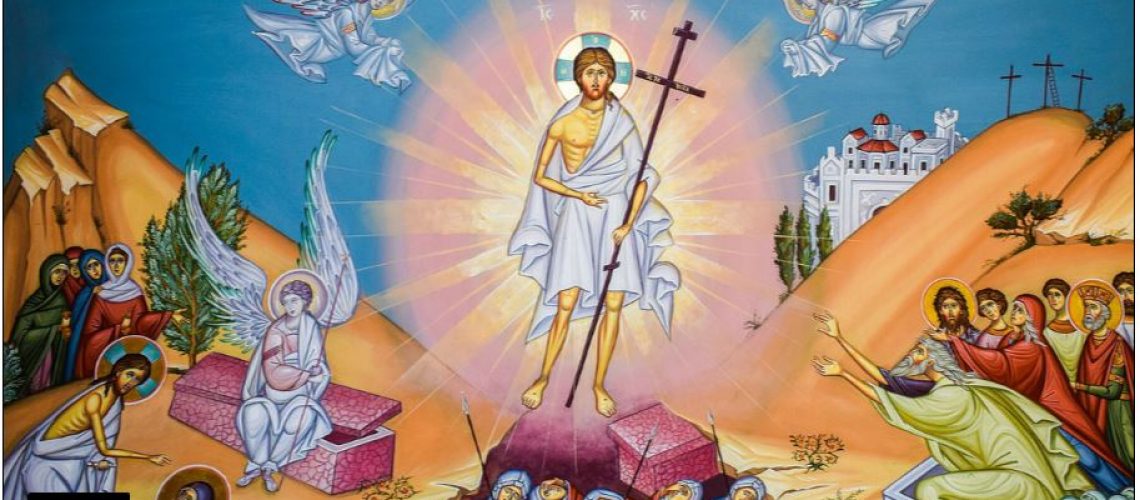
Easter is “the Feast of feasts” (CCC 1169[3]) since “[t]he Resurrection of Jesus is the crowning truth of our faith in Christ” (CCC 638). Although today’s Gospel is only about the empty tomb and there is much more to the Resurrection, ‘[t]he first element we encounter in the framework of the Easter events is the empty tomb,” from which we should realize, like “the other disciple,” “that the absence of Jesus’ body could not have been of human doing and that Jesus had not simply returned to earthly life as had been the case with Lazarus” (CCC 640). We will learn more Catholic doctrine about the Resurrection from the next Sunday Reading.
- From the First Reading (Acts 10:34a, 37-43): Acts 10:38 is cited in CCC 438, 453, 486, and 1289; Acts 10:39 in CCC 597; Acts 10:41 in CCC 659 and 995; and Acts 10:42 in CCC
- From the Responsorial Psalm (Psalms 118:1-2, 16-17, 22-23): Ps 118:22 is cited in CCC 587 and 756.
- From the Second Reading (Colossians 3:1-4): Col 3:1-3 is cited in CCC 655; Col 3:1 in CCC 1002; Col 3:3 in CCC 665, 1003, 1420, and 2796; Col 3:4 in CCC 1003 and 2772. OR from the Second Reading (1 Corinthians 5:6b-8): 1 Cor 5:6-8 is cited in CCC 129; and 1 Cor 5:7 in CCC 608, 610, and 613.
- From the Alleluia (1 Corinthians 5:7b-8a): see above.
- From the Gospel (John 20:1-9): Jn 20:1 is cited in CCC 2174; Jn 20:2 in CCC 640; Jn 20:5-7 in CCC 640; Jn 20:6 in CCC 640; Jn 20:7 in CCC 515; Jn 20:8 in CCC
April 12, The Second Sunday of Easter (or Sunday of Divine Mercy)
The Catechism uses verses from today’s Gospel to declare that “it is impossible not to acknowledge [Christ’s Resurrection] as an historical fact” (CCC 643). The Apostles’ “faith in the Resurrection was born, under the action of divine grace, from their direct experience of the reality of the risen Jesus” (CCC 644).
And what is this reality? Jesus “showed them his hands and his side” which reveals that “he is not a ghost” and that ”the risen body in which he appears to them is the same body that had been tortured and crucified” (CCC 645). Yet “when the doors were locked . . . Jesus came and stood in their midst” means that Jesus’ “authentic, real body possesses the new properties of a glorious body: not limited by space and time but able to be present how and when he wills” (CCC 645). Unlike Lazarus, the Risen Christ will no longer grow older, get sick, be injured, get tired, need food and water, and need clothing and shelter. The Risen Christ has even conquered death, and He will never die again.
Just as the Risen Christ has an eternal body that is both physical and supernatural, so will everyone on the Last Day—whether they are raised to the resurrection of life (the Kingdom) or to the resurrection of judgment (Hell) (CCC 655).
In today’s First Reading, we hear that the first Christians “devoted themselves to . . . the breaking of the bread.” The celebration of the Eucharist every Sunday “dates from the beginnings of the apostolic age” (CCC 2178). “From that time [of the Twelve Apostles] on down to our own day the celebration of the Eucharist has been continued” (CCC 1343). Changing the Lord’s Day from Saturday (as for Jews before and after Christ) to Sunday is thus based on Sacred Tradition, not Sacred Scripture. Nowhere does the New Testament tell Christians to make this change. Believing Sunday is the Lord’s Day is Faith that is not based on “Scripture alone.”
- From the First Reading (Acts 2:42-47): Acts 2:42-46 is cited in CCC 2178; Acts 2:42 in CCC 3, 857, 949, 1329, 1342, and 2624; Acts 2:46 in CCC 584, 1329, and 1342; and Acts 2:47 in CCC 2640.
- From the Responsorial Psalm (Psalms 118:1-2, 16-17, 22-23): Ps 118:22 is cited in CCC 587 and 756.
- From the Second Reading (1 Peter 1:3-9): 1 Pt 1:3-9 is cited in CCC 2627; 1 Pt 1:3 in CCC 654; and 1 Pt 1:7 in CCC 1031.
- From the Gospel (John 20:19-31): Jn 20:19 is cited in CCC 575, 643, 645, and 659; Jn 20:20 in CCC 645; Jn 20:21-23 in CCC 1087, 1120, and 1441; Jn 20:21 in CCC 730 and 858; Jn 20:22-23 in CCC 976 and 1485; Jn 20:22 in CCC 730, 788, and 1287; Jn 20:23 in CCC 1461 and 2839; Jn 20:24-27 in CCC 644; Jn 20:26 in CCC 645 and 659; Jn 20:27 in CCC 645; Jn 20:28 in CCC 448; Jn 20:30 in CCC 514; and Jn 20:31 in CCC 442 and 514.
April 19, The Third Sunday of Easter
In the First Reading, we hear “But God raised [Jesus] up, releasing him from the throes of death.” The Catechism uses this verse to teach that Jesus did not “descend into hell [in the words of the Apostles’ Creed] to deliver the damned [who stayed damned], nor to destroy the hell of damnation [which continues to exist], but to free the just who had gone before him” and had been “deprived of the vision of God” (CCC 633). Hell is like other words in English—it has more than one definition. In this context it means “the abode of the dead.”
Just as the disciples realized they were encountering the Risen Lord when He “took bread, said the blessing, and broke it” in today’s Gospel, we should realize that we encounter the Risen Lord in the Consecrated Bread and Wine, Christ’s Body and Blood (CCC 1166).
- From the First Reading (Acts 2:14, 22-33): Acts 2:17-21 is cited in CCC 715; Acts 2:17-18 in CCC 1287; Acts 2:21 in CCC 432 and 2666; Acts 2:22 in CCC 547; Acts 2:23 in CCC 597 and 599; Acts 2:24 in CCC 633 and 648; Acts 2:26-27 in CCC 627; and Acts 2:33 in CCC 659 and 788.
- From the Responsorial Psalm (Psalms 16:1-2, 5, 7-8, 9-10, 11): Ps 16:9-10 is cited in CCC 627.
- From the Second Reading (1 Peter 1:17-21): 1 Pt 1:18-20 is cited in CCC 602; 1 Pt 1:18-19 in CCC 517; 1 Pt 1:18 in CCC 622; and 1 Pt 1:19 in CCC
- From the Alleluia (Luke 24:32): see below.
- From the Gospel (Luke 24:13-35): Lk 24:13-35 is cited in CCC 1329 and 1347; Lk 24:15 in CCC 645 and 659; Lk 24:17 in CCC 643; Lk 24:21 in CCC 439; Lk 24:22-23 in CCC 640; Lk 24:25-27 in CCC 112 and 601; Lk 24:26-27 in CCC 572 and 652; Lk 24:26 in CCC 555 and 710; Lk 24:27 in CCC 555 and 2625; Lk 24:30 in CCC 645 and 1166; Lk 24:31 in CCC 659; and Lk 24:34 in CCC 552 and 641.
April 26, The Fourth Sunday of Easter
About “the gift of the holy Spirit” that Peter promises will be received after baptism, in the First Reading, the Catechism teaches “this same Spirit who brings sin to light is also the Consoler who gives the human heart grace for repentance and conversion” (CCC 1433). What tells us whether or not we have sinned? Catholic Doctrine, the clearest expression of the will of God. To what should we have conversion? To Catholic Doctrine, and so to God’s will.
- From the First Reading (Acts 2:14a, 36-41): Acts 2:36-38 is cited in CCC 1433; Acts 2:36 in CCC 440, 597, 695, 731, and 746; Acts 2:38 in CCC 1226, 1262, 1287, and 1427; and Acts 2:41 in CCC 363 and 1226.
- From the Responsorial Psalm (Psalms 23: 1-3a, 3b, 4, 5, 6): Ps 23:5 is cited in CCC 1293.
- From the Second Reading (1 Peter 2:20b-25): 1 Pt 2:21 is cited in CCC 618; and 1 Pt 2:24 in CCC 612.
- From the Gospel (John 10:1-10): Jn 10:1-10 is cited in CCC 754; and Jn 10:3 in CCC
[1] There are too many citations, or references, in the Catechism to the verses in a month of Sunday Readings to identify all the pertinent doctrines. The bullet points allow you to explore further the Biblical basis of Catholic doctrine.
[2] If a Reading is not listed, then none of its verses is cited by the Catechism.
[3] CCC abbreviates Catechism of the Catholic Church. Any number after it is the number of a paragraph in the Catechism. For example, “CCC 1169” means paragraph 1169 of the Catechism.

