
For Christians worldwide, Easter Sunday observes the resurrection of Jesus Christ. As it turns out, each Christian country has developed and maintained their own national traditions. According to a study by the World Atlas, the author listed many of these different celebrations. For example, Sweden features a children’s Easter Parade; Haiti’s celebrations underscore the mix of African and Christian beliefs; France has a favorite Easter treat, a giant omelet; and in Poland, Śmigus-dyngus celebrations.
But serving splendid meals is a popular way to celebrate Easter and to bring family and friends together. Looking at the dining celebrations in the following three countries offers some delightful and inspiring celebratory foods:
Easter Food Traditions in Russia:
According to this Russian/Kashmiri lady, Lalita Kaul, members of the Russian Orthodox Church note that Easter is the most important date on their calendar. They believe that Easter not only honors Christ’s resurrection, but it also marks the earth emerging from the darkness of winter. Especially back in the 19th century, Easter eggs were part of the celebrations.
Deviled Eggs
Although the term “deviled” used with eggs may sound evil, what the word really means for this dish is making the egg fillings somewhat spicy. These eggs have also been a meal staple for centuries and are very popular as an Easter offering, even in Orthodox Russia.
Serves 6
6 hard-cooked eggs
3 tablespoons mayonnaise
2 tablespoons crumbled blue cheese
2 teaspoons mustard
Crispy fried onions, crumbled, for garnish
Chopped cilantro, for garnish
Instructions:
Put the raw eggs in a large saucepan, cover them with cool water, and put a lid on the pan. Bring the water to a boil and cook for 8 to 10 minutes over medium heat. Empty the water and put the eggs in a bowl of chilled water. When the eggs are cold, take them from the water, and peel the eggs.
Cut the eggs in half lengthwise. Spoon out the yolks into a mixing bowl, and mash them with a fork. Stir in the mayonnaise, blue cheese, and mustard, and make the mixture smooth. Spoon the mixture into each half egg, arrange the eggs on a serving dish, and sprinkle them with crumbled onions rings and chopped cilantro.
Easter Food Traditions in Great Britain:
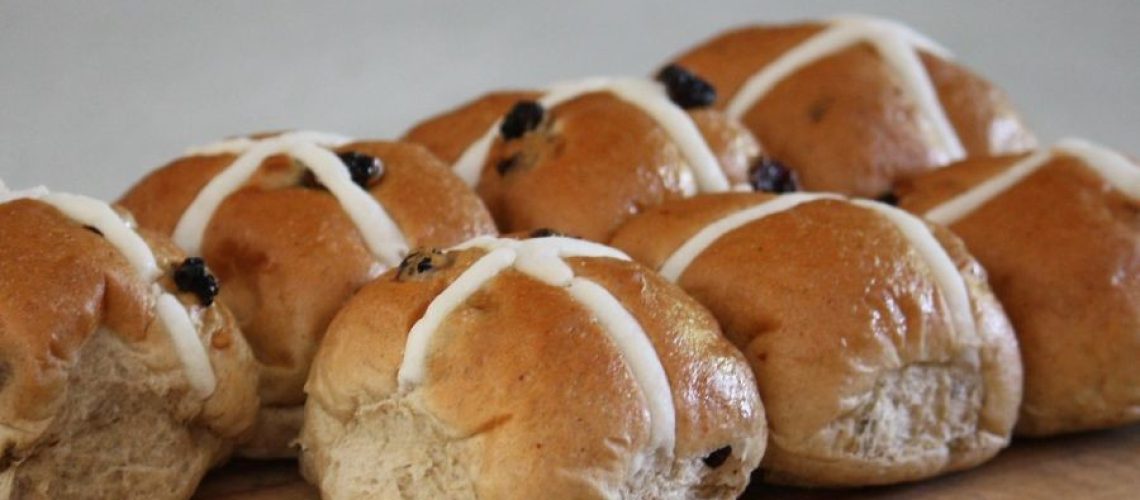
Easter is a major holiday in Great Britain, and the country’s blend of pagan and Christian customs have food playing a major role in the festivities. According to one source, the Easter foods also are linked to renewal and the arrival of spring. The tradition of eating hot cross buns on good Friday may have originated back in the 12th century because the buns were decorated with a sugary cross, representing the death and resurrection of Christ. Though enjoyed on Good Friday, they are also eaten on Easter Sunday.
Hot Cross Buns
These hot cross buns make a delicious addition to an Easter meal. (Note: if you cannot find citron (a lemon-like fruit), use lemon instead. (Recipe Source: Feast Day Cookbook by Katherine Burton and Helmut Ripperger, David McKay Company, Inc., New York, 1951.)
1 yeast cake
¼ cup lukewarm water
1 cup milk
½ cup granulated sugar
½ cup shortening
1 egg, beaten
¼ cup shredded citron
¼ cup seedless raisins
3 cups all-purpose flour
½ teaspoon salt
Confectioner’s sugar for garnish
Instructions
Soften the yeast in the lukewarm water. Scald the milk, and add sugar and shortening, and cool. Add the beaten egg, the yeast, citron, raisins, and the flour sifted with the salt. Knead and let rise to double its bulk.
Shape into buns, place on greased baking sheet, and let rise until light. Brush with a little milk. Preheat the oven to 375 degrees.
Bake at 375 degrees for about 20 minutes. When done, cover with confectioner’s sugar in the shape of a cross or do the same with a thin icing.
Easter Food Traditions in France
Traditional Easter meals in most of France feature roast lamb, spring vegetables, fancy chocolate desserts. According to research, these meals are lavish and served to families at lunchtime to celebrate the beginning of spring and the end of Lent. And many of the dishes reflect aspects of the resurrection of Christ. French Easter dishes are traditionally hearty and filling.
Braised Lamb Shank
(Recipe credit: Chef Trent Conry, formerly at 701 Restaurant, Washington, DC.)
1 tablespoon ground cinnamon
½ tablespoon kosher salt
½ tablespoon ground nutmeg
½ tablespoon allspice
¼ tablespoon mace
½ tablespoon ground black pepper
4 hind lamb shanks
¼ teaspoon grapeseed oil
1 carrot, rough dice
1 stalk of celery, rough dice
1 onion, peeled and diced
1 750 ml (3 ½ cups) bottle of port wine
Instructions:
Preheat oven to 185 degrees.
Mix all the spices together and coat the lamb shanks completely. In a sauté pan, heat the grapeseed oil and sear the lamb shanks on all sides. Remove the lamb from the pan and add the vegetables. Sauté until tender.
Place the lamb shanks back in the pan and add half of the port. Let the port cook down by half. Place all the items into a braising pan and cover with water or stock. Bring to a boil. Cover, place in the oven, and cook until tender, about 5 to 6 hours.

