
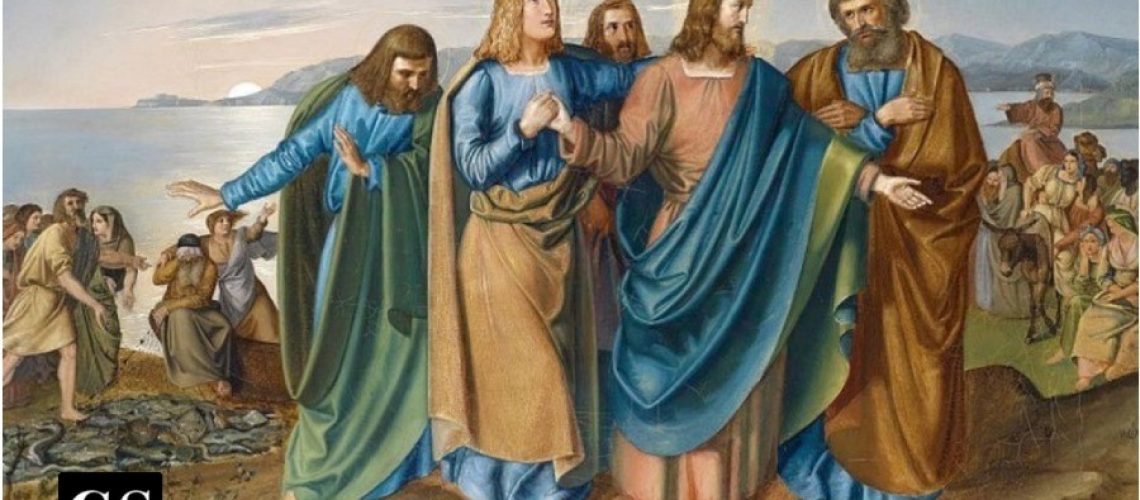
As Catholics we receive a direct call to our mission from Christ Himself. And it is a call we should not ignore.
In His Sermon on the Mount Jesus spoke the following to His disciples (Mathew 5:13-16):
“You are the salt of the earth. But if salt loses its taste, with what can it be seasoned? It is no longer good for anything but to be thrown out and trampled underfoot. You are the light of the world. A city set on a mountain cannot be hidden. Nor do they light a lamp and then put it under a bushel basket; it is set on a lampstand, where it gives light to all in the house. Just so, your light must shine before others, that they may see your good deeds and glorify your heavenly Father.”
This reading challenges the faithful to embrace their vocation in the world, giving Catholics three core missions. We should preserve truth, bring flavor to life, and illuminate darkness through our actions.
The Salt of the Earth
Jesus declares that His disciples serve as the salt of the earth. Salt preserves food from decay, enhances flavor, and acts as a purifying agent.
In the ancient world, people used salt to cure meat and prevent spoilage in hot climates. Catholics today fulfill the same role by defending society against moral corruption. They cure (as in preventing spoilage) everyday life with virtue, justice, and charity. The faithful resist relativism and decay in culture by upholding Church teachings on life, marriage, and human dignity.
St. Thomas Aquinas compiled insights from the Church Fathers on the Gospels in his monumental work Catena Aurea.
St. John Chrysostom explains that Jesus praises the Apostles to encourage them after delivering demanding precepts. The disciples must remain rough and biting like salt when reproving evil. This firmness offends some but testifies to their steadfastness.
Hilary of Poitiers notes that salt preserves bodies for eternity through heavenly teaching.
Remigius adds that Apostolic men undergo transformation through baptism, love, and the Holy Spirit, drying up carnal works and killing lustful thoughts. The faithful salt worldly men who cling to earthly concerns.
Jerome observes that the whole human race receives seasoning through the Apostles. The faithful adorned with virtues become good salt, preserving people through example and word.
If, however, salt loses its savor, it becomes useless.
Augustine warns that fear of persecution or pursuit of temporal goods causes loss of eternal goods.
And Hilary states that if senseless doctors cannot restore soundness to things which are corrupt, they are “fit only to be cast out and trodden by men.”
Catholics must guard against dilution of faith through compromise or apathy. We cannot let the spirit of the age weaponize our compassion. True compassion requires guiding others toward virtue without condoning and enabling sin.
The Light of the World
Christ also tells us we should be “the light of the world.” Light radiates outward and illuminates, and so, too, should we.
Catholics radiate the Lord’s truth into darkness. Truth dispels ignorance and reveals reality.
It is no coincidence that a motto of the Dominican Order is Veritas – Truth. The same is true for contemplata aliis tradere (a Latin phrase often translated as “to hand on to others the fruits of contemplation”). In order to shine the light of truth onto the world, one must first contemplate the truth and then give to others the fruits of contemplation.
Aquinas draws from the Church Fathers again.
Pseudo-Chrysostom distinguishes salt’s preservative role for those with knowledge of God from light’s role in bringing Gentiles to that knowledge.
Augustine identifies the world as those who love worldly things, whom the Apostles enlighten.
Hilary describes the Apostles carrying rays of knowledge to dispel ignorance wherever they go.
Jerome urges boldness in preaching rather than hiding like lamps under a corn-measure, (basket).
Remigius compares the Apostles to the sun sending beams as the sun of righteousness dispatches them against the night of the human race.
Chrysostom highlights that obscure men gain fame to earth’s ends, and persecution of the Faithful only makes their light more conspicuous.
The city on the hill cannot hide because Christ is the mountain that elevates it. Pseudo-Chrysostom calls this city the Church, built on Christ. Its citizens are the Faithful.
Shining Good Deeds to Glorify the Father
Jesus concludes saying, “Just so, your light must shine before others, that they may see your good deeds and glorify your heavenly Father.”
Catholics perform good works not for self-praise, but to direct attention to God. Those truly faithful defer all glory to the Father and do not seek human applause.
Augustine teaches that adding “glorify your Father” prevents seeking men’s praise as the end.
Hilary notes that even concealed works shine in honor of God.
Archbishop Fulton Sheen frequently reflected on this passage in his writings and broadcasts. He stressed that Catholics preserve society from decay like salt and guide others like light.
In contexts such as These Are the Sacraments, the archbishop connects the verse to baptismal grace, where the faithful awaken to Christ the light of the world and become sons of light, letting good works glorify the Father. His Grace urges active witness amid modern challenges, warning against hiding faith under worldly comforts.
Catholics today must live this Gospel practically. They must defend life in public debates, support the poor through charity, and teach children the Faith at home. In the workplace and community, Catholics must season conversations with truth and illuminate ethical dilemmas with Gospel light. The faithful must avoid burying talents through fear or convenience, as the Parable of the Talents warns elsewhere in Matthew.
The challenge arises when society pressures concealment of faith. Cultural relativism tempts dilution of doctrine. Personal sins or scandals obscure the light.
Catholics must counter these with frequent Confession, regular prayer, and communal support, while drawing strength from the sacraments and the examples of saints who preserved and illuminated in hostile times.
This passage from the Sermon on the Mount forms the identity of the Faithful. Catholics should embrace their role as salt and light with deliberate effort. They preserve what is good, flavor life with virtue, and perform deeds that shine beyond themselves to the heavenly Father. In doing so, Catholics fulfill the mission Christ gave us by inviting the world to share in eternal light.


[…] Reasons Why the Victory at Notre Dame Was Important – Tradition, Family, & PropertyYou are the Salt of the Earth & Light of the World – Genesius at Catholic Stand […]