
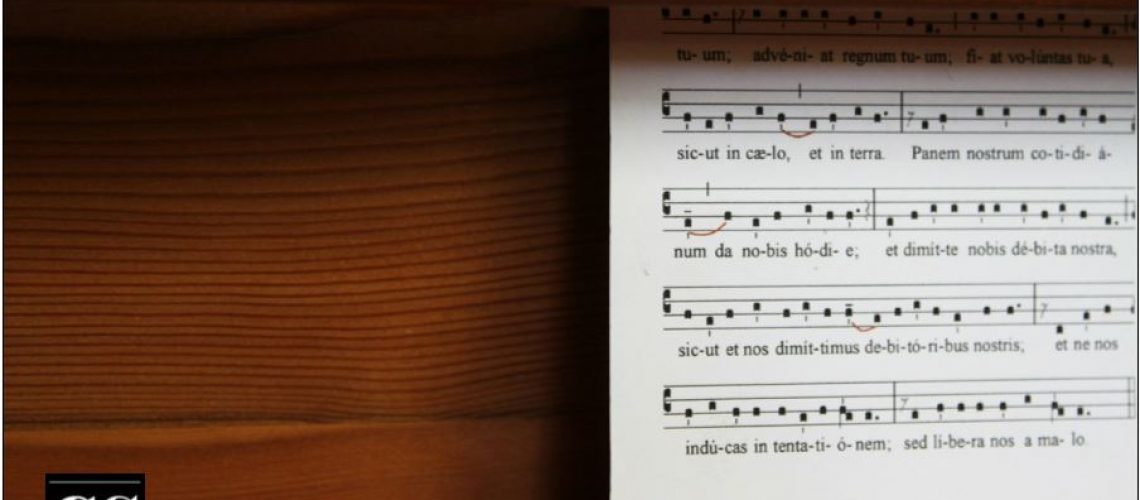
Last month, I promised to introduce you to some of my favorite, local artists. Artists whose creativity isn’t influenced by the algorithm, but by a romance with beauty. This month, I’m introducing Leon Griesbach, founder and director of the Psalterium Institute in Maine.
In the next few months, I’ll be sharing my conversations with Catholic artists who exist and create primarily offline. Of course, most of these artists will have websites where you can find their work and contact information. But they all have limited or no social media presence. This is important to the creation of lasting, meaningful art – and I’ll be returning to these thoughts again and again throughout this series.
The Church in Maine is small, far-flung, and often neglected in the wider life of American Catholicism. Maine is just one diocese covering over 33,000 square miles of heavily wooded, rural landscape, coastline, islands, and small cities and towns.
As one of the least religious states in America, Maine can also feel more isolating to its small cluster of practicing Catholics. But more often than not, it doesn’t. In a surprising way, all the natural and cultural barriers to community feel like they draw us closer together. Maybe because Mainers are willing to drive long distances, in all sorts of weather. Maybe because, living in one, huge diocese helps everyone get to know everyone else. Or maybe because of artists like Leon who prioritize in-person introductions to beauty through small concerts, training workshops, and private lessons. His concerts take place throughout the state, with rehearsals happening in his home – a rambling, refurbished church building in Lisbon Falls.
When Leon arrived for our interview, he was on his way back home from a trip to visit another musician-friend, organist and Artist-in-Residence at St. Rose of Lima Church in Jay, Philip Fournier. Leon was composing, and wanted Philip to help pick apart his work so far. “As I’ve been going deeper into sacred music,” Leon explained, “it’s woken an urge in me to do more writing.”
He said that he is most often inspired to write music by a text. There are psalms and poems that evoke something, and when he writes, he crafts a melody to convey that same feeling.
Formation
We talked about his formation first. There weren’t many homeschooling families in Maine in the 1980s and 90s, but the Griesbachs were one of the few. Being homeschooled in a musically-inclined family, he had the opportunity to follow his heart early. He sang in the folk choir at his church as a very young child with his mother and older siblings. At 7 he joined The Boy Singers of Maine, which started his lifelong “romance with the human voice.”
Meeting the Organ
Leon still remembered the first time he sat down to play the organ. He was 11 years old, and it was late at night on Christmas Eve. Midnight Mass had just ended – the time of night when the forests fill with music in folktales. At the Basilica of Sts. Peter and Paul in Maine, Leon looked up into the choir loft and saw the organist at work. He was already a cantor at his local parish and an enterprising piano student. The organist invited him to play the instrument. While the choir director pulled the stops, Leon pounded out Bach’s Solfeggietto – filling the huge, stone church with rapid music. It was intoxicating. In many ways, it changed his life.
He took a gap year between high school and college, spending most of it at a Benedictine Abbey in North Dakota. With the monks, Leon studied organ and chanted the Liturgy of the Hours every day. Even now, years later, he is a passionate advocate for the Liturgy of the Hours prayers that are part of “the vocabulary of prayer” that gives “life to the Church.”
Mentorship
When he applied to the Catholic University of America, he majored in Organ Performance, not voice. “I barely got in, I definitely wasn’t technically good enough to make it into the program. But I think they accepted me because I played expressively.”
Leon has always been an expressive musician. His organ technique improved by leaps and bounds at CUA, but his passion continued to be voice. At CUA he met Leo Nestor, the director of Choral Studies, who took Leon under his wing and became a true mentor to him.
He emphasized mentorship as a key aspect of revitalizing the artistic life. But then clarified: “Mentorship isn’t like being a guru. The lion’s share of responsibility is on the one being mentored… with Leo, he identified things he saw in me that he could help develop, but I had to pursue that. Leo was a true son of the Church. He loved the liturgy and wanted to improve liturgical music… but he also loved me and wanted to develop this gift in me.”
Leo was an expressive musician, and an expressive person. When Leon talked about him, I was impressed by the depth of feeling in his words and on his face. Throughout our conversation his hands moved constantly – picking up his glass of wine, touching things. They moved gracefully – almost dancing in the air. When he mentioned Leo Nestor, threaded through the entire conversation, his eyes softened and his hands stilled. Leo died in 2019 and Leon sang at his funeral in Washington D.C.
The Artist as Family Man
After graduating, Leon accepted a job offer from the Cathedral in Portland, Maine. He married his wife, Cassi, who had been a music major at CUA as well, and they started raising their family in Portland, and later, in Lisbon Falls.
“Is it hard to balance family life with the artistic life?” I asked him.
“It helps that my wife is also an artist… We support each other’s time. She’s been willing to help me find space and time. No one creates great things without other people making sacrifices.”
The young family made quite a few sacrifices when Leon was offered a position at the North American College in Rome. They sold their house, packed their belongings and spent five years in the Eternal City. Leon had been doing well as the organist and music director at Maine’s Cathedral, but he wanted to pursue beauty more fully and the opportunity to immerse himself in liturgical music in the heart of the Church was exactly what he needed.
His family embraced Rome wholeheartedly. His wife and children reveled in faithful, reverent, beautiful liturgies. They visited museums and made friends with seminarians from all over the United States.
The Psalterium Institute
When he returned to the United States in 2018, though, Leon had to figure out how to support his growing family without selling out his artistic integrity. He joined his father in his dad’s Home Inspection business instead of expecting a full-time income from the Church. With more creative freedom, he was able to found the Psalterium Institute in 2019.
“The churches in our diocese need to have a relationship with this music before they can desire it. I started the Institute to give people exposure to something they might normally have to pay to hear and let them know that they can appreciate it wherever they are.”
Beauty is a primary operative in Leon’s spiritual life. “Beauty evokes pain… It should wound us. The point of creating beauty is to wound people with it so they spend their lives seeking it.” He quoted a line from one of his favorite poems, “The Pulley” by George Herbert:
Let him be rich and weary, that at least,
If goodness lead him not, yet weariness
May toss him to my breast.
In the Institute, he forms singers – both adults and children. “We never give children enough credit… Children are capable of just as much expression as adults.” Leon believes in giving children an opportunity to “pursue artistic excellence.” He challenges all of his singers. “A conductor’s primary goal is to inspire his singers.”
The Institute allowed Leon to conduct, compose, and also provide liturgical music support and training to clergy and music directors across the state, and even throughout the country.
What Is an Artist?
When I asked Leon what an artist is, his first thoughts centered around inspiration: “An artist is inspired by something beautiful outside of himself… It’s expressive, but not self-expression.” Artistic creation is “an act of love… a spiritual intimacy.”
He went on to say that an artist needs to be objectively excellent at his medium. The artist needs technical capabilities and the discipline to continue improving those abilities. Being an artist requires sacrifice – “a pouring out of self” as an “evangelization toward beauty.”
After our talk, Leon headed out into the early, winter night. It’s a long drive home – his family, including a newborn baby boy are waiting for him.


[…] Don’t Need J.D. Vance to Know That Life Is Worth Living – Kathryn Jean Lopez at NROWounded by Beauty – A Conversation with Leon Griesbach – Masha Goepel at Catholic StandSurrogacy Gone Wild Treats Babies Like Orders to Be Filled […]