
By “The Unknown Centurion”
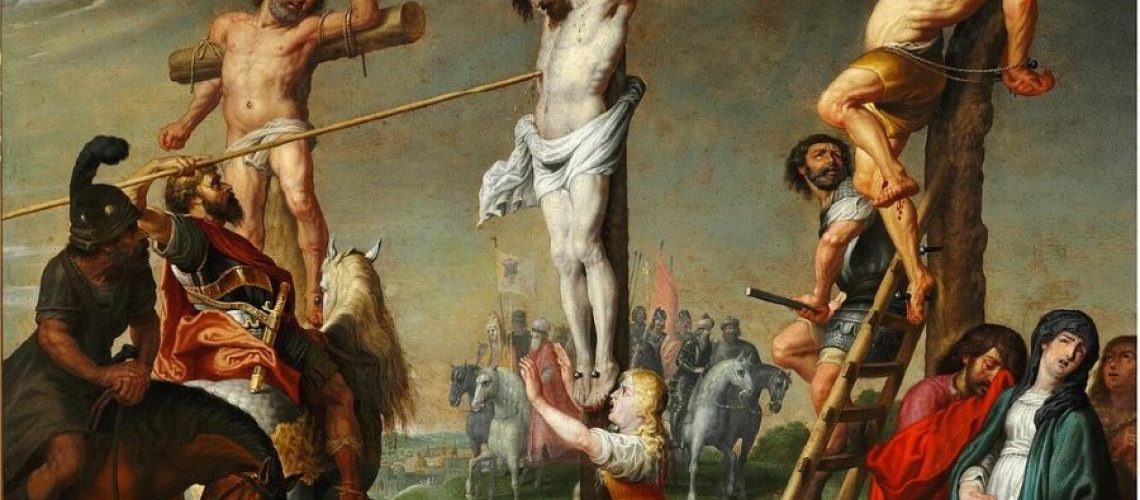
As we move closer to Holy Week, it seems like a most acceptable time to meditate upon and enter deeply into the most sacred and salvific mystery of the Crucifixion of our Lord. Perhaps one often overlooked event in Christ’s Passion and Death is more mysterious, more important, and more supernatural significant than meets the eye. While some Christians may be unaware that the Sacred Heart of Christ was pierced by a Roman Centurion (John 19:32-34), and many who are aware assume it was merely a merciless act of desecration by a sadistic soldier, the piercing was arguably one of the most cosmically consequential acts in salvation history. In fact, the symbolic emanations and supernatural ramifications of St. Longinus opening the Heart of Jesus resounds down through history with tectonic reverberations in the spiritual realm. Make no mistake, this was no random act; it was the way God chose to redeem humanity and renew the face of the earth. In fact, St. John thought it was so important, that he stepped out of his narrator’s role to emphatically emphasize “He who saw it has borne witness — his testimony is true, and he knows that he tells the truth — that you also may believe.” (John 19:34). This would be an incredibly odd overstatement if this posthumous piercing was merely a meaningless, merciless act of Roman brutality.
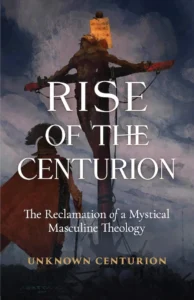 This is a subject so close to my heart. I wrote a book just published by Sophia Institute Press (on the traditional Feast of St. Longinus) titled, Rise of the Centurion: Reclamation of a Mystical Masculine Theology, which explores this central, yet relatively obscure, mystery of our Faith. Rather than betray my publisher by loading up this article with spiritual spoilers without due exploration or appropriate explanation, I decided to structure my sentences in the interrogative form rather than the declarative, appropriate for such a great mystery, while hopefully still serving as an invitation to all those desiring to mystically enter the Sanctuary of the Sacred Heart opened by the centurion-saint.
Were there Biblical prophecies about the Blood and the Water which flowed forth from Christ’s Sacred Side? Is this divine outpouring of Blood and Water the source of the Church’s sacraments? Did such same Blood and Water also conceive the Church? For if the Mystical Body of Christ was born on Pentecost, when was it conceived, and who is its mother? When was the prophecy of Simeon, that Mary’s heart would be pierced, actually fulfilled? Did such a piercing and pouring forth give rise to the Sacred Heart and Divine Mercy devotions? And is the piercing, like the devotions of the Sacred Heart and Divine Mercy in which it is inseparably entwined, reserved for these latter days, when it is most needed?
Why did the centurion rush forth to pierce Jesus’ Heart instead of breaking His legs? What prompted the centurion to defy this direct order and switch allegiances from the most powerful empire on earth to serving as the first soldier of the Kingdom of God? What caused this hardened executioner to publicly proclaim that this lifeless Victim, not the living Caeser, was the Son of God? And if it were not divinely directed, how could a violent man of war have pierced the very Heart of God and lived?
Was the centurion’s vision restored when the Blood and Water from the Side of the Savior poured out upon his head? Did the centurion, at that moment, possibly receive the Body and Blood of Christ? Could the covering of the future centurion-saint’s head with the supernatural substances of Blood and Water have constituted a consecration of a centurion office, as evidenced by all of the subsequent Scriptural centurions defending and extending Christ’s Kingdom? And why did the Church’s greatest asset, St. Paul, in God’s providence, spend his final four-plus years confined in the constant company of centurions and soldiers of Rome?
Was the piercing of the Sacred Victim a type of sacerdotal, sacrificial function? Did the centurion stand in as temporary proxy for the apostles who abandoned or betrayed Jesus. If the vulnerable, embryonic Kingdom of God came into earthly existence on Calvary, in open opposition to the kingdom of the world and its Prince, would it need to have mighty men to defend it? Was St. Longinus present at the Resurrection, the Ascension, or Pentecost? And did he become the first Christian warrior-monk?
Why would all seven centurions in Scripture be positively portrayed when they were despised Pagan occupiers of the Promised Land who persecuted Christians, killing Peter, Paul, and many others? How many times did Jesus speak of one hundred, and to what was He referring? Did these references have anything to do with centurions who were responsible for about one hundred others? Did centurions’ unique skill set which was indispensable to the Roman Empire equip them to serve as soldiers in the Kingdom of God? Did God’s plan of salvation include the selection of centurions to tend, defend, and extend the Kingdom of God?
What do the Church Fathers, Saints, Mystics, and Magisterial Documents say about the piercing of the Heart of Jesus? And how do the bishops and priests who have read this book describe it? I think Sophia wouldn’t mind my revealing answers to that last question below, since it’s on the outside, not the inside of the book. Lastly, what does this great mystery mean and why is it being unveiled at this time? To find out, go to Sophia Institute, your local Catholic bookstore, or online retailers like Amazon.
Emdorsements:
This is a work of deep passion and faith-filled commitment. It provides an extended meditation on the piercing of the Sacred Heart of Jesus by the Roman centurion and of the remarkable redemptive consequences of that violent act. It also traces the roles of the centurions through Scripture and presents them as models for a masculine and militant Catholicism. The Unknown Centurion’s work of ‘speculative theology’ is a rousing and fortifying call for courageous Catholic men to sacrifice and to serve so as to defend their families, their Church, and Christian culture (Fr. Bill Miscamble, C.S.C. Professor Emeritus, History, University of Notre Dame).
I’d like to strongly recommend Rise of the Centurion. While the book is rich throughout, the heart of the work is found in its second section, where the author reflects on the centurion at the Cross and the piercing of the Sacred Heart of Jesus. He invites the reader to contemplate how God, in His providence, used even a Roman soldier to unleash Divine Mercy upon the world. It’s a powerful meditation on redemption, masculine courage, and God’s mysterious plan of salvation. This is a book meant not just to be read but prayed with, especially by men who desire to live their faith with depth, strength, and purpose (Fr. Burke Masters Author, Grand Slam for God; Pastor, St. Isaac Jogues Catholic Church, Hinsdale, IL).
In Rise of the Centurion, the author masterfully revives the robust spiritual heritage of Catholic manhood, drawing from the valor of saints like St. Michael and St. Ignatius. This work calls men to embody Christ’s warrior ethos—fierce in faith, tender in mercy—amid a world that dilutes masculine virtue. Rooted in Scripture, Tradition, and the Magisterium, this book weaves mysticism with discipline, urging a reclamation of paternal authority and sacrificial love. A timely antidote to effeminacy, it inspires Catholic men to rise as centurions of the Church, guarding the sacred with unyielding devotion. Highly recommended for renewal in our faith (Most Reverend James S. Wall Bishop, Diocese of Gallup).


[…] Is the Best Defense of the Faith – Matt D’Antuono at National Catholic RegisterWhy Was The Sacred Heart of Christ Pierced By a Centurion’s Spear? – Catholic Stand MagazineHoly Relic of Christ’s Passion: How to Visit the Column Where […]