

When I was young there was a popular poster that stated “War is not healthy for children and other living things.” These days we call that kind of glib moralizing “virtue signaling.” In the drug addled 60s and 70s, however, glibness often passed for profundity.
Tyranny, too, is unhealthy – for everyone trapped in it or forced to succumb to it.
This brings us to Ukraine.
Just War
The idea of “just war” is credited to St. Augustine, who first listed the criteria for beginning a just war and for fighting a just war. Since that time the criteria for justice in beginning a war and conducting a wear have been refined and formalized by theologians, the Vatican, and regional groups such as the US Council of Catholic Bishops.
The criteria for beginning a war are missing – painfully obviously missing – from the Russian attack on Ukraine. Propagandistic assertions to the contrary, there were no grave public evils in operation in Ukraine; in the words of the US Catholic Bishops’ 1993 document “The Harvest of Justice is Sown in Peace,” there was no “aggression or massive violation of the basic human rights of whole populations.”
Experts in Geopolitics and strategy such as George Friedman, founder of Austin’s independent think tank Geopolitical Futures understand the Russian invasion as being motivated by the desire to restore Russia’s geographical buffer against invasion, a buffer that has been historically important in slowing and delaying invading forces since before Napoleon – effective against both the Corsican armies and Hitler’s Wehrmacht.
Absurd Rationalizations
Vladimir Putin’s own rationalizations include absurdities such as a Nazi component in Ukrainian government (a patent absurdity), a fear that NATO would expand into Ukraine despite multiple diplomatic guarantees to the contrary, and especially to “defend” Russian speakers in Ukraine against repression and oppression. The subtext of Russia’s rationalization includes increasingly overt accusations against the West and the United States as attempting to draw Ukraine away from Russia and make it a part of the West (thereby removing or minimizing it as a geographic buffer between Russia and Europe).
Someone contemplating how a free people might decide to choose their associations based on historical memories of repression against observations of the benefits of political freedom and economic prosperity might come to the conclusion that Mr. Putin’s alarm is based on a perceived unfairness of the West being a happier, healthier, and wealthier place than Russia or those states run along the Russian model . . . but reality does not conform to human ideas of fairness, especially when those ideas are distorted by ideology and envy.
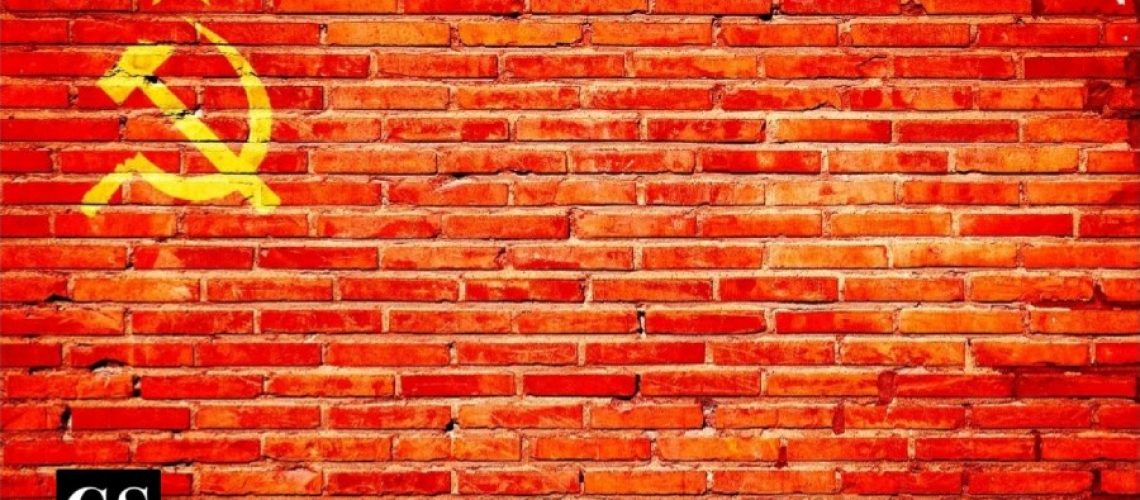
Putin is said to mourn the collapse of the Soviet Union as a catastrophe, not because of the chaos of the dissolution but because of the loss of the Leviathan state concocted by Lenin and others from the fever-dream ideology of Marx and Engel. The post-Soviet history of Ukraine is tangled, tumultuous, and tormented by the specter of the old Soviet system. A struggle between pro-Russian and Pro-Western factions was a part of Ukrainian politics since the 1991 fall of the Berlin Wall. By the presidential election of 2019, however, a Ukrainian nationalist government began to emerge as a stable, centralizing force in their politics and lead the nation toward a longer term alignment with Western Europe.
War Crimes
What we see in Ukraine now is an unbalanced war. Russia is fighting unjustly to impose a puppet government to bring an independent state into servility; Ukraine is fighting a just war to retain its autonomy and freedom.
War crimes and atrocities were being reported against Russian forces from the beginning of the conflict. Amnesty International reports war crimes against prisoners from both sides. The fog of war covers many events, and press coverage in the United States tends to favor Ukraine, but reporting contains significantly more Russian atrocities than Ukrainian. Whether this is true or meaningful will have to be sorted out when the shooting stops, but war is not conducive to civilized behavior, and the longer a war goes on the more temptation soldiers face to act personally and brutally.
In 1983, I attended my first Diocesan Convention as an Episcopalian, and a resolution against war was presented with a focus on various brush war conflicts, especially in Central America. After contentious wrangling in committee and on the floor of the convention, the resolution was edited down to the bare bones. I forget the actual wording, but the essence of it was “War is a Bad Thing and there ought to be less of it.” A substitute resolution stating, essentially, “Peace is a Good Thing and there ought to be more of it” was submitted and voted down. The “War is a bad thing” resolution then went on to fail, pleasing nobody by its blandness or with the ideological divides concealed under the innocuous words. (My observations at Episcopalian diocesan conventions are no small part of my journey to convert to Roman Catholicism, but that is another story.)
The World Suffers
The simple truth is that war is a bad thing and peace is a good thing, but nations and those who run them operate under considerations that tend to obscure or overwhelm simple virtues.
It has been over 82 years since Nazi Germany marched into Poland, having first accomplished aggressive land grabs without starting an all out war. I grew up with a World War II veteran who constantly blamed Neville Chamberlain and other appeasers for the war, believing to his core that had Hitler been opposed early on the war would never have begun. He may have been right; his assertion is the sort of historical counter-factual that is impossible to resolve. I hope that he would not be correct about current events, but I am not fully confident.
In 1939 the unhealthiness of war combined directly with the unhealthiness of tyranny, and the world suffered horribly from both before the tyranny was vanquished, at least from Germany, Japan, and a few other spots. That a large swath of the world then fell under a different tyranny is one of history’s sad and difficult realities. We can take some comfort in 2022 that the world is somewhat – marginally – less subject to tyranny than it was in 1939 or even 1948, but it is a cold and in some places distant comfort.
The people of the world are freer than they were in 1942. Let us pray that in another 80 years, if not vanquished at last, tyranny might be much rarer and much less tolerated.




11 thoughts on “War Is Not Healthy . . . Neither Is Tyranny”
Dr. Vesna Bosanac died yesterday. She was the director of the Vukovar Hospital, in whose basements she treated many and mostly Croatian wounded soldiers. Before Vukovar was conquered by the Serbian Yugoslav Army, up to 700 cannon shells fell on it a day. Doctors and nurses experience the same thing, I pray for them to persevere in their humanitarian work, these are the killed workers of the Vukovar Hospital after the fall. List of employees of the Vukovar War Hospital killed in Ovcara:
Jozo Adžaga (1949) – logistics (chef)
Ilija Asadžanin (1952) – emergency service (driver)
Ivan Bainrauch (1956) – logistics (head of technical service)
Tomislav Bosanac (1941) – logistics (water distillation)
Ivan Buovac (1966) – emergency service (driver)
Dragan Gavrić (1956) – logistics (vehicle maintenance)
Zlatko Jarabek (1956) – logistics (vehicle maintenance)
Đuro Knežić (1937) – logistics (technical service, hospital barber)
Zlatko Krajinović (1969) – emergency service (driver)
Tomislav Mihović (1952) – X-ray department (photo laboratory assistant)
Tomislav Papp (1963) – logistics (supply, energy and storage) Tomo Pravdić (1934) – logistics (technical service)
Stjepan Šarik (1955) – logistics (boiler room and generators)
Đuro Šrenk (1943) – logistics (technical service, plumber)
Zvonko Varenica (1957) – logistics (technical service, locksmith)
Goran Vidoš (1960) – logistics (electrician)
Mate Vlaho (1959) – emergency service (driver) Miroslav Vlaho (1967) – emergency service (driver)
Josip Zeljko (1953) – hospital insurance
Mihajlo Zera (1955) – emergency service (driver)
Employees of the Vukovar War Hospital killed during the attack on the city and after the occupation of the city:
Vlasta Aleksandar (1965) – Department of Physical Medicine (physiotherapist)
Dušica Jeremić (1954) – accounting (administrative lawyer)
Ljubica Kojić (1954) – Shelter “Borovo-Commerce” (cleaner)
Nevenka Matić (1948) – joint service (officer)
Zdenka Miličević (1961) – surgery (nurse)
Ljubica Obradović (1952) – X-ray department (administrator)
Ivan Raguž (1938) – logistics (boilermaker)
Rudolf Terek (1943) – dentistry (senior dentist)
Marica Stanek (1952) – outpatient clinic for school children (nurse)
Blanka Stefanjuk (1961) – surgery (nurse)
Goran Krznarić (1965) – logistics (porter’s lodge) Karlo Crk (1942) – logistics (butcher’s)
Employees of the Vukovar War Hospital who have been captured and are listed as missing:
Ivan Baranjek (1939) – postoperative care, hospital “Borovo-Commerce” (nurse); taken away from “Borovo-Commerce” 19. XI. 1991
Marko Mandić (1953) – surgery (medical technician, emergency department); taken from hospital 19. XI. 1991
Ivan Božak (1958) – porter; taken from hospital 20. XI. 1991
Zvonko Vulić (1971) – logistics (supply, energy and storage); taken from hospital 20. XI. 1991
One of the considerations not mentioned here are the consequences of a “half war” in which the issues are not settled and are simply left to fester until the next outbreak, usually worse than the first. The Congress of Vienna was a valiant, though unsuccessful, attempt at reordering Europe to prevent another Napoleon from causing upheavals and disruptions in the future. That it was largely successful for half a century is remarkable. An example of failure is the allied intervention in 1919 in Russia after the revolution. The allies engaged in half measures that were failures by any definition and finally departed two years later. The result was a Soviet Union and then a Russia that continues to bedevil the world to this day. The moral of all this is simply don’t go to war without the resolve to win and correct the evil responsible for the conflict in the first place.
this sounds like the basis for a nice afternoon’s discussion over coffee and snacks. Thank you for the comment!
Pingback: TVESDAY EDITION – Big Pulpit
A Serbian officer stood above Croatian Dubrovnik in 1991 and said that when we destroy it and conquer it, we will make it even OLDER AND BEAUTIFUL, the Russian officers and Putin have the same thoughts, destroy, burn, kill.
“older and beautiful”….
Sometimes words fail me.
Thank you for your comment.
Actually, Captcrisis, I wouldn’t. An article is significantly more thoughtful than a poster.
There’s only so much one can put on a poster. You must be against posters in general.
You would call this simply more “virtue signaling”.
https://www.catholicnewsagency.com/news/250691/ukrainian-catholic-leader-innocent-children-s-blood-is-on-the-hands-of-the-criminals-who-began-this-war
Mark – I have found The Jungle Grows Back by Robert Kagan to be a short, lucid and powerful discussion of the themes you write about. Thank you for your essay.
Thank you!