
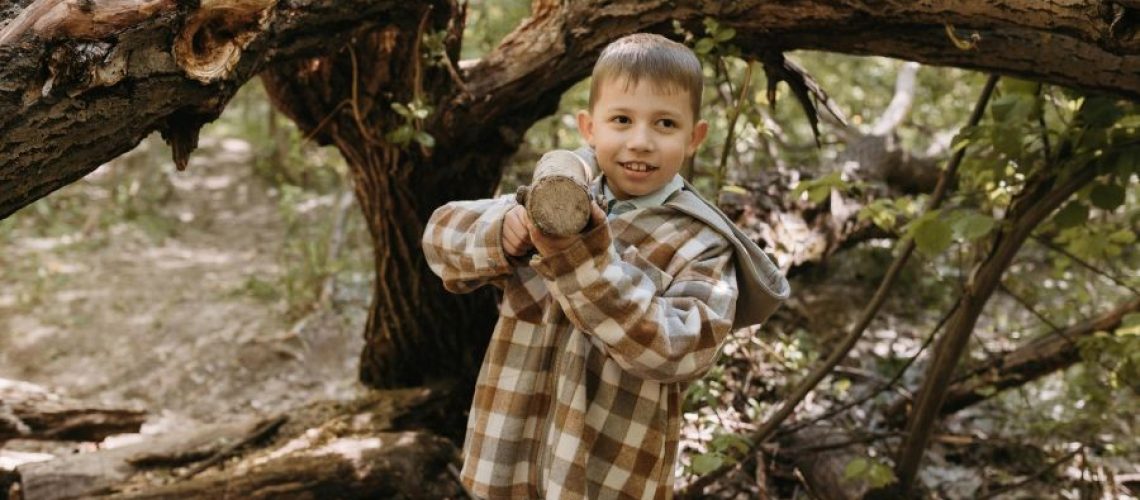
It is 9:30 am on a typical Sunday morning at our parish. A few dozen children, aged kindergarten through middle school, have filtered into the school library for their 80-minute religious education classes. The little ones are boisterous, dusted with telltale powdered sugar from the post-Mass doughnuts in the cafeteria. The 6th through 8th graders in my group blink and yawn, enervated by Saturday-night sleepovers or long sessions with their video games.
This lassitude doesn’t bother me, however, because I know they’ll wake up soon. We begin most of our classes in the same way, with a brief trip down the hall to the gym. When we get there, the majority of the girls sit with jean-clad legs dangling over the edge of the stage, chatting in small groups. Without exception, the boys grab whatever balls they can find and start shooting hoops. They hit the floor regardless of their personal athletic prowess, and they do not stop until they are summoned for opening prayers. After witnessing this phenomenon week after week, this remarkable dichotomy has no power to surprise me.
In his 1967 song “Everybody’s Fancy,” arguably the most straightforward foreshadowing of JPII’s Theology of the Body ever made, Fred Rogers, the Presbyterian minister and children’s television host, intones: “Boys are boys from the beginning,/Girls are girls right from the start.” It does astonish me to think that anyone would deny the existence of essential, brain-based differences between girls and boys, until I consider the vast machinery that has been set in motion to obliterate the consciousness of those differences. No matter how tuned in individual parents may be to the wonderful reality that boys are not girls and vice versa, their common-sense principles will fall under attack as soon as the little ones are enrolled in school—even, these days, most Catholic schools. Let me take a tiny example gleaned from my experience this year.
At the beginning of this school year, the parents of our Catholic grade school were asked to invite friends and family members to purchase items through the popular SchoolStore online fundraising program. One generous relative treated my son to a $50 gift certificate for books available on the site. Together, he and I scanned the list, scouting for books at his reading level and in line with his current interests. However, the pickings were frustratingly slim.
Finally, in desperation, I selected the “Boys and Men” category provided on the site. Disappointingly, the search came up with only fifteen titles, all of which were picture books. Available selections included The Great Whipplethorpe Bug Collection by Ben Benares, described as a loving father-son conversation about “unpacking gender roles.” The book synopsis reads, didactically, “One day Chuck looks at his stay-at-home dad, huddled over his laptop, and asks: “Dad . . . when I grow up, am I going to be as boring as you?” With a little help from his nurturing father, Chuck finds his own source of strength and individuality through creativity, and helps him to discover that “greatness” comes in many forms.” My son could also choose a book telling the story of Nathan Chen, the first Asian American figure skating gold medalist, or a gentle read called Sometimes I Cry.
Out of curiosity, I tried “Girls and Women” in the search bar. I expected to find an uneven distribution of results, but, all the same, the contrast shook me. I counted no less than one hundred sixty-eight titles in the female category. Scrolling through the options, I discovered that feminist moms can put their kids to bed with 321 Awesome! 20 Fearless Women Who Dared to be Different, “a sassy and fun counting board book.” Biographical offerings run the gamut from notable authors (Agatha Christie) to celebrated athletes (Simon Biles), with multiple books chronicling the life of Kamala Harris. Also included is Girls on the Rise, by Amanda Gorman, Joe Biden’s inaugural poet, billed as a “rousing rallying cry with vivid illustrations by Loveis Wise.”
The tendency to celebrate girl power while discreetly burying what JPII might have referred to as the “masculine genius” has clearly infiltrated the classroom as well. As we enter the fourth quarter of the academic year at my son’s school, the students in his grade have studied only two full-length books. One of them, an independently assigned young adult novel, was completed this summer without any subsequent discussion or evaluation. The other, which has involved extensive classwork, was I am Malala, the autobiography of educational activist Malala Yousafzai, who was shot for her public outcry against the Taliban’s suppression of girls’ education. At 17, Yousafzai received the Nobel Peace Prize for her work in promoting worldwide education for girls.
While Malala Yousafzai’s quest for girls’ schooling reveals immense personal grit in the face of terrifying odds, her 2025 memoir Finding My Way reveals at least one grave difficulty in regarding her as a model for Catholic school students. In an October 2025 interview with Fresh Air host Tonya Moseley, Yousafzai discussed her mother’s decision to procure an abortion for a young rape victim in their circle, which Yousafzai characterized as “such a brave step.” While Yousafzai keeps her religious and political views fairly opaque, this page associated with the Malala Fund abortion rights — Stories – Assembly | Malala Fund — Assembly | Malala Fund does share two stories about pro-abortion activism as a response to discrimination against women, something Yousafzai surely could have removed if she had personally opposed it.
Even if these questionable references to abortion had been absent, it is reasonable to inquire, “Why this book and this book only?” The question evokes the old party game, “If you were on a desert island, what five things would you have to have with you?” In the process of equipping Catholic adolescents for the jungle of high school, can we possibly believe that the most important lessons that we want them to internalize are the notions that women are victims and men are best cancelled?
Looking back upon my youthful exposure to literature, I see that things were once very different. During my fourth-grade public school English class, my teacher read aloud to us every word of Jean Craighead George’s My Side of the Mountain, the absorbing survival story of young Sam Gribley, who winters in a hemlock tree in the Catskill Mountains. When I transferred to Catholic school, I was graced by the literary enthusiasm of Dolores Litke, my inspired sixth-grade teacher, who was known in moments of high emotion for blurting out the expression “Golly gee crumb cookies!” Mrs. Litke assigned us The Phantom Tollbooth, whose hero Milo, through the agency of a mysterious package, is summoned from a life of nagging ennui into the rich depths of a quest for knowledge, which ultimately draws forth from him unplumbed reserves of daring and perseverance.
We also tackled The Trumpeter of Krakow, whose central figure, fifteen-year-old refugee Joseph Charnetski, embraces hard work, lives his Catholic faith, and responds with great resourcefulness and fortitude in the face of evil. Another key figure in the book, Elzbietka Kreutz, exemplifies deep loyalty and tenderness in her relationships, which drives her to an act of courage that provides one of the most suspenseful moments of the novel. In high school we read Jane Eyre, but we also read A Separate Peace.
My experience was not unique. During Easter dinner a few weeks ago , my husband and my brother fell into a casual conversation about the books they had read in childhood. My husband mentioned Treasure Island and the Hardy Boys series. My brother enjoyed them too, but he also grew up absorbing virtually all the reading material scattered around the house by two teacher-parents. One of the items he pored over was a Cold War-era tome called EXPERIMENTS WITHOUT EXPLOSIONS by O. M. Olgin, a student textbook jammed with supposedly safe chemistry projects for the home laboratory.
Can you detect any similarity between a boy’s natural bent toward curiosity, adventure, and action and our current educational methodology, with its emphasis on computer-driven exercises supposedly tailored to the abilities of each child? I bet you can’t! Boys need the real thing. This was abundantly clear to me in November, when my Sunday-school students learned the concept of Purgatory using a hammer and nails and a small wooden board. Simply pounding a nail into a board seemed to be a novel experience for most of the students, an observation I found simultaneously delightful and troubling.
The youth of today face daily exposure to a technological world that whittles away their connection to what is true and enduring. This connection is not dependent on intense mystical experiences but is in fact strengthened by very simple actions. In #13 of The Screwtape Letters, C.S. Lewis makes his senior tempter excoriate young Wormwood for letting his “Patient” read a good book and take a walk to an old mill—genuine, simple, real pleasures that have surrounded their human victim with “an asphyxiating cloud” which the demons are temporarily unable to penetrate.
As embodied spirits, we need to pursue the divine and invisible by connecting with visible, physical, vital things. Jesus brushes lightly against this truth in John 3:12, when He chides Nicodemus, “If I told you earthly things and you do not believe, how will you believe if I tell you heavenly things?” We recall that Jesus Himself absorbed virtues amid the sawdust of a carpenter’s shop, getting blisters and calluses, throwing his back into the act of crafting beautiful and practical things.
Rooted in Christ’s example, a handful of Catholic educators have recently recognized the need to reawaken the process of training boys to be men. One notable effort is being made at the College of St. Joseph the Worker in Steubenville, Ohio, which was recently granted provisional recognition by the Cardinal Newman Society as a truly Catholic institution. This assessment appears to be warranted by the school’s orthodox curriculum and faithful atmosphere, bolstered by 100 percent Catholic faculty, but its unique value is not based exclusively on head knowledge alone.
Midway through freshman year, on Trades Choice Day, freshmen select a specific career path (carpentry, plumbing, HVAC or electrical). Yearly tuition is $15,000, but, following their training, students are expected to graduate net-positive, in contrast to the majority of college students today, who leave school hampered with crushing debt.
Perhaps even more important, the college is designed to foster a sacrificial heart, rather than the perpetual immaturity encouraged by the booze-and-sex-saturated climate of many university campuses. Living in proximity to the vibrant spiritual life of Franciscan University, undergrads have access to daily Mass, Confession and Adoration. The college does not provide a meal plan, so students learn to cook their own meals, eating together as a community. St. Joseph’s Facebook page records video of students and faculty working together to rehabilitate a derelict building for undergrad housing. The same virtues which are deliberately cultivated at college are meant to equip these students for life beyond the institution as the lay faithful. While it also accepts female students, the program has been particularly attractive to young men who are seeking a career path that will allow them to marry and support families while impacting the wider community through their faith and labor.
On a recent Facebook post, college sophomore Danny explained why he had elected to follow his particular trade: “I was drawn to plumbing because it’s a beautiful thing to give people water. It may be gross; it may be nasty sometimes, but that’s not that big a deal when you get to see a happy face at the end of the day, ‘cause they actually have water, I mean, um, or you know, they can, flush their toilet. I enjoy bringing essential things to people.”
Meaning no disrespect to the ladies (I am one, of course), it’s time for the powers that be to stop trying to mold boys into vessels of our own twisted imaginations. The same Jesus who healed the blind and lame also knocked over tables and chewed out the Pharisees. Rather than surrendering our young men to the seductive wardship of their video game controllers, let’s offer them noble worlds to conquer. Our whole civilization will be the better for it.


[…] Joe McLaneAmerica’s Young Priests Are Overwhelmingly Conservative – The Catholic HeraldWhat Boys Really Need – Dorothy Osanna at Catholic Stand MagazineFive Saints Who Were Converts – John Mahon […]
[…] Before Us9. Video: Never Forget Pope Francis & His Disastrous Pontificate! – Joe McLane10. What Boys Really Need – Dorothy Osanna at Catholic Stand […]