
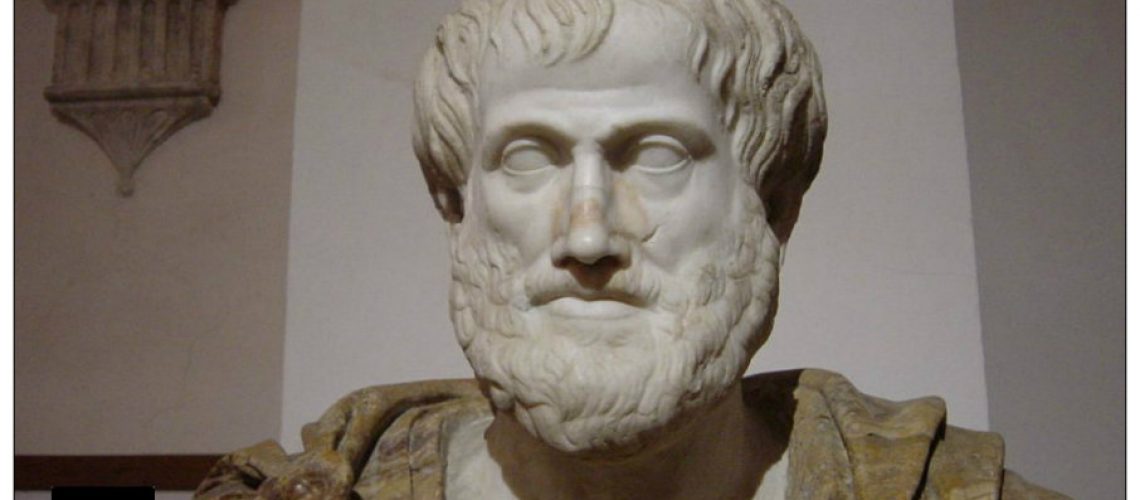
Prudence is one of the four Cardinal Virtues first defined by Plato and refined by Aristotle. The ancient Greeks valued these virtues for secular as well as idealistic reasons. But Catholic teaching says Grace enhances and even perfects these virtues.
In taking a look at prudence, it seems to me that in common usage, prudence has taken on an aura of “Does this thing to be undertaken have a good chance of succeeding?” This is a far cry from how St. Thomas Aquinas’ defines prudence: “right reason in action.”
And if you Google prudence you will find Merriam-Webster says prudence is:
- the ability to govern and discipline oneself by the use of reason;
- sagacity or shrewdness in the management of affairs;
- skill and good judgment in the use of resources.
Prudence Considered As a Christian Virtue
The thing that is missing from the secular definitions is attention to the Good. This is something that was integral to the earlier Greek thought as shown throughout the work of Plato and Aristotle. And it remains so for Christians such as St. Augustine and St. Thomas Aquinas.
My reworded definition would therefore read something like this:
- the ability to govern and discipline oneself toward goodness by the use of reason;
- sagacity or shrewdness in the management of affairs so that they lead to good ends;
- skill and good judgment in the right and proper use of resources.
These are small changes in wording perhaps, but necessary in an age of self-centered self-indulgence. Too often encouragement “to do good” is heard as advocating a course of self-sacrifice, which is anathema in a selfish age.
Doing Well By Doing Good
This course of action is not necessarily sacrificial, at least over the long term. Many of us are acquainted with the phrase “doing well by doing good”.
Benjamin Franklin is credited with coining the phrase ‘doing well by doing good”. According to Michael Robinson, director of Auburn University’s Executive Master of Real Estate Development program, “Franklin, prior to the revolution, had become wealthy, in part, by patenting his inventions and giving access to the public for the public good. In this small Petri dish of the Philadelphia community, Franklin was able to see the connections between his growing wealth, the prosperity and well-being of his city, and the donations of his intellectual capital to the community.”
In short, Benjamin Franklin did well by doing good. He was perceptive and wise enough to see how it worked, and point out this truth to others.
The point is that apart from being a virtue on its own, prudence can be materially rewarding. The ancient Greeks recognized prudence as a virtue because it provided secular benefits for both those who practice it and the communities in which it is practiced. Discerning these benefits is relatively easily. Wealth, status, reputation, influence, community harmony, constructive culture, and prosperity often come about through the practice of prudence.
What Good Does Prudence Do The Soul?
But these are all essentially secular examples and secular benefits. What of the soul?
When we add in the modifications to the dictionary definitions as shown above, we can see that they lead us away from completely self-centered prudence. They lead toward the good that Christianity values.
As Catholics we believe that there is but one source of goodness. As such, prudence with goodness as its object must also be blessed by God. Godly prudence leads us not merely to doing well, but closer to God.
Practicing prudence requires thoughtful examination of circumstances and thinking about where different choices might lead. Christian prudence requires us to extend the consideration to which choice or choices lead us closer to God, closer to walking in God’s will.
In my own life, this has involved periodically stopping to examine (and re-examine) where my choices are leading me. I grew up in a family where several different years featured a certain amount of financial insecurity. This left me with a propensity to be both frugal and careful about making financial plans and decisions.
Planning good stewardship with the Church and different charities should be a natural extension of frugality and good financial planning. But as it turns out, this takes me some extra effort and discipline.
In a similar way, ordinary prudence would lead someone away from walking through rough areas of town alone at night. But Godly prudence echoes the sentence from the Act of Contrition. We promise to avoid near occasions of sin. We should also be prudent in our conversations, our web browsing, our companions, and our daily activities.
The Virtue That Leads The Rest
These examples demonstrate why Prudence has been considered the virtue that leads and drives the rest. As the “Catechism of the Catholic Church” says, “It is called auriga virtutum (the charioteer of the virtues); it guides the other virtues by setting rule and measure. It is prudence that immediately guides the judgment of conscience.” And it is prudence that requires us to consider where our actions – including our thoughts and wishes – will lead.
It is not enough to think being careful is the equivalent of prudence; our caution must be formed with an eye to God. Pagan prudence looks to the benefit of the practitioner first, his family or clan second, his village or town third, his country next, and so on. Christian prudence is formed with an eye to conformity God’s will.


[…] have written in the past about prudence. This month I would like to examine the virtue of […]
Nice explanation of the virtue, Mark. I particularly liked the way you distinguished its current day secular version with our traditional concept (which, as you note, has its origin with the ancient Greek pagans). What does that say about our age?!
Thank you for your kind words.
My best guess as to what it says about our age is that our modern pagan elements are significantly less sophisticated than our Greek, Roman, and non-Western forebears.
Mark
[…] Thoughts on the Virtue of Prudence – Mark Belanger at Catholic Stand The Meaning of Contemplation – David Torkington at […]