
Dear friends, brothers and sisters in nation-building,
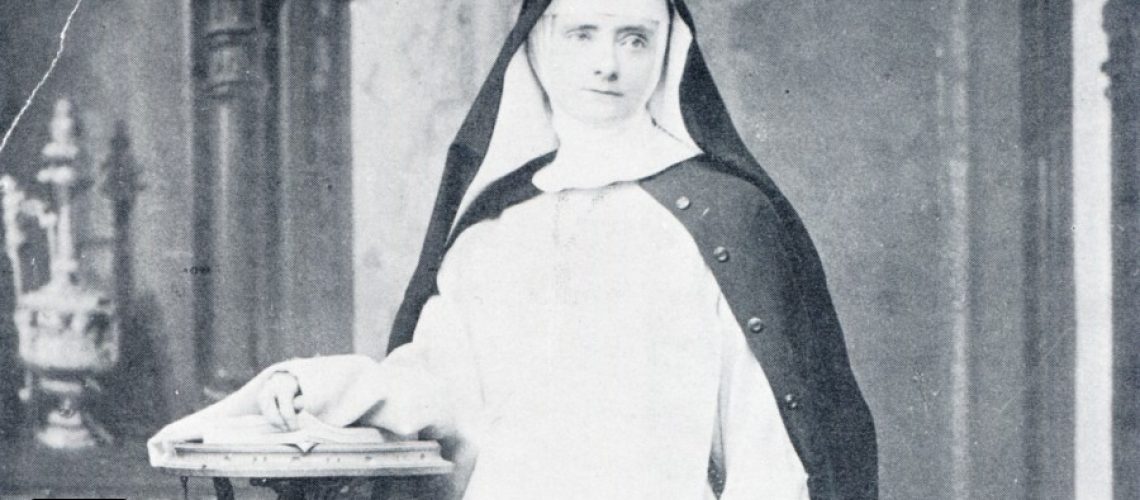
In the heart of the Italian Renaissance—an era celebrated for its earthly artists and political machinations—a different kind of masterpiece was being crafted within the silent walls of a convent in Prato. Her name was Alessandra de’ Ricci, born into Florentine nobility on April 23, 1522. Yet the world would come to know her as St. Catherine de’ Ricci: a mystic who touched heaven, a leader who governed with uncanny wisdom, and a hidden architect of spiritual reform whose life offers a startlingly relevant model for integrity in an age of decay.
Her story begins not with a grand vision, but with profound loss. After her mother’s death, the young Alessandra, just six years old, was sent to the Monticelli convent under the care of her aunt. Here, amidst the structured silence, a divine romance was kindled. By fourteen, her resolve was unshakable; she defied her family’s plans for an advantageous marriage and, in 1535, entered the strict Dominican convent of San Vincenzo in Prato. Taking the name Catherine, she embraced a life of radical poverty, prayer, and obedience—a world away from the opulent palazzos of her birth.
Catherine’s interior life was marked by extraordinary mystical phenomena. For twelve unbroken years, from 1542 to 1554, a weekly drama of compassion unfolded. Every Thursday at noon, she would enter a deep trance, physically re-living the Passion of Christ. Witnesses, including skeptical Church investigators, attested to seeing the stigmata—the wounds of Christ—manifest on her body as she endured hours of agonizing suffering until Friday at 4 p.m. This was not a private devotion but a public witness, a startling testament to her total union with divine love.
On Easter Sunday in 1542, in the midst of these ecstasies, she received the sign of her spiritual marriage: a mystical ring, invisible to others but perpetually felt by her, a constant reminder that her authority flowed from a covenant of love, not human ambition. Perhaps most remarkably, her spirit seemed untethered from space. While her body remained in the cloister at Prato, her dear friend, the great reformer St. Philip Neri in Rome, testified under oath that she would visit him in his cell, offering counsel and consolation. This miracle of bilocation symbolizes her boundless capacity to connect, guide, and inspire beyond physical barriers. It is a potent metaphor for leadership that transcends its immediate confines.
In 1547, at just twenty-five years old, Catherine was elected Perpetual Prioress, a role she would hold with distinction for thirty-six years. Here her story shifts from the mystical to the immensely practical—and where her most powerful lessons for our time reside. She was, by all accounts, an administrative genius, “extremely effective and efficient,” managing the convent’s affairs, reforming its discipline, and corresponding with a network that included three future Popes: Marcellus II, Clement VIII, and Leo XI.
Her leadership was forged in crisis. When the convent’s vital grain supply spoiled, threatening the community with starvation, she did not merely pray—she acted. Walking barefoot into the granary, she prayed and intervened, and the grain was restored. When fire threatened to engulf their home, she made the sign of the cross and the flames were extinguished. These miracles of practical salvation reveal a core truth: true spirituality serves the common good. It protects the community’s bread and safety.
Her governance blended unshakeable integrity with tender mercy. She discerned spiritual deception in a postulant and guided her to truth with prayer, not punishment. She learned of a condemned thief and, while not disputing his earthly sentence, prayed fervently for his soul, securing his peaceful conversion. Here was justice tempered with profound humanity—a leader who saw the whole person, capable of both error and redemption.
Catherine’s relevance for today, especially for nations grappling with systemic corruption such as Nigeria, is not merely symbolic; it is operational. She presents a model of incorruptible leadership, a term made literal when her body was found incorrupt upon exhumation. Her life argues that integrity must be woven into the very fabric of character until it becomes an unassailable reality.
Her principles offer a direct challenge to failed governance:
(i) Integrated Character over Performance:
Catherine’s authority sprang from a wholeness of life. She cared for the sick with her own hands, embodying a humility that served rather than a status that demanded. For modern administrations, this means leaders must be subject to the same systems they oversee, with transparency in assets and conduct being non-negotiable.
(ii) Consultative Wisdom over Autocratic Rule:
Her cell became a nerve center for wise counsel, sought by princes and paupers alike. She listened before she directed. Applied to our tiers of government, this mandates institutionalized citizen feedback as the bedrock of policy at local, state, and federal levels.
(iii) Practical Mercy over Rigid Bureaucracy:
Her intervention for the condemned thief shows that systems must have a heart. A merit-based civil service, crucial for ending patronage, must be paired with a justice system focused on rehabilitation and the dignity of every soul.
(iv) Stewardship over Exploitation:
The miracle of the grain is a lesson in resource management. When public funds are treated as a communal grain store to be protected and multiplied for all—rather than plundered for private gain—a nation flourishes.
St. Catherine de’ Ricci’s virtuous prayers:
(i) For the Grace of Integrated Character:
“O St. Catherine, mystic and faithful administrator, you whose inner union with God forged an incorruptible life, pray for us. Obtain for our leaders and for us the grace to be whole, where private virtue fuels public trust. Help us build institutions where integrity is the only currency that holds value. Amen.”
(ii) For the Grace of Fortitude and Compassion:
“Dear St. Catherine, you who bore great illness and the wounds of Christ with patient joy, embrace all who suffer in body or spirit. Teach us to see in our trials a share in the Passion, and to respond to the pain of others with your swift, practical charity. You who saved your community from hunger and fire, be our patron in times of crisis. Amen.”
(iii) For the Grace of Discerning Leadership:
“Wise Prioress, who guided saints and sinners with equal prudence, enlighten those in authority. Grant them the discernment to see truth beyond deception, the courage to choose the common good, and the humility to seek counsel. May they, like you, lead from a place of prayerful service, not selfish power. Amen.”
Final Words
St. Catherine de’ Ricci spent her life within the walls of a convent, yet her influence shaped the world beyond. She teaches us that the most powerful reforms begin not in grand halls, but in the inner sanctum of a soul resolved to love God utterly and serve others practically. In an age obsessed with visibility, she is a patron of hidden integrity. In an era of broken systems, she is a model of the incorruptible steward.
Her legacy is a call to sacred pragmatism—a challenge to every leader, every community member, and every person of faith: to ground the highest spiritual realities in the most practical acts of care; to administer resources with scrupulous honesty as if tending holy grain; to meet failure with mercy and deception with discerning truth; and to lead, always, from one’s knees.
She proves that a life of profound prayer does not retreat from the world; it engages it with a clearer, sharper, and more compassionate vision. As we navigate the complexities of our own times—our nations yearning for justice and our institutions in need of renewal—may we draw from her virtuous well.
May we have her courage to choose conviction over convenience, her wisdom to blend contemplation with action, and her unwavering faith that even now, love can restore what is spoiled and extinguish what threatens to consume.
St. Catherine de’ Ricci, mystic, leader, and protector of the common good, pray for our nation, pray for us, and pray for me. Amen.

