

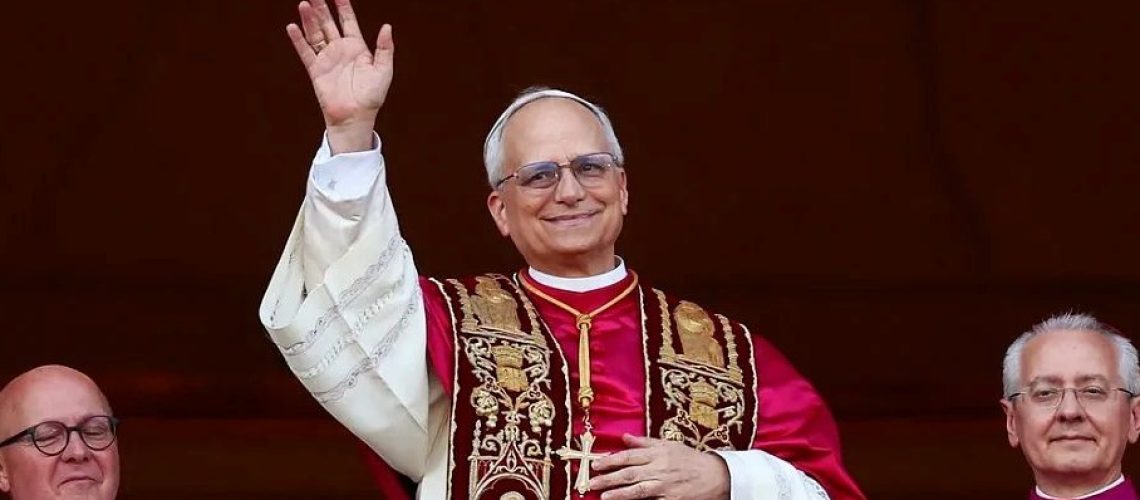
Who wants to be “Pope for a Day”? I recall hearing something to the effect that, “There’s no shortage of people who want to be pope,” from Catholic apologist John Martignoni, referring to people who would like to take a cafeteria approach to Catholicism. They choose to accept the teachings of the Church that they like, but want to ignore what challenges them. There’s still no shortage of Catholics who want to be pope, or at least pope for a day.
Agree or Disagree
It doesn’t seem to matter whether the Pope-for-a-Day candidates are “conservative” or “progressive” or whatever other labels they wish to assume. Many people have opinions on what the pope is doing and saying, regardless of what they actually know about the issue he’s addressing. Some of these opinions are in agreement with the pontiff, and some are not. This is not to say that any or all of us would agree with the pope on everything, nor should we. Regardless of where someone stands on an issue, with the proliferation of social media anyone can broadcast any opinion, however well-formed or not, instantly. It wasn’t always like this.
Not So Long Ago
Most people in developed countries currently have access to the internet and all the information it spews out. Compare and contrast that with the information available to the average Catholic, especially in more remote areas, during the Middle Ages through the early 19th century. Many of them probably weren’t even aware of who the pope was at times, much less what he was writing and saying. Now, whatever the pope does or says, whether he’s talking about baseball or breviaries, is broadcast globally, and much of this in real time.
Caveat Lector
This glut of information about what the pope is doing and saying, where’s he’s saying it, and anything else that someone finds interesting presents a plethora of things to ponder. That’s an issue in and of itself. How much of what’s being reported will actually matter or make a difference in a good way for Catholic laity on their path to sanctity?
On top of this, some of what gets reported may be straight facts and information, but some will have a definite spin on it. As is the case with information we find on the web in general, some may be considered “misinformation,” and may actually be misleading. Consider, as well, how “clickbait” is used to drive traffic to websites. Readers of accounts of what the pope is doing and saying should beware.
Spiritual Warfare
Beyond being critical consumers of reports on the pope’s activities, we as Catholics need to ramp up our spiritual awareness. Consider what effect the consumption of any media, Catholic or otherwise, is having on the state of your heart and soul. After you have read and reposted a piece on the pope or the Church, where’s your heart? Have you experienced an increase in faith, hope and love while you’ve gone to the keyboard and shared your agitation with others?
St. Ignatius of Loyola, in his rules for discernment, tells us that spiritual desolation consists of a heaviness, with a “movement to things low and earthly, the unquiet of different agitations and temptations, moving to want of confidence, without hope, without love.” If we’re trying to stay in the state of grace and live a life of virtue, these movements of the heart likely aren’t coming from God.
In fact, when we’re being drawn to look at others, with a critical spirit, that’s probably the enemy of human nature leading us away from the good, the true and the beautiful. The devil–diabolos–the accuser and divider–wants to keep everyone worked up and create even more disunity than already exists.
The Knights of Columbus recently issued a statement exhorting members to work for healing and unity in light of current events and disagreements. Good, orthodox priests have been addressing current tensions and concerns in podcasts and blog posts, as have others with credible backgrounds and experience. So, just what should the role of the faithful be in all of this?
Change You
Know your faith so you can better understand how what anyone in Church hierarchy is doing or saying stacks up with two millennia of Church teaching. Even if you read and can confirm that something said or done seems in direct contradiction with what the Church has taught, consider realistically how much impact anything you say or do, outside of prayer, will actually have on what the pope or anyone else in the Vatican is doing.
Focus on praying for the pope and those advising him; pray for Holy Mother Church. How we react to others, including the pope, says more about us than about the others. Take those reactions you’re experiencing to your daily mental prayer and ask the Lord what He’s trying to show you and how He’d like you to change. Face it. The only person we can change, and that, only with a great deal of effort and faithful response to God’s grace, is ourself. All these other goings-ons can only distract us from the real work we must do in the remaining time we’re here.
Build Virtues
When we’re busy worrying about what others are doing, including the pope, we’re taking ourselves outside the sacrament of the present moment. We’re probably not paying attention to what God’s asking of us in our own spiritual lives. Growing in virtue is hard work. The devil knows that. He knows what distractions most easily attract each of us, so he can help us find and focus on them rather than attending to the difficult job of growing in our own holiness.
Thus, the devil tells us to, “look over here,” at pope news for example, and ignore that bad habit we need to break. You know what I’m talking about—most of us have one or more sinful habits we continually take to confession. We’ll continue to take them to confession as long as we focus on what others are doing instead of what we, with God’s grace, need to do. A regular confessor or spiritual director can help identify ways to overcome these habits. But are we ready to let the pope be pope every day, and let God help us each become the man or woman He created us to be?
When someone is occupied with his own faults, he does not see those of his neighbor (Abba Moses, The Word in the Desert, Douglas Burton Christie).



1 thought on “Pope for a Day”
Know your faith so you can better understand how what anyone in Church hierarchy is doing or saying stacks up with two millennia of Church teaching. Even if you read and can confirm that something said or done seems in direct contradiction with what the Church has taught, consider realistically how much impact anything you say or do, outside of prayer, will actually have on what the pope or anyone else in the Vatican is doing.
https://github.com/raxskle