
The End of the French Bourbon Monarchy
The last king of the French Bourbon monarchy, Louis XVI, was writing in September 1789 to his loyal bishop after only the first four months of the French Revolution, which ultimately lasted ten years, six months, and four days — the revolution that would eventually cost him his life:
Monseigneur, Bishop of Tréguier, you know the troubles that are desolating my kingdom… So come to my aid, come to the assistance of the State by your exhortations and by your prayers. I invite you to do so, and I count on your zeal and your obedience. On this, I pray to the Lord that He will help you, Monseigneur, in His holy guard.
As we know today, it was too late to save the kingdom by a single prayer from the new ideological winds, social earthquakes, and revolutionary fire.
The divine instinct behind this royal plea and its hope had been announced more than two hundred years earlier through the devotion to the Sacred Heart. During the first hundred years, this royal hope was confirmed by the Just King Louis XIII, his wife Anne of Austria, and their son, Louis XIV.
But in 1689 — one hundred years earlier — King Louis XIV refused the final request of Marguerite-Marie Alacoque, transmitted through his confessor Father François de la Chaise, repeating the words of the Savior:
Make it known to the eldest son of My Sacred Heart that, as his temporal birth was obtained by devotion to the merits of My Holy Childhood, so he will obtain his birth to eternal glory by the consecration he will make of himself to My Adorable Heart… I want My Heart to reign in his palace, to be painted on his standards and engraved on his arms, to make him victorious over all his enemies and over all the enemies of the Holy Church.
Research in the 20th Century by Catholic Historians
The French professor Lucien Ceyssens, OFM (1902–2001), devoted his life to clarifying the spiritual conflict of Jansenism within the Catholic Church from the 16th to the 18th centuries, particularly in France. His work, including extensive Vatican research, was widely recognized.
Jean Orcibal, author of a major 1989 study on Cornelius Jansenius, dedicated his book to Ceyssens and wrote in 1958:
Not only did he provide indispensable working tools, but the scope of his work makes him a master.
Ceyssens and Professor J. A. Tans published Autour de l’Unigenitus (1987), analyzing the preparation of the bull Unigenitus, issued by Pope Clement XI to condemn Pasquier Quesnel’s book and its 101 alleged errors.
This bull was prepared largely to satisfy King Louis XIV’s political desire to eliminate Jansenism. The pope misunderstood the theological consequences and presented the bull in a purely political manner, contrary to French Gallican traditions.
Albert Le Roy wrote in 1892:
What an amphibious monster! It was like marrying the Grand Turk to the Republic of Venice — papal infallibility with maxims from 1682.
The bull had a demoralizing effect on France. The upper classes and clergy became absorbed in abstract theological disputes while the material misery of the population worsened.
The Virgin Mary and Post-Revolutionary France
The poverty of the French peasantry resulted from Louis XIV’s wars, unequal taxation, and lack of social support.
After the Revolution, France received Marian apparitions:
– Catherine Labouré (1830)
– La Salette (1846)
– Lourdes (1858)
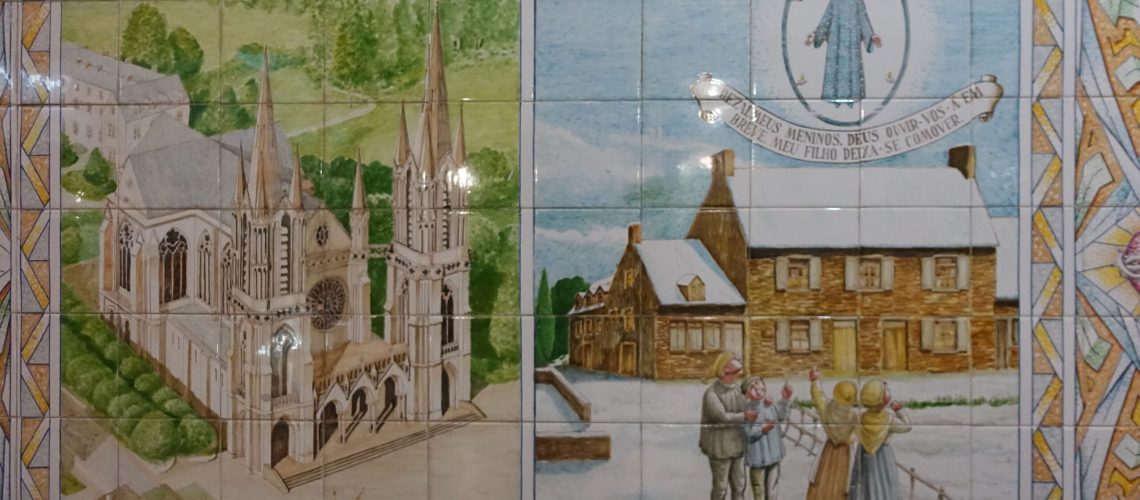
After the Franco-Prussian defeat of 1870, France turned publicly to the Sacred Heart. The apparition of Our Lady at Pontmain brought the message:
“But pray, my children. God will hear you in time. My Son allows Himself to be touched.”
From Saint Augustine to the Council of Trent
Augustine of Hippo opposed Pelagius and defended original sin and divine grace.
The Council of Trent reaffirmed free will without defining its precise relationship to grace.
Jansenius of Ypres
Cornelius Jansenius (1585–1638) authored Augustinus, published in 1641.
Opposed by the Jesuits and supported by Cardinal Richelieu, it provoked controversy. In 1653, Pope Innocent X condemned five propositions in the bull Cum occasione.
The Future of France
More than 300 years later, historians now recognize two grave errors of Louis XIV:
-
Forced religious uniformity
-
Revocation of the Edict of Nantes
The French Revolution ultimately destroyed both monarchy and Church unity.
Modern France has repeated the error of seeking “strong government” while weakening spiritual foundations. Even the presidency of Emmanuel Macron reflects this tension.
Yet this is no reason to doubt the future of Catholicism in France. History shows that divine mercy intervenes when political power fails.


+
pax
Notice to the readers : this article is a very reduced form of the original article published on Research Gate,
https://www.researchgate.net/publication/402173610_Papal_bulls_against_Jansenism_and_the_disorder_of_modern_France
[…] MagazineA.I. is Not the End of Education – Stacy A. Trasancos, Ph.D., at God & ElementsPapal Bulls Against Jansenism & the Disorder of Modern France – Dr. Edouard Belaga at CSMWhere Peter Is? Where Francis Was? Schismatic Question – Fr. […]