

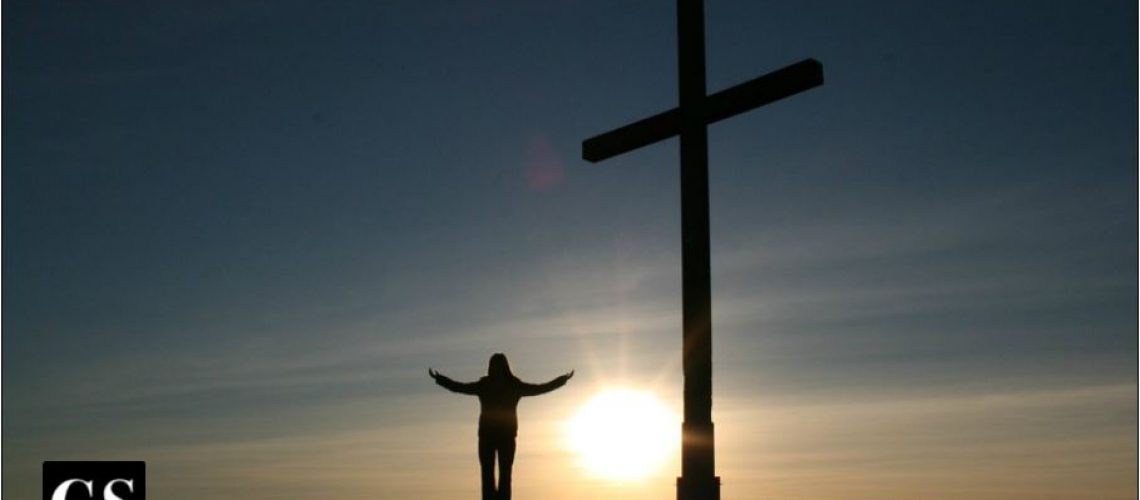
The recent feast (Jan. 25) of The Conversion of Paul (Acts 9:1-19) is a transcendent reminder that our conversion toward Christ often has two parts. It consists of a transformation involving where we think we are going and also how we think we are getting there.
To put this another way, our conversion story is about both our destination and our vehicle for reaching that destination. For each of us, that destination is our personal Damascus. How each of us pretends to reach our Damascus is our personal horse.
Our Damascus: A Destination Turned Mission
Saul saw Damascus as the destination of his plans to arrest and help eradicate Christians from his society. Ultimately, Damascus represented his purpose or mission in the world around him. He was a self-perceived enforcer, eradicator, and purifier. In fact, Acts 1:9 tells us Saul was spewing murderous threats against these Christians.
We see, therefore, that our perceived destination and purpose grows through present actions and words of intent into something far greater than merely a place we are supposed to reach. For Saul, and often each of us, our perceived destination or purpose becomes our very mission in life, even the reason for our existence. That purpose may be defined by a given status or role (doctor, teacher, union leader, etc.) or some generalized service (healing, teaching, leading) that we are called to perform. Like Saul, we may boast of how great we will be doing some occupation or task, almost willing the future into existence by our own presumptions and swagger.
We may or may not be accurate, however, in how we perceive our personal Damascus. This is so because, although Jesus is perfect, we are not. We may be blinded by personal biases, traumas, preconceptions, or experiences.
Some of us may fancy ourselves successful medical doctors, lawyers, business or social leaders, or life changing influencers. And some may label their Damascus as an accomplishment, a role, or a service to others. Regardless of what we see as our own Damascus, we may come to see it as our predestined purpose or mission, immune to obstruction or frustration from others or life turns. In a sense, Saul’s Damascus came to no longer be a place or destination. Rather, it may have become a personification of his very identity.
Our Horse: A Vehicle Toward Our Mission
Paul’s horse represented his vehicle for reaching his perceived destination. It was the way he was going to get there. Reaching our purpose is a process in itself. Most often, we will need some instruments or tools to get us there. Those tools could be people, situations, or methods of progress that will ultimately help us achieve what we think we are supposed to achieve.
But all too often, we become so fixated, so obsessed with our goal, our destination, that we overlook the nature or quality of the way we reach that goal. “The end justifies the means” they say, and so it goes.
In a sense, our Damascus can become so important to us that we take our horse for granted. The horse becomes nothing more than a way to that means, and is essentially justified in any form to that destination.
It is easy to see how such an approach can lead to losing our way and sin. My essentially good goal of becoming a supervisor so I can help my co-workers reach their potential becomes so overriding that any means I use to become supervisor is justified. If it means spreading gossip to get my competitor for that position out of the running, so be it.
So while it may seem far more convenient to make our destination and the means to that goal a package deal, doing so may often cause us to overlook the nature of those means. This is another example of why what may seem more convenient is not necessarily the most moral or spiritually beneficial way to go. From a spiritual perspective, we are better off keeping our Damascus and our horse separate entities to be individually evaluated.
The Necessary and Essential Wakeup Call
Saul of Tarsus was on his high horse heading toward his Damascus. He saw the extermination of Christians as his mission and purpose. An educated man with many gifts, Saul had essentially placed all of this learning and skills at the service of this almighty purpose turned mission. This mission, and nothing else, mattered. That destination, as represented by Damascus, became so sacred to him that it became irrefutable and impossible to question. Saul’s horse was a means to that purpose and nothing more, so much so that it was likewise irrefutably part of that goal.
We know from scripture, tradition, and the lives of the saints that God often chooses the most unlikely people and means to achieve His purpose. Saul was no exception. Saul was a known and sworn enemy and hater of Christians. He helped imprison them and even murdered them. He set out to fulfill his obsession of wiping them out using his horse as the means to that end. However, God had other plans.
Saul recalled that Christ confronted him at noon on that fateful day, and knocked him off his horse in a flash of light. It was indeed Saul’s high noon, for it was the confrontation that would decide the rest of his life and reveal his true purpose and calling in the eyes of God.
Like Saul, many of us are prone to ride our high horses toward the missions of our making. We aspire to our Damascus without considering whether it is the Will of God, much less of God. Perhaps it is, yet we may have twisted and warped it to our liking. Maybe it is truly God’s plan for us, but the means we have chosen to attain it, our high horse, is not of God or God’s Will. Even if our Damascus and the horse we use to reach that destination are of God, and God’s Will, are we traveling to it fully embracing the need to always wrap our horse, and the Damascus that our horse is helping us reach, in God’s Will.
The Lessons of That Fall
All of us need to be knocked off our high horse. We need the wake-up call of Christ’s tough, yet gentle, love. Like Job or Gideon, we need God to show us that we can do nothing that truly matters without Him.
As noble and profound as we may build up our Damascus to be, it is an empty mirage without God. As efficient and reliable as our high horse to that Damascus may seem, it is merely a path to nowhere if that Damascus is not of God. We need to place our Damascus, and the horse we plan on using to reach that destination, in the context and hands of God. We need to stop the pretense and trap of seeing that Damascus and that horse as ours.
The lesson of Saul turned Paul is that God is not concerned with our past, but only with our future. It is that only Christ can remove the blindness of this world that will help us to truly see our path to God. It is that we all need to be knocked off the high horses of our making on the path to the Damascus of our choosing.
Saul’s conversion was more than the substitution of one letter turning Saul into Paul. However, each of us needs to undergo such a conversion involving changing one letter. When God loves us enough to knock us off our high horse and our Damascus, He will help us to see that what is all about “me” must become all about “He.”


7 thoughts on “Our Conversion Begins with Our Damascus and Our Horse”
Pingback: French Monastery Survives War and Famine After 885 Years, the Basilica of St. Ambrose in Milan, and More Great Links! – Catholic Mass Online Search
Pingback: French Monastery Survives War and Famine After 885 Years, the Basilica of St. Ambrose in Milan, and More Great Links! - JP2 Catholic Radio
Pingback: SATVRDAY AFTERNOON EDITION – Big Pulpit
Oh, this is just so rooted in how we live our lives today, and how our spiritual development unfolds from the successes and failures of our career progress. Let’s help circulate this article widely!
Thank you John for your kind and thoughful comments and input. I agree that it is rooted in what is going on today. We have so much spiritual noise all around us that we cannot hear the voice of God leading us back home. I am glad you liked the piece.
I wanted to cut and paste a phrase that was most meaningful to me but soon realized it was impossible. I would’ve had to cut and paste your entire article!
I’ve tried so hard in my life, just never fully succeeded. Probably riding the wrong horse and heading for an outcome not of God’s will!
I will save this somewhere where I can frequently return to it. Thank you!
Dear Ida: You do not know how much it means to me that a reader will take the time to comment on any of my pieces. You are a gift that I cannot repay by your input. Thank you so much for this gift of your thoughts and feelings regarding this piece. May God grant each of us the path to the Damascus we were meant to fulfill riding the horse we were meant to ride. God Bless !