

As other CS writers have reminded us, here we are in Lent, once again.
When I was young, giving up Cokes for Lent was the go-to discipline for kids. But in the part of the country I was living in, “Coke” was a generic term for soda of any flavor. So it was non-brand-preferential – it was soft drink inclusive.
By the time I was in high school, however, the discipline changed. Instead of just giving something up, we were told one ought to take something on for Lent as well. That was definitely a more challenging discipline.
I don’t recall this being received with much enthusiasm by the kids in our parish youth group. I do have a vague memory of an impulse in that direction, but I have no clear memory of actually adding anything for Lent when I was a teen.
When I left home for college, observing Lent was another thing I left behind for several years. As it happened, the first Lent after I returned to church was a time of special growth and depth for my home parish. It was kicked off by a weeklong series of presentations by two monks, and was sustained by Sunday and Wednesday evening programs of study and devotions.
That year culminated in a dense schedule of Holy Week services and activities. That Easter morning was one of the most vividly moving and enlivening services I ever attended.
”You get out of it what you put into it” may be a cliché, but experience, personal reports, and common sense inform us it is also a truism. There is a reason why the two greatest feasts in the church calendar are preceded by lengthy periods of preparation, Lent and Advent. Both occasions deserve our anticipation and preparation.
Anticipation
“Anticipation” is the title of a 1971 song by Carly Simon that later became the soundtrack for an advertisement for ketchup. On the surface, neither makes a promising vehicle for thinking about Lent. But on reflection there is more than what the surface shows.
The song is about romantic passion in the offing while the ad is about hunger and waiting to taste food. Both arise from deep, primal human appetites that we are all familiar with – both in the abstract and from direct experience.
Waiting for our beloved to emerge from the airport disembarkation point, or to drive into sight captures the essence of the song. And smelling food on the grill in the crisp spring air reminds us of the pleasant pangs of a good meal in the offing. So while anticipation is not identical to hunger, it is related.
It is not by accident that our penitential seasons of anticipation feature fasting. Actual hunger is a physical reminder of the spiritual hunger that is the primary feature of the unredeemed, in history or in our present times. Focusing on that spiritual hunger during Lent or Advent is part of what prepares us for a deeper and more enlivening experience of Easter or Christmas.
Preparation
“Familiarity breeds contempt” is another old saw, and this is often true as well. But in ordinary life, familiarity may often dull delight and blunt appreciation, creating apathy and neglect instead of contempt. Too often, this is what happens during Lent.
As well as encouraging anticipation, however, we can also prepare for Easter by reminding and re-immersing ourselves in the enormity of the coming feast.
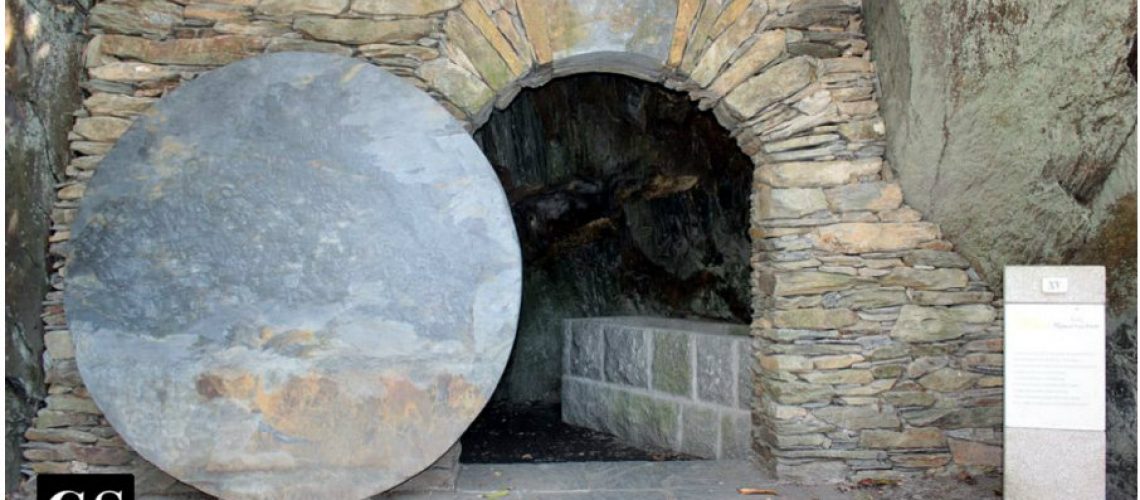
I have sometimes imagined what Hollywood might have done with the crucifixion and resurrection were it not constrained by the Gospels. I can easily visualize a lurid movie poster showing the risen Lord bursting out of the tomb bristling with weaponry. And I can see the slogan “This time they crucified the wrong Messiah” emblazoned over the shattered rocks of the tomb. (Hollywood does not always seek to rise above the worst impulses of humanity.)
But, in fact, the very opposite happened. Some historians suggest that Judas and even some of the other apostles wanted Jesus to become a martial Messiah. They wanted Him to command legions angels to put things right on Earth. But that is not what Jesus came to accomplish. He did not come to remake the social structures of His time, but to remake and reform human hearts.
Remade And Reformed
The effects of that remaking and reformation are evident over the centuries since the Resurrection. The homebound tyranny of the Roman system of Paterfamilias is long gone, and its successors of feudalism, monarchies, and related power structures have faded or are on their way out. While Western civilization comes in for a lot of criticism, much of the criticism is based not on that was extant before Christianity but from Christian ideals that are as yet unrealized.
These things have happened not because Jesus preached a need for new social structures, but the need for reformed and remade hearts. As it says in Proverbs 4:26, “Survey the path for your feet, and all your ways will be sure.” (This is sometimes rendered as “If the feet are put right, the rest will follow.”)
One of the great heresies of the 20th century was the Marxist belief that policy could change human nature. Sadly, some politicians still seem to think like Marxists. But this is a kind of political Lamarckism.
(Jean-Baptiste Lamark was a French naturalist who believed in a now long-discredited form of evolution in which the actions of an organism created the biological changes of evolution. The classic example of this erroneous thinking is that giraffes grew longer necks by straining to reach higher vegetation. This straining somehow led to giraffes with longer necks being born.)
Hearts, Minds, And Souls
Christ did not leave us a template for better societies. However, the changes Christianity and the Holy Spirit have made in human hearts, minds, and souls have led to a better world than that which existed in the time of Christ. It is far from perfect, of course, but it is better. And it could become even better.
These changes in ourselves can happen at any time through our lives. Indeed, we can hope that they begin early and never cease. But especially during Lent and Advent, we have a chance to make changes to ourselves. These change comes about as part of our preparations for the great feasts of the Resurrection and the Nativity.
This wisdom has not been lost on the rest of the world. Mahatma Gandhi once said that “As human beings, our greatness lies not so much in being able to remake the world – that is the myth of the atomic age – as in being able to remake ourselves.”
But we cannot do it on our own. We need Grace, the aid of the Holy Spirit, prayers, study, and the support of our Christian community. And let’s not overlook the benefits of fasting.
Prayer
Father in Heaven, help us to live lives of anticipation and preparation not only during Lent and Advent, but throughout the year. Form us through prayer and worship and study into people who change the world not by struggle and strife, but by living lives of Grace and Blessing, drawing the world closer to You as we ourselves grow closer to Your Son, our savior, Jesus Christ.
Amen!





6 thoughts on “Lent Again”
A timely reminder of why your insight is an important part of my life. Well done, my friend!
Thank you!
M
” It is far from perfect, of course, but it is better. And it could become even better.”
Very well articulated !
Thank you!
Mark
“But we cannot do it on our own. We need Grace, the aid of the Holy Spirit, prayers, study, and the support of our Christian community. And let’s not overlook the benefits of fasting.”
Well said. Thanks for sharing.
Thank you!
Mark