

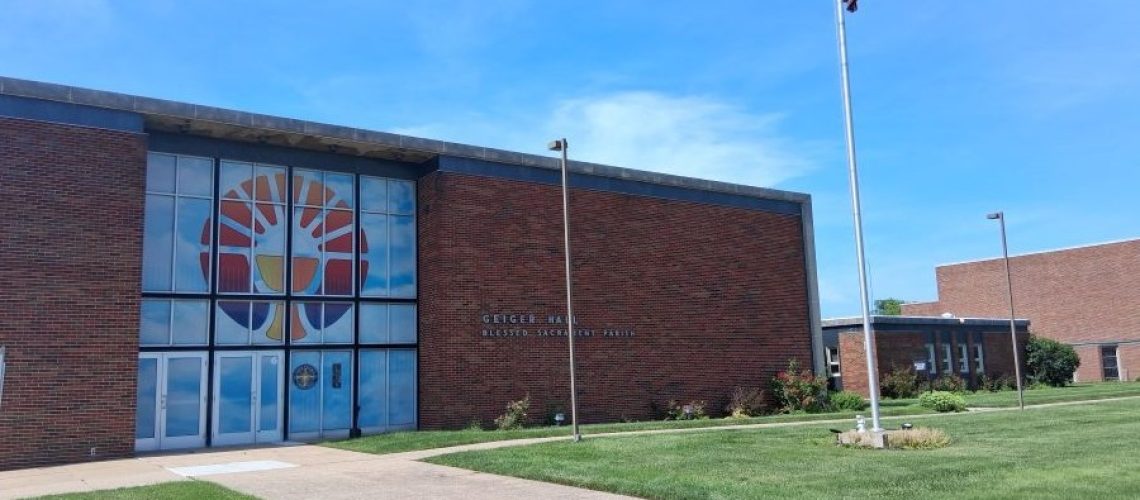
Picture this: it’s an ordinary Friday afternoon, and you’re about to swing by the school and collect your kids for a long, relaxing weekend. Suddenly, your phone chirps, you pick it up, and an official-looking email from your children’s Catholic school pops up. As you dutifully scan it, your jaw drops. The Diocese is closing the school at the end of the academic year. The reason? Too little money…and not enough children.
After you’ve absorbed enough of this bombshell to convince yourself that the announcement is not a practical joke or a nightmare, you start calling other parents, trying to frame a response. Should you say a novena? Alert the media? Start a petition? Recruit local community leaders for support? Blow up Facebook with indignant rants? Whatever you decide, you don’t have much time, because your “court of last resort” may be the Vatican…and, according to Canon Law, you have only ten calendar days to get that ball in motion.
Think it couldn’t happen in your backyard? If you have (quite reasonably) assumed that the local diocese is committed to supporting your Catholic school for years to come, think again. Parents in Auburn, Maine were shocked by the devastating March 2025 announcement that St. Dominic Academy would be shutting its doors at the end of the school year. Families in the Boulder, Colorado area reeled in October after a weekend email from Archbishop Samuel Aquila broke the news of the impending closure of St. Louis Catholic School. In January, the hammer fell on South City Catholic Academy in Missouri. A few weeks later, supporters of St. Hubert Catholic School in suburban Chicago attained the dubious distinction of being the latest parent group to invoke canon law in the quest to reverse their school closure.
According to the Daily Herald, young mom Jillian Bernas Garcia, an experienced fundraiser who has been serving her parish as the Chairperson of the Archdiocesan capital campaign, objected forcefully to the decision to close the school: “The evidence is clear. St. Hubert is viable; the decision to close is a choice. Does the archdiocese value saving dollars over saving schools and souls? An independent review shows we can do both, it is not a binary choice.”
Bernas Garcia states that school families had no idea that their school was struggling until 2024, when they were told that the parish was contributing $500,000 a year to keep them open and that their enrollment needed to be increased. In response, school supporters raised $282,000 in one school year and came within single digits of their enrollment goal. However, without consulting the St. Hubert school board, archdiocesan officials unilaterally slashed tuition discounts for low-income students, reducing enrollment by nearly 50 students and effectively undercutting the efforts of involved school parents. Meanwhile, parents were not even made aware of the deadline to accomplish their objectives.
This February, Jillian Bernas Garcia and other concerned parents submitted their formal written complaint to Cardinal Blase Cupich through the agency of canon lawyer Laura Morrison, a former Chicago prosecutor with a passion for serving the Catholic laity. In under a year, Dr. Morrison has accepted no less than four school closure cases from around the United States. Working against the clock in close collaboration with aggrieved parents, Morrison writes a remonstratio to be delivered to the local prelate, who has thirty days to respond to the complaint. If no satisfactory answer is forthcoming, Morrison uses documents assembled by the parents to present a complete hierarchical recourse to higher authority—in some cases, the regional Archdiocese, and in others, the Dicastery for Culture and Education at the Vatican. Contrary to what outsiders might think, canon law is not a lucrative profession; Dr. Morrison’s primary objective–justice for her clients–is readily apparent in the hours she pours into conversing with and counseling parents.
Notwithstanding the gallant efforts of Laura Morrison and others like her, however, the outcome of these cases is woefully uncertain. While Morrison frequently points out that the Vatican officials responsible for resolving cases “are dying of paper cuts,” many of the cases before the Dicastery of Culture and Education involve the merging and suppression of parish churches, whose ranks have been heavily decimated by recent pastoral planning campaigns. Despite the fact that Catholic parishes have seen some victories in this fight, particularly since the 2012 restoration of 13 Cleveland churches affectionately dubbed the “Miracle of St. Casimir’s,” the application of canon law to school closures is still comparatively untried and does not have a long history of success.
Nevertheless, concerned parents like Amy Keuhlen of St. Louis Catholic School believe that their stand for Catholic education may impact families beyond their immediate circle: “Maybe they’ll get enough of these cases that they’ll say something’s up with Catholic schooling in the United States, and we should do something about it,” she told a reporter in a recent interview.
Some critics may rejoin, “Why fight? The closing of a school is always sad, but isn’t it inevitable?” Couples aren’t having the large families that used to pack the seats in the Golden Age when religious sisters staffed the classrooms. October Mass counts tell the grim tale of diminished Mass attendance, reducing parish contributions to schools.
However, a closer study of this reasoning sometimes reveals mile-wide gaps, as in the case of St. Louis School, located in the Archdiocese of Denver. A financial report shared with LifeSite News demonstrated that the school could operate indefinitely on its current level of parish support, as seen here: Archdiocese of Denver orders closure of school despite strong formation and finances – LifeSite. Financial data also indicated that the Archdiocese of Denver is itself indebted to the parish to the tune of about $2.67 million.
When CBS Colorado consulted Dr. Scott Elmer, currently the Chief Mission Officer of the Archdiocese of Denver, he readily acknowledged that St. Louis Catholic Church has the funds to keep the school in business. When a reporter probed further about the school closure, Elmer characterized the unpopular decision as forward-facing stewardship: “Do you want to wait until you have to close a school because your funds have run dry, or do you want to make a proactive decision to appropriate those funds for something else?”
By this reasoning, no Catholic prelate or school board really needs a financial emergency to shut down a Catholic school. All that is needed is to have another idea in mind for the money. This kind of strategy is not the Church working as Christ intended it; in fact, it’s a little terrifying that an institution which has formed generations of children can be shut down on such a flimsy pretext.
How does a diocese get in position to shutter one of its buildings? The recent closure of Christ the King Elementary School in Sioux Falls, South Dakota offers a textbook example of how school closures are typically initiated. In September 2025, the Board of the Bishop O’Gorman School System released a letter stating that in the following year, Christ the King students would be absorbed into other schools of the school system thanks to the usual suspects, rising expenses and inadequate enrollment.
While the decision stunned school parents, its roots could be traced as far back as Spring 2022, when the Diocese of Sioux Falls began gathering data for a pastoral planning initiative with the poetic moniker Set Ablaze: Unleash the Fire of the Holy Spirit.
A quick glance at the Set Ablaze website (the brainchild of a firm retained by the Diocese to help them “facilitate renewal”), unveils a carefully curated narrative blending mild observations about the “slow decline” of the local church with optimism about the role of the laity in reigniting parish life. Talking points commend South Dakotan Catholics for their wise financial stewardship, framing the need for financial planning as a prudent measure to address ever-present concerns about church facility maintenance.
At times, the pastoral planning guide veers into semantic mystifications like this one:
Q: How is a pastorate distinct from our current model of pastorally linked parishes?
A: There is really one essential distinction: a pastorate is erected with the explicit purpose of creating a context in which a pastoral plan is written and implemented.
Skeptical Sioux Falls Catholics could hardly be blamed for interpreting the statement above as: “We’re setting you up to tear you down,” but most of the discussion centers around parish life in the diocese, not the education of children.
While acknowledging diminished enrollment in Catholic schools, the Diocese proposes here HOME D5 | Diocese that the situation be remedied through “recommitting ourselves to our Catholic faith, realigning our priorities by placing God back at the center of our lives, and bringing the vision of missionary discipleship to life in our diocese.” Notably, the engagingly devised Set Ablaze resource, complete with charming photographs and a YouTube video of a beaming Bishop Donald DeGrood, seems to gloss over the possibility of eliminating schools, if it mentions it at all. However, in his letter to Christ the King families confirming the devastating closure of their school, Kyle Groos, Bishop O’Gorman President, cited both the diocesan strategic plan and the school system strategic plan, Anchored in our Faith, as key factors in the decision to close the school.
In a local news report, school mother Erin Eckrich sorrowfully said, “Why was it never brought to the attention of people that could actually help? And they would be so willing to help because this education of their children at Christ the King was so important to them.” Ms. Eckrich’s question is one that has been asked, in a variety of ways but all depressingly familiar, by the parents and teachers of numerous Catholic schools across the country in the last 12 months.
Though canon law firmly establishes the position of Catholic parents as primary educators of their children, and the paramount importance of tending every child’s “physical, moral, and intellectual talents” in a harmonious way, it is undeniable that the needs of families are often treated by the Catholic hierarchy and laity involved in Catholic education as secondary to commissioned diocesan improvement schemes. When Catholic leaders sacrifice the tightly-knit communities painstakingly built by Catholic students, teachers, and parents who have grown together in harmony, they run the risk of seriously destabilizing our youth, already taxed by state standards-based computer gimmicks and unsettled by classroom conditioning drills that are supposed to help them survive the sudden onslaught of gun-wielding assailants.
In a letter to the families of St. Dominic Academy last March, James Ruggieri, Bishop of the Diocese of Portland, wrote: “I realize that this announcement may be both shocking and deeply upsetting to you [my emphasis]; however, based on a thorough analysis of enrollment data over the past eight years and financial data over the past five years, it is clear to me that the high school program is no longer financially sustainable.”
The first half of Bishop Ruggieri’s statement triggers an essential question: why, when he knew the result would be so devastating, would a compassionate shepherd be willing to inflict so much emotional turmoil on Catholic school families? Expressing concern for a sufferer’s shock and pain is a proper response in the event of an unforeseen tragedy, like a car accident. It seems disingenuous when the sympathetic words are chased by “eight years” of enrollment statistics.
The potential genius of proactively involving parents in strengthening a so-called “failing” school is readily apparent to those who have witnessed the enormous outpouring of effort made by busy parents in the throes of canon law cases. “I know how to raise funds, if I know how much I need to raise,” says Jillian Bernas Garcia of St. Hubert School. At the beginning of this school year, before the closure announcement, she and many other parents came forward with various revenue-generating proposals–preschool grants, bingo nights, and cheerleading camps–creative ideas that were dismissed by church leadership as unnecessary.
It’s a fact–bolstering enrollment and raising money are more like turning an ocean liner around than changing lanes on the expressway. A truly pastoral response demands patience and time, with the understanding that results are not guaranteed. Still, what parent would not honor the consideration of a Catholic school board who invited parents to a town hall on the “State of the School” and openly shared concerning statistics well in advance of projected closures? Imagine, again, a Bishop who freely came forward and said, “Look, the numbers are alarming, but I am committed to giving you a fair shot at keeping your children in this school. Let’s take five years and see if we can turn things around. And I will help you.”
I am far from stigmatizing the United States College of Catholic Bishops as a den of fiends incarnate, but all too many of them have succumbed to the lure of the prescribed burn as a cure-all for diocesan money problems, without bestowing proper attention on the human toll of such measures. We know well that our ordained brethren, and likewise the educational consultants retained by them, are not immune to sin or incapable of error. While this reflection should generally call for compassion and not censure, it also increases the responsibility of parents to work for a Church which treats Catholic schools as a treasure to be safeguarded and not an intriguing configuration of Lego blocks to be rearranged at will.
The soon-to-be Blessed Bishop Fulton Sheen famously asked, “Who is going to save our Church? Not our bishops, not our priests and religious. It is up to you, the people. You have the minds, the eyes, and the ears to save the Church.” How can Catholic school parents, grandparents, teachers, alumni, and supporters use their God-given talents to anticipate a school closure and potentially stop it in its tracks? As readers will have clearly seen, even a “bolt from the blue” does not land without some hints as to what might be in store. Prayerfully consider whether any of the following forces possibly at work in your Diocese might impact your school:
- Has your diocese launched a pastoral planning or strategic process in the last several years? You can find a partial list of ongoing plans here: Diocesan Pastoral Plans – The Catholic Project. Where pastoral planning goes, church and school closures are almost certain to follow in their wake.
- Has your diocese/Catholic school board commissioned a planning/growth and vitality study, with or without the option of parent input, either internally or using an outside firm such as Meitler Consulting? If so, school leadership may be seeking confirmation of the closure decisions they already have in mind.
- If your school is attached to/closely connected with a parish, has there been a recent change in pastors? For instance, have you been reassigned a “pastoral administrator” or an “interim pastor” instead of a regular pastor? Has this temporary assignment been dragging on for a while? If so, it might be time to talk to the Bishop.
- If your school is run by a Catholic school board, has there been a recent shakeup in key personnel? For instance, has the board president left midyear? Has an interim president been appointed? Is the board in the process of hiring a new president? Any of these events might indicate the reassignment of unpleasant tasks…like closing a school.
- Does your school, or its attached parish, own any land or other valuable property that might be a tempting way for the diocese to pay down debt or finance other projects? Take note that eliminating a school is often the necessary first step in shuttering the church it’s attached to, in order to distribute its resources elsewhere.
- Have there been any recent cuts to established financial aid programs that might impact low-income families’ ability to pay their tuition, forcing a sharp decline in enrollment? This attrition may be a strategic attempt on the part of your diocese to whittle down the number of schools it’s responsible for.
- If your school is part of a cooperative system, has there been an exodus of students leaving from your building to go to the other schools? And does your school system leadership take the time to find out why? If not, they may not be looking out for your campus as well as they should be.
- Has your school open house, or any other typical recruitment event, been cancelled or postponed this year? If so, a school closure announcement may be imminent.
This list is by no means exhaustive, so it is critical, in the parlance of Bishop Sheen, to keep your “mind and eyes and ears” open and vigilant. If, under the guidance of the Holy Spirit, you have reason to believe that your school might be in danger, it is advisable to seek out like-minded individuals who share an interest in preserving the community. Bear in mind that your pastor may not be able to be of much help, whether or not he shares your views, since he is operating under obedience to the local bishop.
After you have established your core group of advocates, approach school decision-makers and ask for clarifications on points of concern (enrollment, finances, and any troubling developments). If there is a need to increase enrollment, raise funds, or pursue other solutions, negotiate a reasonable amount of time to do these things (3-5 years minimum), remaining conscious that it is the responsibility of your diocese or school board to participate fully in these efforts, and not simply to cast them upon your shoulders. Speak respectfully, but don’t be afraid to challenge your school board, your superintendent, or even the bishop. It is a good idea to communicate via email because then you have a written record, but unscripted face-to-face interactions sometimes produce startlingly useful results as well.
You may ask directly whether there is a plan to close your school, but it is important to realize that verbal promises and reassurances from school leadership may be utterly unreliable. In some cases, the well-wishers may not be informed of the endgame; in others, they are desperately trying to prevent leakage of the closure ahead of time.
Finally, it doesn’t hurt to prepare for the worst. Recalling that canon law allots “ten useful days” for seeking recourse, it’s a good idea to read up a little on the process and compile a short list of canon lawyers you might want to reach out to in case of emergency. Brainstorm about how you would pay for the appeal. At the same time, don’t worry too much about these things, because the Lord has an uncanny way of leading those who place their trust in Him. I know, because I’ve been there myself.
Last year, on Valentine’s Day, our families here in Erie, Pennsylvania received the unwelcome news that our own neighborhood Catholic school was closing, a cataclysmic event that touched off an exhausting canon law battle culminating in a decision at the Vatican. I will remember those days, often huddled with signs on the sidewalk in front of the school with a dedicated band of stalwart parents, as some of the most frustrating, and at the same time, the most exhilarating of my life.
On the 13th of August, however, I picked up the phone and heard the words we dreaded: the Vatican had ruled against reopening Blessed Sacrament School. Two days later, glumly approaching the school just before 8 am on the way to Assumption Day Mass, I stared down at my feet and saw lying on the sidewalk a bouquet of ten red roses, swathed in plastic and not too weather-beaten despite their abandoned condition. I bent down, closed my fingers around them and carried them into church with me; afterwards, I sliced the ends of the stems, arranged them in a vase of water from the sacristy sink, and positioned them on Mary’s altar.
Only a short time ago did I consider that the roses had appeared like a belated Valentine’s Day present—somewhat bedraggled, but still fragrant with God’s providence. May all those who struggle to preserve true Catholic education from annihilation be assured that their trials are not wasted; on the contrary, these efforts will ultimately blossom “thirty, sixty, one hundred fold.” And to all the front-line mothers and fathers in the midst of active canon law cases: do not be downcast! Lift up your heads! He sees you, and He is the one who counts.




9 thoughts on “Is Your Catholic School Being Set Up For Closure?”
Pingback: Cardinal Cupich to close six Catholic schools despite parent protest, petition - LifeSite
Pingback: SVNDAY EVENING EDITION – BIG PVLPIT
Why would you expect the same Church hierarchy that has miserably failed at keeping parishes alive to keep parish schools alive?
They use the same failed strategy with the schools as they did in the parishes:
1) Dilute and de-emphasize the tenets of the Faith
2) Mimic government run institutions as much as possible to prove the secularist argument that Church institutions are superfluous
3) Let laity who are mainly interested in some inferior good provided by the Church run things instead of those laity primarily devoted to the orthodox transmission of the Catholic faith
4) Copy the spending model of a government institution, that can collect unlimited money through taxation, even though your funds are only provided by donation and voluntary participation
My opinion is that parochial Catholic schools are dead – the body has just not stopped twitching yet. The future of Catholic education belongs to homeschoolers and independent Catholic schools that are not subject to the mismanagement of the diocese.
I love Catholic education. I support Catholic schools. Sadly many parochial schools are not Catholic. And this is nothing new. Sadly many Catholic schools are not forming future saints.
It’s been this way my entire life (I’m a child of the 80’s) and for longer than that. In his 1953 book/speech “Are We Really Teaching Religion?”, Frank Sheed argued that Catholic schools taught many religious facts, but often failed to impart a coherent “living” understanding of doctrine or a profound personal awareness of Christ.
http://www.ewtn.com/catholicism/library/are-we-really-teaching-religion-4068
At nearly all the Catholic Schools I’ve been associated with many families do not attend Sunday Mass. Many parents are not cooperators with the school and actively undermine the catechization and formation of their children.
OBVIOUSLY this is not 100% and doesn’t mean the parents are 100% of the problem and the school and the Institutional Church is absolved of their sins.
BUT it’s not clear that some Catholic schools being shut down will be detrimental to the salvation of souls.
[Comment Edited due to length]
Pingback: THVRSDAY EVENING EDITION – BIG PVLPIT
I recall some years back, a Catholic girls school was having trouble and considering closing. An uncle of mine, who was on the diocesan school board, was asked to go speak to the nuns who were running the school. They asked for suggestions. He said that it seemed that when the school was thriving, almost all the teachers were nuns who lived in the on-campus convent and who had taken the vow of poverty. Now, there were only a handful of nuns and the rest of the teachers were lay teachers who required a competitive wage with other teachers in their profession. The head nun then said, “Well, we’re not getting any new vocations.” My uncle said, “Well, why aren’t you?” She answered, “We really don’t know.” He said, “Could it be that you no longer wear habits? What are you offering the students as examples that they can’t get anywhere else?” They got angry and asked him to leave, which he did. The school shut down six months later.
Magnificent article!
If only we could trust that the hierarchy truly had the best interests of families at heart!
These are the people making decisions to close catholic schools: they have paid more than $5 billion over 20 years for costs related to allegations of sexual abuse of minors by priests, pastors, bishops, archbishops, cardinals, and deacons. Note very well: this does not include amounts still kept secret and amounts in court records that have been sealed at the bishops’ requests, often on the basis of “protecting the victims.” For reference a billion dollar$s- $1,000,000,000.00 – is one thousand millions, 1000 millions. Guy, Texas
Don’t worry. I’m sure with this AI forecast that a Catholic school can be resurrected on the
internet. A Catholic home-schooled class on a widescreen monitor that is virtual, interactive and very, very inexpensive to operate compared to a central building that must be kept up.
Tuition would also be very affordable. It’s coming.