
When the gravity of last year’s isolation began to set in on people, a few curious things happened. Obviously, we all became aware of the brokenness of the systems which prop up a self-centered, materialistic society. Some of those issues are at last being addressed, but sadly many are being brushed under the social carpets or overshadowed by other, louder issues.
One of the most impressive observations many were able to make as they became intimately familiar with the walls of their homes was a kind of emotional or psychological homelessness. Maybe they had owned the home for 5, 10, or even 20 years but they had not really taken the time to notice the little ways they had used and abused the rooms that gave them shelter.
Cultivation of Beauty at Home
The rush for building materials and the explosion in the numbers of DIY home renovations have shown admirable cultivation of beauty and homeliness which our modern society, for all its invasive insistence on keeping up with the metaphorical Joneses, has lost.
Shelter is a basic human need. A dry place in the midst of rain; a warm place in the dead of winter. But a home does more than defend fragile bones from the harshness of the elements. A home is a place of rest, refreshment, and life.
Traditionally, conception, birth, and death all occur within the embrace of a home, and often as not, within the very same four walls. Home is of course a place to sleep in safety. But it is also a place where we see the spokes of the seasons of the world and the seasons of life intertwined in an immemorial dance. We encounter the time to feast and the time to fast. We find the time to live and the time to die.
As people slap paint upon their walls, tear up carpets, and reimagine life on their slice of the earth, something incredible and profound has begun to happen to the modern imagination, by the Grace of God. From planting gardens to building bookshelves, people are rediscovering the miracle of domesticity in the smallest of ways, and we in the Church must not miss the chance to offer profound reasons for why this is so incredibly healing.
We have a rich and complex theological framework as Christians which has been enfleshed within the rhythm and hum of human history. Our faith is rooted most fundamentally in a mystery too rich and deep for words, but it is one which has been eloquently meditated on for generations by sages, saints, and the faithful at altars across the world for over two thousand years.
The Incarnation
It is the Incarnation which underpins all other miracles which we profess and on which hangs everything we believe, and in accepting this miraculous Grace we are prepared for belief in the incredulous logic of the Trinity – of the Resurrection and the Life. Why does the Incarnation matter so much? In every era, there is a demand upon us to make an account of the Christian faith, yet in each season there are harder and easier things for men to grasp.
In older days, where the skeptics doubted more the legitimacy of the body than the eternity of the soul, it was much harder to accept that God would put on flesh than that God should be in the first place.
I will here largely refrain from pontificating on whether in the preceding centuries, the collapse of society and the abandoning of Common Sense has a direct correlation to man’s distorted vision. I will not explore the tendency for men to make themselves into petty gods by making God small rather than by letting God make them like gods by making themselves small. Nevertheless, I can’t keep from showing my hand.
Divinization
What the Church calls Divinization is largely part of the Sanctifying mystery in which our hearts, carried by the gift of Faith, long to be united to God.
In the West, we usually describe this in Saint Paul’s terms as being transformed into the Image of Christ, who took on flesh so that we might be lifted up with Him into the presence of God. St. Thomas Aquinas describes this presence as the Beatific Vision – that spiritually perfect joy at last where we shall see God ‘face to face’, unveiled and unmediated.
All of this is strong drink for the heart, mind, and soul, and like any potent draught, it ought to be savored slowly to explore its complexities. This rich and majestic theology, I say again, hangs on the Incarnation precisely because only by the miracle of God the Son taking on flesh and elevating that humanity for all eternity into the eternal presence of the Trinity, do we have cause to hope in our own transfigured future.
Heaven
And yet, though we as Catholic Christians in particular hope for a heaven so profoundly wrapped up in the trinitarian economy of love, we are not born into it by default. As men and women tied to the earth and made with bodies to live on this beautiful, fragile sphere, we are all called to be in a specific time and place. Heaven is our goal, yet the path to such eternal rest is a long and winding road, putting on Christ – that is, taking up our cross and following him.
Unlike the countless gnostic heretics who came before (and who linger still today), we do not believe that the material world or the body is evil. From the first, man has been a body linked inseparably to his soul and there are better and worse ways to care for the body and for the world which supports it.
Our Faith Journey on Earth
Where and how we live in the world is part of our journey of Faith. In his Providence, God has ordained that we should live now and not in any other moment in history. He has given us the tools, intellect, and spiritual gifts we need to build up, in Saint Augustine’s words, the City of God. As we live out our lives in this time and in the literal places in which we are settled, we are not called to pass through life like some kind of metaphysical vapors which leave no trace. Instead, Jesus told his followers to go into the world and make disciples of all nations, baptizing them in the name of the Father, and of the Son, and of the Holy Ghost.
Baptism is such an incredible image. First, it is once more both a physical and spiritual act, just as we are both physical and spiritual beings. Our bodies are not only present but integral to the act of initiation into the Body of Christ.
Thus, to baptize all nations as our Lord commands, we cannot merely send our thoughts, prayers, and temporary social media profile pictures. We must physically go as a Church into those places where he is not known. Once there, we must claim it once more for the Kingdom of Heaven has come, and her true king reigns over heaven and earth, world without end, amen.
A Transforming Presence
This transforming presence, rooted in a properly ordered vision of man and his place in the world, should have far-reaching implications. Of course, it means we steward rather than rape the land on which we live, and ought to learn to live once more as co-laborers in a vineyard rather than engineers extracting ever-more resources from a factory. A steward knows he does not own but manages on behalf of another, and as Christians that ‘other’ is the Creator who entrusts us with so much that he has made and called Good.
This presence also implies many things about the role of beauty in the world. The way we design and build our cities, villages, churches, and homes is rooted in our understanding of God’s transcendent but accessible Beauty. This does not mean that every building, town, or city must look identical; diversity is part of the genius of the Catholic Faith, yet it is a diversity intimately united to the Truth, Goodness, and Beauty of God.
As we continue to unpack the countless new normals of life in a world of constant change and uncertainty, we are invited to carve out little oases of faith, hope, and love in the landscape of our nations. Each home can become an icon of the transforming love of God. We proclaim the greatness of our Good God in the conscious choices we make on how we make and fill our homes.
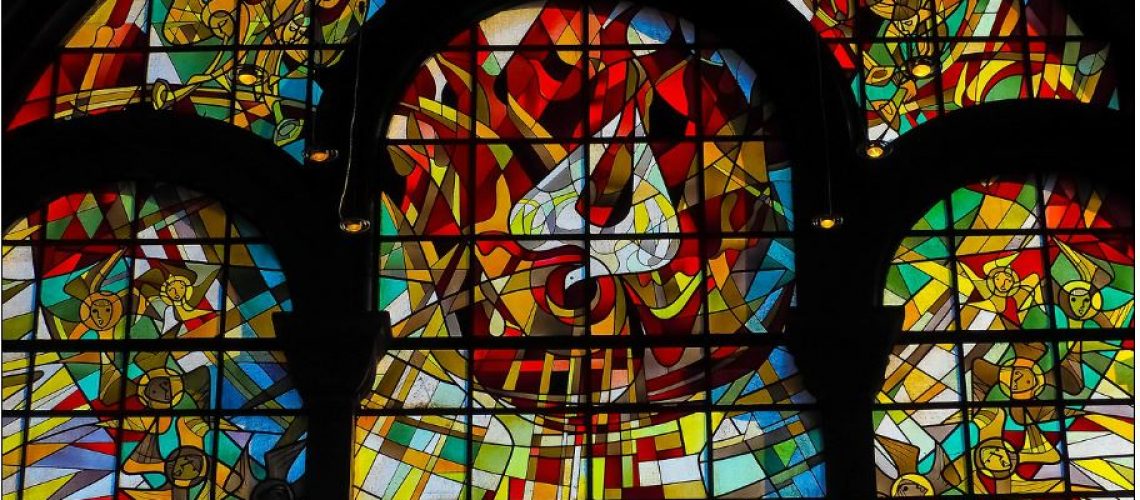
Just as in a beautiful church our hearts are lifted with our eyes as we look upon statues or stained glass or art, the way we organize and decorate our little domestic churches can profoundly aid us in our faith. Above all, the decisions we make to fill our homes with deeply Catholic expressions of beauty should always overflow into the effort we make to fill them with the yet-more-deeply Catholic acts of love.
How We Live
I pray that this impulse to consciously dwell on the land and in the homes in which we live continues to take root in our world. We as Catholics have the answer to why it matters how we live: we know the truth of God’s goodness and believe in the transforming power of love. I long to see this transforming, truly incarnate worldview convert the landscape of my nation into a nobler and more beautiful place.
I am convinced, while it will not happen overnight, these little icons of love can transfigure the dry bones of churches, villages, and cities from the inside out. May we all join in Christ’s prayer as we beg that our Father’s kingdom come and His will be done on earth as it is in heaven.

