

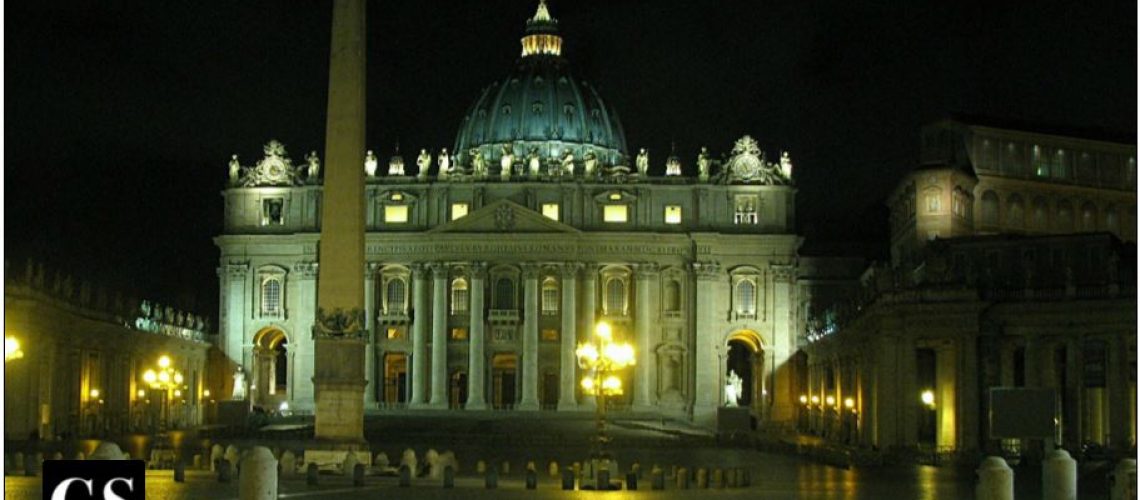
Some years ago, an Ecumenical Council met at St. Peter’s Basilica, in the Vatican. It made decisions which some members of the Church could not accept. They said that the Vatican Council had erred. They said that it had promulgated new ideas which were not faithful to Tradition. And so, they set up their own bishops and priests, who were out of communion with the pope, in order to minister to their own communities of those who could not accept all the teachings of the Council.
When did all that occur? It took place in the years after 1870, when some Catholics rejected some of the teachings of Vatican I.
Something similar also occurred in the years after 1965, when (Catholic) Traditionalists rejected some of the teachings of Vatican II.
The Church has yet to make a formal response to the Traditionalist movement. However, it made some very clear responses to those who rejected Vatican I. This raises the question of whether anything that was said to those rejecting Vatican I, has relevance to those rejecting Vatican II?
1. The Disputed Teachings of Vatican I
Vatican I (1870) approved two documents before the outbreak of war brought the Council to a premature close.
The first document, Dei Filius (April 1870), dealt with matters of Fideism and Rationalism. Those issues were largely uncontroversial.
The second document, Pastor Aeternus (July 1870), dealt with matters of papal authority. It asserted four claims:
- Papal Infallibility (Chap 4) – This is the claim that the pope can be divinely assisted to speak with guaranteed truth, in order to preserve Church unity.
- Papal Supremacy (Chap 3) – This is the claim that the pope can be divinely assisted to judge and settle any matter relating to faith, morals, governance and discipline, in order to preserve Church unity.
- Scripture Teaches 1 and 2 (Chap 3.1) – This is the claim that the first two claims were taught by Scripture, and so those claims are part of the divinely revealed deposit of faith.
- Tradition Teaches 1, 2 and 3 (Chap 2) – This is the claim that the three previous claims were all part of the (Apostolic) Tradition which has handed on those claims from the earliest days of the Church.
These four claims set out the core issues relating to the papacy, which some Catholics of the era could not accept. In refusing to accept those claims, they dismissed them as theological novelties which were incompatible with an authentic understanding of the real content of the Church’s Tradition.
2. Old Catholics
Many of those who rejected Vatican I came to be known as Old Catholics. Initially Old Catholics were just in disagreement with Catholicism over the issues raised at Vatican I. However, as time has passed, Old Catholic beliefs have also diverged on other issues, such as clerical celibacy and women’s ordination, as well as potential differences in attitudes towards divorce, homosexuality and abortion.
The category of Old Catholics does not just refer to those who rejected Vatican I. The group also includes Catholics who were in dispute with the Vatican since a 1724 appointment of the archbishop of Utrecht (i.e., the Union of Utrecht).
Although the Old Catholics include those who rejected Vatican I, it does not include everyone who rejected the Council. For example, the Church historian Ignaz von Döllinger (1799–1890) was a firm opponent of Papal Infallibility before the Council. (See his Letters from Rome, 1870.) He also continued to reject the Council after its conclusion. (See his Declarations and Letters, 1891.)
Despite Döllinger’s rejection of Vatican I, he nevertheless refused to join the Old Catholics. That was because he considered himself to be a Roman Catholic, holding the traditional Roman Catholic faith. So why would he join another Church? He viewed the mainstream Roman Catholic Church as having left him and having left the true Roman Catholic faith, at Vatican I, rather than that he had left it.
As the category of those rejecting Vatican I does not align precisely with the Old Catholics, in what follows I shall simply refer to those who rejected Vatican I as the dissenters.
3. Pius IX’s Response
Pope Pius IX (d. 1878) responded to the dissenters in several documents. This included the 1873 encyclical Etsi Multa (EM) and the 1875 Graves Ac Diuturnae (GD).
In the latter document Pius IX described the dissenters as both “schismatics and heretics” (GD 1). That was because their position involved both doctrinal disagreements (i.e., heresy), as well as a pastoral breach of Church Unity by breaking communion with the pope (i.e., schism).
Pius IX made a number of comments about the position of the dissenters. Those comments broadly constitute five main criticisms, which we will look at individually, below.
4. Rejecting the Papal Magisterium
One of the key issues raised by the dissenters was the rejection of the doctrine about the papal office.
Pius IX said:
They refuse to acknowledge all the divine prerogatives of the vicar of Christ on earth and do not submit to His supreme magisterium. (GD 2)
On the surface, this reference to “prerogatives” is probably a reference to the teaching of Vatican I itself, which defined papal prerogatives in terms of infallibility and supremacy.
But Pius IX was also making a broader point, which involved the purpose of papal prerogatives. He stated:
The duty of Our supreme ministry requires Us to deliver the universal flock of Christ from every danger of deception and to watch over its safety as well as the unity of the faith and of the Church. (GD 8)
What Pius IX was asserting is that the papal office exists as the divinely willed mechanism for preserving unity in the Church. As unity is divinely commanded in Scripture, then it would be absurd for God to command something that is impossible. So, insisted Pius IX, God must have provided a mechanism to ensure unity. That mechanism is the papal office, which holds a “living magisterium,” which can settle theological disputes and thus avoid disunity. (See “What Is the Living Magisterium?”)
Pius IX’s comments suggest that the position of the dissenters is doctrinally problematic in two regards. Firstly, they have rejected the doctrinal teaching of an Ecumenical Council. But secondly, they have rejected the Traditional doctrine which acknowledges that the pope can settle theological disputes (i.e., the doctrine now known as the living magisterium) in order to preserve Church unity.
5. Rejecting the Magisterium of the Whole Church
A further consequence of the dissenters’ position is that it involves rejecting the magisterium of the “whole Church.”
Pius IX said:
They… reject and oppose the… magisterium both of the Roman Pontiff and of the whole Church in teaching matters. (EM 22)
The point that Pius IX was making is that when the dissenters rejected an Ecumenical Council which was accepted by the rest of the Church (i.e., by the whole Church), that immediately put the dissenters in defiance of the teaching authority represented by the belief of the whole Church.
Whether the “whole Church” is understood as the Sensus Fidelium (which was represented in the person of the Church’s bishops), or as the Ordinary Magisterium of the world’s bishops in communion with the pope; rejecting either was a rejection of the Church’s Traditional doctrine about the authority of the (non-conciliar) whole-Church teaching. And so that became another doctrinal error of the dissenters.
However, this issue is a little more complex than it initially seems, as there are potentially two different understandings of what counts as the belief of the whole Church. Pius IX was appealing to the whole Church of “today” (i.e., the evidence of the common belief of his contemporary Church). But those who reject an Ecumenical Council usually claim that they hold the faith of the whole Church of “yesterday + today,” (i.e., as manifested through previous centuries plus as manifested in the present day by those who reject the council).
Essentially that was the position argued by Arius, when he rejected the very first Ecumenical Council of Nicaea in 325. He insisted that Nicaea was changing the Church’s doctrine, as he had known it throughout the 75 years of his life. That position was also the view of dissenters such as Döllinger, when he rejected Vatican I in 1870, insisting that the Council was changing the ancient faith of the Church.
The underlying problem is that claims about what the whole Church believes invariably involve interpretations of previous comments by members of the Church, and interpretations inevitably involve disagreements. For example, Döllinger thought that Vatican I was incompatible with historical evidence about what the Church’s Traditional doctrine really was. But the other great Church historian of the era, John Henry Newman (d. 1890), thought that Döllinger’s position involved an unnecessarily extremist interpretation of both Church history and of Vatican I itself.
What this all means is that Pius IX’s criticism that the dissenters are in conflict with the belief of the whole Church may well be pertinent, but that allegation involves clashes of interpretations, which means that it collapsed the point at dispute into the previous point about the papal magisterium (section 4). This is because Pius IX assumed a methodology for resolving disagreements of interpretation which was an appeal to the papal magisterium. The dissenters rejected that methodology, and so there was no longer a shared intellectual framework between Pius IX and the dissenters, in which they could argue shared principles towards a shared conclusion.
6. Rejecting the Doctrine of Indefectibility
Another doctrinal issue raised by the dissenters is that their position involved a rejection of the doctrine of the Indefectibility of the Church.
Pius IX said:
They… affirm that the Roman Pontiff and all the bishops, the priests and the people… fell into heresy when they approved… the definitions of the Ecumenical Vatican Council… Therefore they deny also the indefectibility of the Church. (EM 22)
In this remark, Pius IX is referring to the doctrine that the Holy Spirit preserves the Church as a whole from falling into doctrinal error. The doctrine of Indefectibility does not claim that no one in the Church ever teaches error. Nor does it claim that there cannot be small groups in error (such as groups like the dissenters). Historically there are often groups who cannot accept what an Ecumenical Council states. That was the case with Arius, and his rejection of the very first Ecumenical Council in 325. And it has been a feature of many other Ecumenical Councils ever since.
What the doctrine of Indefectibility claims is that the Church as a whole cannot fall into error. Pius IX’s view was that those who choose to reject an Ecumenical Council are thereby contradicting that doctrine. This is because they are asserting that the Church as a whole can indeed go into error, because they are alleging that the whole Church (apart from themselves) has already gone into error by accepting the erroneous Ecumenical Council which they themselves reject.
7. Asserting an Erroneous Doctrine of Church Membership
Pius IX also made the point that the dissenters have a defective doctrine of what it means to be a member of the Church.
Pius IX said:
They repeatedly state… that they do not in the least reject the Catholic Church and its visible head but rather that they are zealous for the purity of Catholic doctrine declaring that they are the heirs of the ancient faith and the only true Catholics. (GD 2)
The dissenters were claiming to be fully committed to the Traditional faith of the Church and to fully recognize the pope’s role, as determined by Church tradition, except in regard to the specific issues where they thought that the pope (and the rest of the Church) had erred at Vatican I. In a way, the dissenters were committed to recognizing Pope Pius IX, but also committed to resisting him on the specific issues where they thought he erred.
Pius IX refused to accept that such a position was possible within the Church. He rejected the idea that there could be a subgroup in the Church who were the only “heirs of the ancient faith” and thus were “the only true Catholics.” This is because part of the definition of what it means to be a Catholic, and to be in the Church, involves being in communion with the pope. Refusing to accept the pope’s judgment about an Ecumenical Council, and then disobediently setting up their own bishops, priests and church structures, was a breach of that communion with the pope. And the consequence of that, as Pius IX put it, was:
it is from this Apostolic See, where blessed Peter lives and presides… that the rights of venerable communion flow to all;… from which if one cuts himself off, he becomes an exile from the Christian religion. (EM 24)
What Pius IX was saying is that within Catholic theology, there cannot be Catholics who are out of communion with the pope. That is like arguing for the contradiction that there can be Catholics who are (simultaneously) not-Catholics. To the extent that the dissenters believed in that contradictory model of ecclesiology, then they were asserting an erroneous doctrine of ecclesiology which contradicted the Traditional faith of the Church.
8. Asserting a False Doctrine of Canonical Mission
Another criticism raised by Pius IX was that the dissenters have set up their own bishops and priests, but their clergy have no “canonical mission.” As Pius IX put it:
They… dare to exercise the duties of an ecclesiastical minister without possessing a legitimate mission or any jurisdiction. (GD 4)
This criticism refers to the Traditional faith of the Church, that Christ set up the Church and sent it into the world with the mission of preaching the Gospel. The Church continues Christ’s ministry by “sending” preachers in Christ’s name (Romans 10:14–15).
When individuals or groups break away from the Church (i.e., break away from being in communion with the pope), then they also break away from the Church’s mission. That means that they are no longer “sent” by Christ. On the contrary, those individuals are effectively sending themselves, instead. (For further information on the concept of canonical mission, see Altar Against Altar.)
In the background of Pius IX’s comments about canonical mission is an implicit trilemma. When groups act as if they have a canonical mission which they do not have, then issues of coherence and honesty can arise. If groups claim that they are somehow justified in acting without a canonical mission, then the ethical issues of believing that the end justifies the means can arise. And to the extent that a group thinks that the doctrine of canonical mission is unimportant or that it no longer applies to them, then they are potentially asserting a new doctrine which is contrary to the Traditional doctrine of the Church.
Pius IX didn’t formally state the issues as an explicit trilemma, but each of the three elements of the trilemma result in doctrinal difficulties. Perhaps that is why Pius IX seems to have thought that this issue of “canonical mission” was an inescapably “black and white” matter, which was able to sharply define which individuals are acting acceptably and those which are not. Thus, Pius IX concluded:
We urge you with the greatest enthusiasm to give support strongly and constantly to your legitimate shepherds who have received a legitimate mission from this Apostolic See. They watch over your souls since they will have to account to God for them. Listen obediently to their voices and keep in mind the words of eternal truth which Jesus spoke: “Whoever is not with me is against me; whoever does not gather with me, scatters.” (GD 7)
9. Conclusion
Pius IX was relatively clear and direct in his nineteenth-century response to the dissenters who rejected Vatican I. The core principles of his position are represented in the five criticisms above, which claim that the dissenters position involved three errors of doctrinal denial and two errors of doctrinal assertion.
Are any of Pius IX’s criticisms relevant to the situation of those who have rejected Vatican II?
At the moment there is no formal judgment from the Church about the status of all those who have rejected Vatican II. There are comments from Pope Paul VI accusing Marcel Lefebvre of “contradiction” (Letter to Marcel Lefebvre, 11 October 1976). And similar comments were made in Pope John Paul II’s 1988 Ecclesia Dei.
The substance of those popes’ allegations of contradiction seems to relate to the claim to be upholding Tradition, whilst nevertheless denying some aspects of Tradition in order to make the claim. However, precisely which elements of Tradition are supposed to have been denied or contradicted by the Traditionalists, has not yet been formally clarified by the Church.
Ultimately that is a clarification which is awaiting attention in the in-tray of Pope Leo XIV (or perhaps one of his successors). In the meantime, individuals can ponder the implications of Pius IX’s words for themselves. But care is needed in doing so, as comparisons of similarities may mask contrasts of dissimilarities, and so reflections can all too easily jump to conclusions with hasty judgments.




9 thoughts on “Does Pius IX’s Response to the Rejection of Vatican I Have Implications for the Rejection of Vatican II?”
It’s fascinating how you linked Pius IX’s syllabus of errors to Vatican II, highlighting the contrast in perspectives. The evolution of Church doctrines over time is truly thought-provoking. Do you think these differences reflect changing societal norms or deeper theological reinterpretations run 3?
One of the interesting observations made by pope Benedict XVI is that when people look at Vatican II, they have a choice in how they interpret it. They can look for disagreement, or they can see continuity. Perhaps as time passes, people are acquiring a more balanced perspective?
For pope Benedict xvi’s comments see: – https://www.vatican.va/content/benedict-xvi/en/speeches/2005/december/documents/hf_ben_xvi_spe_20051222_roman-curia.html
Great article but the conclusion departs.
In Vatican I, there was never talk of the Church contradicting herself.
In Vatican II, the four main errors (religious liberty, ecumenism, collegiality, new ecclesiology) are explicitly condemned by Pius IX’s syllabus of errors and by subsequent Popes until John XXIII.
Perhaps the reason why Vatican 1 ignored the issue of contradiction was because of the doctrine of indefectibility (see section 6 above)? If Pius IX was correct on that matter, then wouldn’t that preclude Vatican II from doctrinally erring? Or if Vatican II has indeed erred doctrinally, wouldn’t that then mean that Pius IX must have also taught error, when he said that the Church was indefectible (and thus the Church couldn’t commit the kind of doctrinal error that Vatican Ii is accused of)?
Perhaps there is no need to choose to attribute doctrinal error to both Pius IX and Vatican II? For example, on the matter of collegiality, what Vatican II said, seems to be perfectly consistent with the teaching of Vatican I. For details see: –
https://catholicstand.com/does-vatican-iis-collegiality-conflict-with-vatican-is-papal-supremacy/
Pingback: VVEDNESDAY EARLY-MORNING EDITION - BIG PVLPIT
I think Vat 3 would be the charm.
Vatican III? Its an interesting question whether another Ecumenical Council could be accommodated at the Vatican. There are twice as many bishops now, as there were in 1965. The lifting of the joint excommunications between Rome and Constantinople may also have implications (?). It all adds up to a (very) large (and expensive) sounding event. Perhaps the next council will end up having to be Teams 1.
As an Old Catholic Bishop, I find this article accurate, abet from the Roman view on the hill.
My only issue is the labeling of Vatican 1&2 as ecumenical councils. There were in fact not. Only Roman Bishops and clergy were in attendance.
Also, Old Catholics lament the sin of division praying Christ’s call “that we all may be one” But Utrecht isn’t interested in that conversation, how ever many, especially in the West, would welcome a dialogue.
Thank you for taking the time to contribute. It is always helpful to clarify matters of accuracy.
As regards Vatican II, figures like the Patriarch of Antioch, Maximos IV Sayegh (d.1967), would have been surprised to hear himself called a Roman. He even insisted on speaking in French (ie not Latin) when he participated at Vatican II, to make the point that Eastern Catholics were not (Latin) Romans.
And yes, sadly it is difficult to see how some ecumenical issues can move forward, except that human impossibilities always remain divine possibilities (Lk 18,27) and so hopefully everyone can at least unify in praying for unity.