
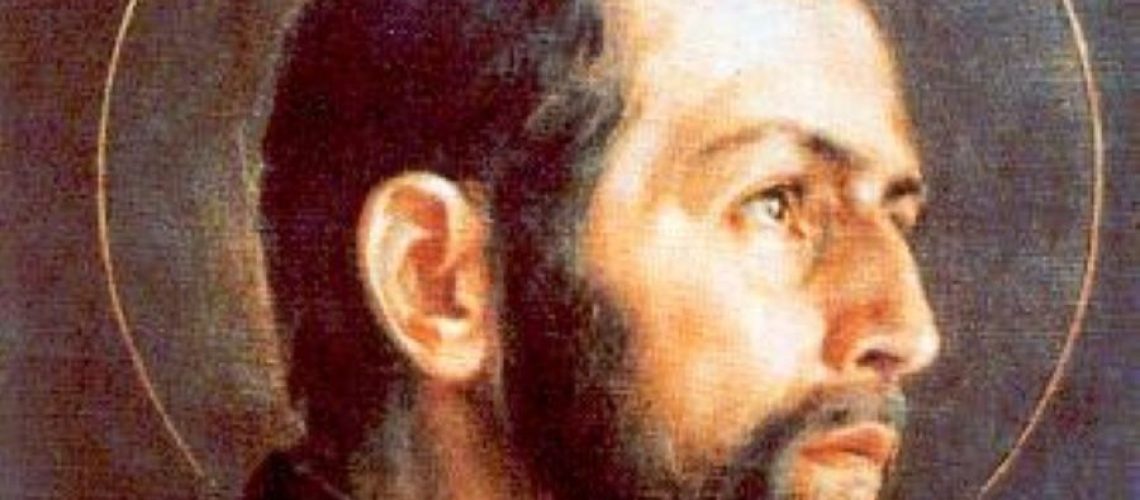
Physician of Souls, Apostle of Eucharistic Renewal, and a Model for Holistic Healing in the Churchof the USA, UK, and Nigeria
In an age fractured by secularism, moral relativism, and a widening gulf between bodily and spiritual care, the life of St. Anthony Mary Zaccaria emerges as a prophetic sign. A medical doctor who became a priest, he united the healing of bodies with the regeneration of souls, founding three interconnected vocations: the Barnabite Fathers, the Angelic Sisters of St. Paul, and the Laity of St. Paul. Together, they anticipated the apostolic dynamism later emphasized by the Second Vatican Council.
This essay examines the essential contours of his brief yet remarkable life: his birth in Cremona (1502), his death at the age of thirty-six, the reported supernatural radiance surrounding his first Mass, the dramatic moral transformation of an entire city, and the discovery of his incorrupt body twenty-seven years after his burial. Within Catholic tradition, the incorrupt body of a saint is regarded as a visible sign of God’s sanctifying grace and a witness to the hope of the resurrection. At the heart of Zaccaria’s charism burned the Eucharist. He pioneered the Forty Hours Devotion as a public school of adoration, penance, and communal renewal. Through a critical synthesis of hagiographical sources, papal documents, and historical studies, this article argues that Zaccaria’s vision of integral reform—rooted in interior conversion, fervent Eucharistic devotion, and lay co-responsibility—offers a compelling model for addressing ethical decline, corruption, and the contemporary crisis of meaning, particularly in the USA, the UK, and Nigeria. His insistent call to “run like fools toward God” is not romantic nostalgia but an urgent invitation to a world longing for authentic love. That invitation leads to the four pillars of divine healing: the Cross, the Eucharist, the Word, and Christ’s Presence.
Anthony Mary Zaccaria was born in Cremona, Lombardy, in 1502 to a noble family. Orphaned by his father at the age of two, he was formed by his virtuous mother, Antonietta Pescaroli. He studied medicine at the University of Padua before returning to Cremona to practice as a physician. Yet his encounters with physical suffering convinced him that humanity’s deepest illness was spiritual, prompting him to leave medicine and embrace the priesthood. Ordained in 1528, he celebrated his first Mass with such profound devotion that witnesses reported seeing a supernatural light surrounding him and angels adoring the altar. He died in Cremona on July 5, 1539, at only thirty-six years of age, his body exhausted by apostolic labours and rigorous penance. The Church honors him as the patron saint of physicians and of the three spiritual families he founded: the Clerics Regular of St. Paul (Barnabites), the Angelic Sisters of St. Paul, and the Laity of St. Paul.
In 1530, Zaccaria collaborated with two lay nobles, Bartolomeo Ferrari and Giacomo Morigia, to establish the Clerics Regular of St. Paul in Milan. Pope Clement VII approved the congregation in 1533. When the community moved to the Church of St. Barnabas in 1545, they became popularly known as the Barnabites. Their apostolate focused on preaching moral reform, reviving sacramental life, and studying the Epistles of St. Paul as a guide to Christian living. Zaccaria also founded the Angelic Sisters of St. Paul (approved in 1535) and the Laity of St. Paul, enabling married and single lay faithful alike to pursue holiness and evangelize their communities. His literary legacy was modest—twelve letters, six sermons, and the Barnabite Constitutions—but these writings reveal both profound mystical insight and practical wisdom (Dossi, 1947).
Zaccaria’s spirituality was deeply Pauline and Christocentric. He insisted that “the true reformer is one who first reforms himself,” emphasizing interior conversion over merely external change. His charity was generous: he repeatedly gave away his fine clothing to the poor, making mercy the visible expression of God’s love. The Eucharist formed the center of his spiritual life. He promoted frequent Holy Communion at a time when it was uncommon, describing the sacrament as the medicine of immortality. His devotion to Christ’s Passion was equally intense. He introduced the custom of ringing church bells every Friday at three o’clock in the afternoon to commemorate the Lord’s death, a practice that later spread throughout the Catholic world.
Among the most notable events associated with his life was his first Mass, during which numerous witnesses reported seeing a heavenly light surrounding him and angelic figures adoring the consecrated Host. His preaching inspired a remarkable moral renewal in Cremona within only two years, transforming a city marked by vice into one characterized by renewed sacramental life. Following his death, his body was exhumed in 1566, twenty-seven years after burial, and was reportedly found incorrupt and supple. This discovery contributed significantly to the advancement of his cause for sainthood. Pope Pius IX beatified him in 1849, and Pope Leo XIII canonized him on May 27, 1897, recognizing numerous favors and reported miraculous healings attributed to his intercession (Acta Apostolicae Sedis, 1897; Catholic Encyclopedia, 1913).
In 1527, Zaccaria, together with the faithful in Milan and Vicenza, initiated the practice of continuous public adoration of the Blessed Sacrament for forty hours, commemorating the period during which Christ’s body rested in the tomb. In 1534, he obtained formal authorization from the Archbishop for the devotion to be celebrated in Milan’s cathedral. The Forty Hours Devotion, with its rhythm of exposition, prayer, and Benediction, became a school of communal penance and spiritual renewal. From a theological perspective, prolonged Eucharistic adoration invites a profound interior transformation, a reality reflected in the remarkable renewal experienced in Cremona under Zaccaria’s Eucharistic preaching. St. Ignatius of Loyola recognized the spiritual fruits of this devotion and, through the Society of Jesus, helped spread it throughout Europe and beyond, establishing it as one of the treasured practices of the universal Church (O’Connell, 1946).
Zaccaria’s life offers a remarkably contemporary blueprint. First, his call to moral and spiritual renewal through interior conversion directly addresses the ethical challenges of materialism, corruption, and secularization confronting the USA, the UK, and Nigeria. He demonstrates that lasting social transformation begins with converted hearts rather than legislation alone. Second, his foundation of the Laity of St. Paul anticipated the Second Vatican Council’s teaching on the lay apostolate. In societies where clergy are few, the active participation of holy, well-formed lay men and women in family life, politics, education, and economics is indispensable. Third, as both physician and priest, he models an integrated approach to healing that embraces physical, psychological, and spiritual well-being. Such a vision remains urgently needed in healthcare and pastoral ministry across all three regions. Finally, in an increasingly frenetic digital age, the Forty Hours Devotion offers a powerful antidote—a sacred space of silence, adoration, and communal prayer that restores interior peace and renews a sense of transcendent purpose.


Nice piece on the Saint
Gracia ♥️
[…] CatholicWhat do Catholics Mean by the Holy Trinity? – Shane Schaetzel at Real Clear CatholicArdent Saint: St. Anthony Mary Zaccaria – Vincent Obiajulu at Catholic Stand MagazineAn Epistemic Disparity Between Christianity […]
Amen, a good masterpiece!
Thanks 👍