
A little over a year has passed since the violent death of popular Christian speaker Charlie Kirk. For a brief time, video of the shooting was accessible online, and viewers could watch the victim as he collapsed and bled on the ground. The video was quickly removed when content moderators recognized it as grossly inappropriate for the public.
It would be well if this kind of concern for public well-being and mental health were universally applied. Just as we choose our words carefully when we must deliver bad news, officials need to consider the effects of what they broadcast to the general public.
The Pentagon’s Morally Problematic Plan
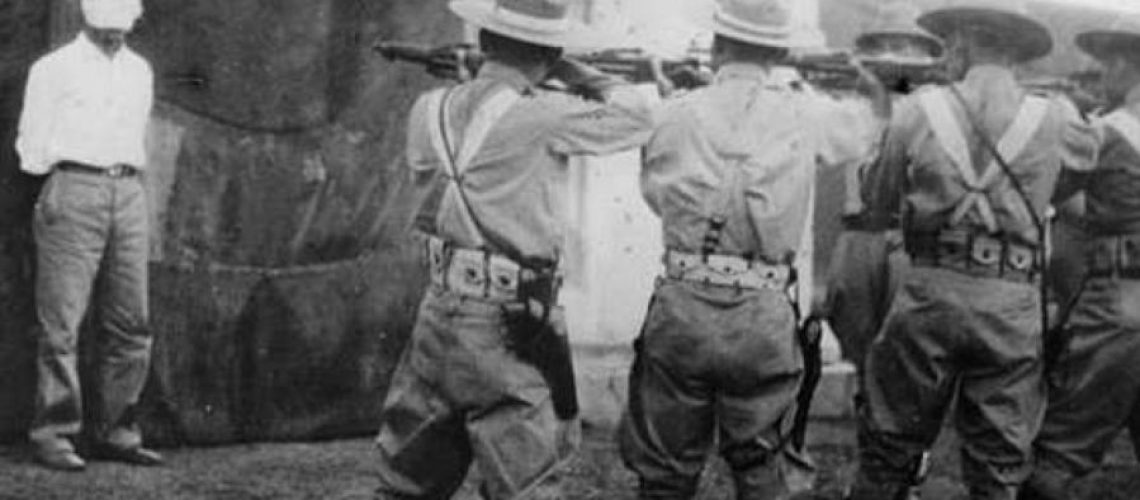
Recently, the Pentagon has announced that the firing squad execution of murderer Nidal Malik Hasan will be live streamed. This is morally problematic on multiple levels.
First, the Church teaches against the death penalty. Pope Leo XIV has posted on the social media platform X:
The death penalty is inadmissible because it is an attack on the inviolability and dignity of the person. The common good can be safeguarded and the requirements of justice can be met without recourse to capital punishment: effective systems of detention have been developed that protect citizens while at the same time do not completely deprive those who are guilty of the possibility of redemption. [@Pontifex, 10 Oct 2026]
The Church has formerly allowed the death penalty if it were the only means of protecting society against a dangerous criminal. As Pope Leo notes, modern methods enable officials to incarcerate a prisoner for life, with no possibility of escape or parole.
According to Church teaching, then, the execution of Nidal Malik Hasan is immoral and unacceptable. The plan to livestream the event only exacerbates the error.
“Scared Straight” and the Flawed Logic of Deterrence
If it is not needed to ensure public safety, why does America use the death penalty? We hear the logic of deterrence. People say the heinous crimes of mass shooters and terrorists call for the death penalty, partly so that others with evil intentions will refrain from committing such deeds.
In the 1970s and 80s, a similar kind of reasoning created a program for juvenile delinquents called “Scared Straight”. Youth who had already gotten in trouble with the law, or who were identified as at risk of becoming criminals were escorted on tours through Rahway State Prison, one of New Jersey’s toughest penitentiaries. Inmates shouted at the visitors, used graphic language, and told the teenagers in no uncertain terms of the harsh conditions, including assaults from fellow inmates, that accompany incarceration. Television cameras showed the teens visibly shaken, some in tears, and determined to avoid such a fate.
Ultimately, though, the program failed. After years of studying this and various programs in other areas, the National Institute of Health concluded that Scared Straight and similar awareness initiatives only increased the delinquency of the participants compared to a control group of the same demographic who had not gone through the program.
What went wrong? Some analysts concluded that the exposure to prison life only toughened the young people. To compensate for the traumatic experience, they developed a dangerous bravado. In time, they bragged about their knowledge of prison, and became what they had formerly feared.
Would-be mass shooters and terrorists, of course, are not inner city teens. Their motivations and tendencies differ. For one thing, some terrorists fully expect to die in the process of completing their crimes. Some even take their own lives during or after the incident. Those perpetrating crimes for extremist so-called religious ideologies are not likely to refrain from crime for fear of being condemned to death. In fact, they may feel a perverted compulsion toward that fate, as proof of their devotion to whatever cause they blindly follow. In any case, neither capital punishment itself nor broadcasting an execution is likely to prevent such individuals from committing violent crimes.
Revenge vs. Justice
Other reasons people give to justify capital punishment focus on victims and their families. Murder victims didn’t deserve to die, and their loved ones don’t deserve the suffering they will endure for the rest of their lives. Doesn’t the murderer deserve death himself or herself? The Old Testament “eye for an eye” demands as much.
To this, the Church notes that the New Testament is the fulfillment of the law. Jesus taught forgiveness, which we profess every time we say the Lord’s Prayer. From the cross, Jesus forgave his tormentors. And our Mother Mary has forgiven us for causing her Son’s death.
Understandably, it is nearly impossible for most humans to forgive those who have harmed a loved one. Here it is necessary for society to care for the grieving family without resorting to revenge. Executing a criminal does not undo his violence, and cannot bring true comfort to those left behind in tragedy’s wake.
Perpetuating Violence
Broadcasting an execution only extends the evil begun by the criminal. Consider the effect that a livestream of a firing squad execution is likely to have on viewers. Certainly, it would be detrimental for those who are very young in age or maturity, emotionally fragile, suffering from PTSD, overly sensitive, or simply too kind to cope with such an occurrence. To inflict this trauma on innocent people perpetuates the violence of the original crime.
Moreover, a public broadcast of this sort affects all of society. Like the teenagers in the Scared Straight program, all of us will be in danger of becoming tougher, more callous, and less sensitive by virtue of the society in which we live. With the livestreamed shooting of someone we hate, we become part of a society that boasts of public executions. America becomes a little more like the countries we fear the most, those whom we call “barbaric”.
What Social Media Comments Reveal
Sadly, the comments on social media posts about the planned public execution already demonstrate this hardening of people in our society. Behind their Facebook or X identities, people are writing about the execution, “Can’t wait to watch!” and, “I’ll make the popcorn.” Even in the case of the unfortunate Christa Pike, who survived two lethal injections on September 30, people have written, “Third time’s a charm!” in support of still another execution attempt on her. A Christian can only shudder at these kinds of remarks, and wonder how our neighbors can express malicious glee at the chance to witness a firing squad execution. Whatever the answer, society will not be improved by the public broadcasting of a man, however horrid his deeds, being shot to death for all to see and cheer.
It is possible that by the time this article is published, officials will have decided not to live stream the event. Let us hope for this outcome! Even so, the arguments against capital punishment and broadcasting violent events are important to ponder.
True Wisdom
What is there for devout Christians to do? We can vote for political candidates who are prolife in terms of convicted criminals as well as preborn children. Contacting a congress member to object to a livestreamed killing is a good idea. After all, we do not leave our faith in the church pew each Sunday; we use it to bring forth the kingdom of God in whatever ways we can. In this, as in all worldly trials, we find that true wisdom comes from the Church which our Lord Jesus established for our well-being until his return.
Works Consulted
NIH National Library of Medicine. “‘Scared Straight’ and other juvenile awareness programs for preventing juvenile delinquency.” April 30, 2013. https://pmc.ncbi.nlm.nih.gov/articles/PMC11973542/ .
The Roman Catholic Diocese of Phoenix. “Capital Punishment.” Accessed October 11, 2026. https://dphx.org/human-dignity/respect-life/capital-punishment/.