
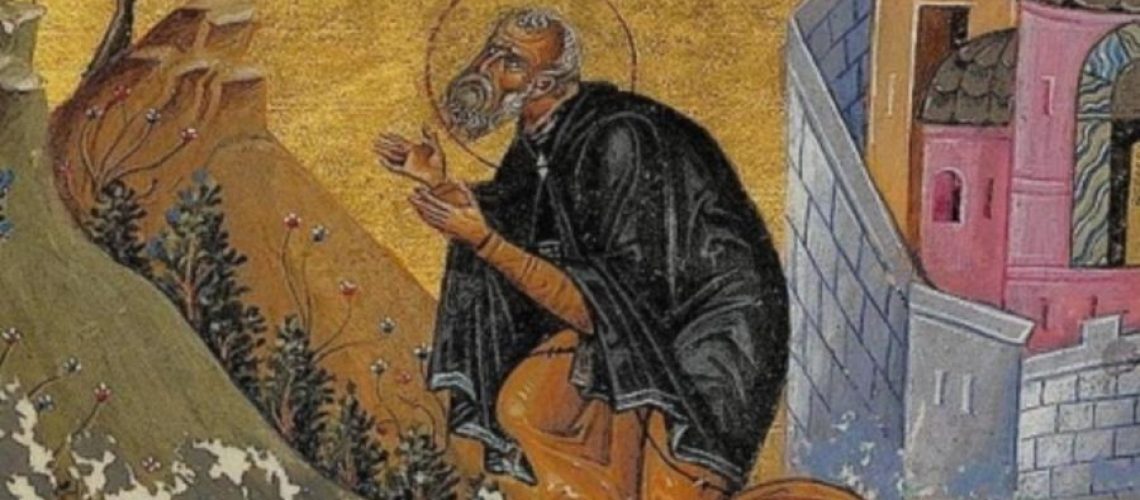
Part I: The Stillness That Roared- St. John the Silent and the Urgent Ministry of Holy Silence for the USA and Nigeria
Hesychia, The Silence That Listens
The Greek term hesychia (stillness) does not denote the absence of sound but the presence of attention. St. John the Silent’s seventy-six years of solitude cultivated what Pope Francis has described as “the precious silence of those who know how to remove themselves from the stage… listening to the word of God, the cry of the poor, and the groans of creation.” True hesychia is not an empty silence; it is a silence full of the other. It is the deliberate, chosen quieting of one’s own internal monologue—of anxieties, plans, judgments, and the compulsion to speak—in order to become an unobstructed receiver of another person’s reality.
How is this “presence of attention” to those in dire need to be exemplified in our noisy, distracted world? It requires the cultivation of specific, concrete, and verifiable practices.
First, the practice of non-anxious bodily presence. Research in trauma-informed care indicates that the first and most vital intervention for a person in crisis is not words of advice but a regulated, calm nervous system in proximity. For the parent of a sobbing teenager, the parishioner facing eviction, or the Nigerian mother who has just received news that a relative has been kidnapped in Zamfara, the ministry of hesychia often begins with simply sitting. It means refusing, through a conscious act of the will aided by grace, to let one’s own heart rate accelerate into panic; refusing to fill the air with platitudes; refusing to reach for the phone to Google a solution. It means saying, with the body and a quiet, steady gaze: “I am here. I am not leaving. I am not afraid of your pain. I can hold it with you.” This is the silence that heals, the stillness that speaks louder than any sermon. It creates a sacred container into which the suffering person can pour their anguish without drowning.
Second, the discipline of questionless presence. Modern communication is often a disguised interrogation. We ask, “How are you?” not to listen but as a social reflex. We pry for details to satisfy our curiosity or to assemble a solution. John’s hesychia models a different way: being present without extracting data.
For the mentally ill who are shunned in some Nigerian communities, for the stigmatized whose silence is a prison of shame, the greatest gift is a presence that does not demand explanation, that does not require them to perform their suffering for public consumption. It is the silence of the mother who holds her child when words have failed, the companion who does not ask the survivor of violence to recount the trauma but simply walks beside them. This presence says, without words: “Your dignity does not depend on your ability to articulate your suffering. You are worthy of my attention simply because you exist.”
Third, the restoration of fixed-hour intercessory silence. In the United States, where the average citizen spends hours each day engaged with screens, and in Nigeria’s bustling cities where noise is ceaseless, Christians must recover the ancient practice of scheduled silence—what the monastic tradition calls the opus Dei. This is not about feelings but fidelity. It means a parish committing to a weekly hour of Eucharistic adoration in complete silence: no background music, no vocal prayers, no projected images, just the silent, mutual gaze of the soul and its Saviour. It means a family in Enugu or Chicago deciding that the first ten minutes after returning home will be a “no-screen, no-noise” zone, a deliberate decompression that honours the human need to transition from the chaos of the world to the peace of the domestic church. Such practices are not luxuries for the leisured; they are survival strategies for those who wish to remain human in an age of algorithmic agitation.
Fourth, intensive small-community accountability groups. Following the model of the early Benedictine monks and the Methodist class meetings, Christians today need small, committed groups where the primary purpose is not discussion but mutual attention. In such groups, participants practice the skill of listening to a brother or sister share struggles without interrupting, without offering instant solutions, and without pivoting the conversation to their own experiences. This is a radical discipline that retrains the brain away from the narcissistic habits ingrained by social media and toward the Christ-like capacity to attend fully and selflessly to another.
These practices are validated not only by two millennia of Catholic spiritual tradition but also by contemporary psychological research demonstrating that perceived social support—which begins with the experience of being truly heard—is one of the strongest predictors of mental well-being and resilience. The APA’s 2025 report found that nearly seven in ten U.S. adults (69%) said they needed more emotional support in the past year than they received, an increase from 65% in 2024. The treatment gap is not merely clinical; it is a presence gap. John the Silent, who spoke almost no words for seventy-six years, emerges as the unlikely yet urgently needed patron of a ministry that the twenty-first century desperately lacks: the ministry of being fully, sacredly, and silently present.
Patronages and Posthumous Influence
While the historical record does not assign St. John the Silent a specific formal patronage—no single profession, nation, or disease—his legacy functions as a patronage of the interior life. He is the de facto intercessor for those seeking contemplative prayer; persons struggling with speech-related sins such as gossip, slander, and verbosity; the mentally anguished who feel unheard; bishops and clergy who desire a simpler, more prayerful ministry; and monastics and hermits.
Since his death, pilgrims have reported healings at his tomb, and his feast draws devotees who seek a share of his “stillness of soul.”
St. John the Silent: Intercessory Prayers
For a Distracted World (U.S. Context)
O Blessed Jesus, who taught St. John the Silent the language of holy stillness, grant me, I beseech Thee, the grace to turn off the noise that drowns Thy voice. Quiet my racing thoughts, silence the clamour of social media and the tyranny of productivity, and let Thy mighty calmness reign within me. Through the intercession of St. John, make me a sacrament of peace in a frenetic world. Amen.
For Those Suffering in Silence (Nigeria Context)
Lord Jesus Christ, Divine Physician of soul and body, look with compassion upon the millions of Nigerians who suffer mental illness in shame and isolation. Through the intercession of St. John the Silent, break the chains of stigma that hold them mute. Send them healers who honour both faith and science. Transform the silence of oppression into the silence of communion, that they may cry out to Thee without fear and find rest for their souls. Amen.
For the Grace of Holy Silence (Universal)
Almighty God, who drew St. John the Silent into the desert that he might speak only to Thee, teach me to love the quiet place where Thou dost dwell. Deliver me from idle words, from the pride of opinion, and from the fear of being forgotten. Let my silence become, like his, a womb where Thy Word is conceived and a fortress where the poor are sheltered. I ask this through Christ our Lord. Amen.
Final Thoughts
St. John the Silent has been misread for fifteen centuries. He has been called an escapist, a misanthrope, a man who abandoned his flock. That reading mistakes the map for the territory. John left a diocese, yes, but he entered the universal Church. He fled the noise of the world, but he plunged into the silence where God proclaims His love.
For the United States, suffocated by a loneliness epidemic that the 2025 APA poll shows has left 54% of adults feeling isolated and 69% needing more emotional support than they received, John’s life is both diagnosis and prescription: you are not lonely because you are alone; you are lonely because you have forgotten how to be alone with God.
For Nigeria, where nearly 50 million citizens carry mental health burdens and fewer than 10% receive treatment, and where between July 2024 and June 2025 at least 4,722 people were abducted in 997 kidnapping incidents, John’s hesychia offers a necessary corrective: silence chosen is holiness; silence imposed is oppression. The Church must teach the difference. The lion that stood guard beside the saint remains ready to stand beside a people who consecrate their land to God. The stranger who brought loaves and wine to a hungry disciple is not dead; His providence is the same yesterday, today, and forever. And the tears that streamed down the face of the aged bishop were not signs of defeat but rivers of healing water flowing into a desert world.
Let us, then, learn from John. Let us put down our phones, step away from the endless scroll, and enter the silent chamber of the heart. There, where no human applause can reach and no algorithm can track, we will find the Lord who has been waiting for us all along.
St. John the Silent, pray for us.


[…] Cardinal McElroy Bans Altar Rails In Violation Of Canon Law – A.P. Stine, Ph.D.A Sixth-Century Answer to a Twenty‑First‑Century Emergency – Catholic Stand MagazineAsk Father: Priest Says the Consecration of the Chalice over the […]
Thank you for this. I have a tendency to be a noisy comforter, full of advice and platitudes. I will pray that Saint John the Silent teach me to love, encourage, and correct the sinner- in silence!