
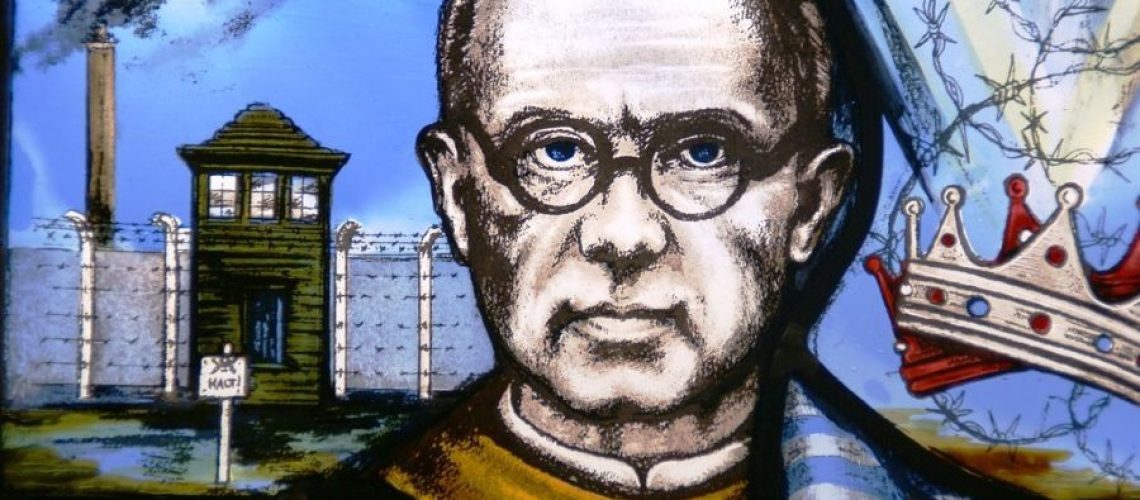
In the tapestry of the Catholic Church, woven by the hands of countless saints and martyrs, certain lives shine with a light that not only guides but invites us deeper into the heart of faith. Saint Maximilian Kolbe is one such radiant thread. Renowned across the world for his heroic sacrifice at Auschwitz, he was first and foremost a lover of Jesus Christ in the Eucharist, an ardent son of the Blessed Virgin Mary, and a tireless apostle of total consecration to Our Lady.
Kolbe’s life is a testament to how true devotion transforms ordinary days and extraordinary trials alike. Through a profound trust in Mary’s maternal care, he lived and taught a spirituality that leads souls to Jesus—the true center of every Catholic life. For families, catechists, and all who seek deeper friendship with the saints, Kolbe’s witness offers both inspiration and a practical path to holiness for our times.
At Journeys of Faith, we are continually moved by the example of saints like Maximilian Kolbe—those who prove that radical fidelity to the Church, daily communion with Christ in the Eucharist, and wholehearted love for Our Lady are not just ancient ideals, but real possibilities for every believer today. As we explore the secret of Kolbe’s strength—the power of total consecration to Mary—let us open our hearts to the same grace that shaped his life into a living gospel, a beacon of hope for all who walk the journey of faith.
A Childhood Vision of the Blessed Virgin Mary
Long before he would enter the dark shadows of Auschwitz, young Maksymilian Kolbe, known to his family as Raymond, experienced a moment that would define the course of his entire life—a vision of the Blessed Virgin Mary. As he later recounted, at the tender age of twelve, he knelt in prayer before a humble image of the Madonna in his parish church. The world faded away, and Our Lady appeared to him, holding in her hands two crowns: one white, signifying purity, the other red, foreshadowing martyrdom.
The Blessed Mother’s gentle words pierced the silence: “Which do you choose?” Little Raymond, struck with childlike sincerity and supernatural courage, replied, “I choose both.” In that moment, the seed of total consecration was planted deep within his soul. Here was a boy who, confronted with a call to both holiness and sacrifice, did not hesitate.
The memory of this encounter became a wellspring of strength and devotion for him, shaping every decision that followed. His filial trust in Mary was not born from theological study but from an intimate, lived experience of her maternal love and guidance. He came to see the Immaculata—as he called her—not only as Queen of Heaven, but as the surest path leading souls to Jesus, truly present in the Eucharist.
This childhood vision remained the cornerstone of Saint Maximilian’s spirituality. It awakened in him a burning desire to devote his life to Mary, to defend her honor, and to bring as many souls as possible to her Son through her. It was from this mystical encounter that his later mission—the founding of the Militia Immaculatae and the promotion of total consecration to Our Lady—would spring, illustrating how a single moment of grace in childhood can bear fruit a hundredfold in every chapter of a life spent in loving service.
The Meaning of Total Consecration to Our Lady
Total Consecration to Our Lady, as lived and preached by Saint Maximilian Kolbe, is far more than a simple devotion—it is a radical way of belonging entirely to Mary, so as to belong entirely to Jesus. Rooted in the rich tradition of the Church and deepened by saints like Louis de Montfort and Kolbe himself, consecration is an act of loving surrender and filial trust. When a Catholic gives themselves entirely to the Immaculate Virgin, they place all that they have—past, present, and future; all that they are—body and soul; all that they do—works, prayers, joys, and sorrows—completely under her maternal care.
To consecrate oneself to Our Lady means to acknowledge her unique role as Mediatrix of all Graces and Mother of the Church, chosen by God to be the direct path to Jesus. Saint Maximilian Kolbe spoke of being an “instrument in the hands of the Immaculata”: freely allowing Mary to use every thought, word, and deed for the glory of God and the salvation of souls. This act is not meant to diminish our relationship with Christ—quite the opposite. Mary’s only desire is to bring us closer to her Son, molding us after His own Sacred Heart.
Practically, living out total consecration imprints a Marian character onto one’s everyday faith: a confidence in Mary’s intercession, a commitment to praying the Rosary, participating in the Sacraments, and seeking to imitate her virtues—especially her humility, purity, and loving obedience to God’s will. It is an open invitation to let the Blessed Mother enter and transform every aspect of our lives, so that she might present us, ever more perfectly conformed to Jesus, as fitting offerings to the Heavenly Father.
Kolbe’s Love for the Immaculata
For Saint Maximilian Kolbe, devotion to the Blessed Virgin Mary—whom he affectionately called the Immaculata—was the beating heart of his spiritual life. In the midst of a world increasingly skeptical of faith, Kolbe recognized in Mary the perfect model of discipleship and the most powerful intercessor before the throne of God. From a young age, he was captivated not only by her purity and humility, but by her unique role in bringing souls to Jesus.
Kolbe’s own experience of Mary’s maternal care shaped his mission. As a boy, troubled by a vision in which the Immaculata offered him both a white crown (symbolizing purity) and a red crown (symbolizing martyrdom), he accepted both without hesitation. This total surrender became the foundation of his spirituality: everything was to be given to Mary, who, as the Immaculate Conception, was entirely united to God’s will.
He famously wrote, “Never be afraid of loving the Blessed Virgin too much. You can never love her more than Jesus did.” For Kolbe, consecration to the Immaculata was not simply a private devotion, but the surest path to holiness. He tirelessly promoted this act as a radical giving of one’s entire self—heart, soul, mind, and strength—to Mary, trusting that she would form Christ within her children as she once did at Nazareth. Kolbe’s Militia Immaculatae, formed to spread devotion to Our Lady, grew rapidly as thousands of souls responded to his call for total consecration.
In day-to-day life, Kolbe’s love for the Immaculata translated into practical action: frequent recitation of the Rosary, cheerful acceptance of sacrifice, and a bold zeal for evangelization. He believed that Mary’s presence could bring light into even the darkest corners of suffering and confusion. Through Mary, Kolbe sought to conform his will entirely to God’s and, ultimately, to lead others to Jesus present in the Most Holy Eucharist. By entrusting every joy and sorrow to the Immaculata, Kolbe reminds us even today that devotion to Our Lady is not a detour, but the royal road to her Son.
Founding the Militia Immaculatae
Saint Maximilian Kolbe’s burning zeal for the salvation of souls and his deep love for Our Lady found expression in one of the great spiritual movements of the twentieth century — the Militia Immaculatae, or the Army of the Immaculate. Born out of a profound desire to combat evil in the world and to bring all souls to Christ through Mary, this apostolic mission was intimately woven into the life and suffering of Fr. Kolbe himself.
It was October 16, 1917. Europe trembled under the shadow of World War I, and the Church faced growing threats from militant secularism and attacks against the Faith. While still a young Franciscan seminarian in Rome, Kolbe witnessed open hostility toward the Church, especially displays of hatred against the Pope and the Blessed Virgin. In response, he gathered six companions in a small cell at the Conventual Franciscan friary, determined to counteract the darkness with consecrated action.
Kolbe’s proposal was stunning in its simplicity and boldness: a militia — not of violence, but of love, penance, and prayer — consecrated totally to the Immaculate Virgin Mary. Members pledged themselves to belong entirely to Our Lady, using whatever means possible to win hearts for Jesus, particularly those who had fallen away or were far from the Church. “Let us work for the conversion of sinners, heretics, and especially Freemasons,” Kolbe wrote, “and for the sanctification of everyone under the patronage and through the mediation of the Most Blessed Virgin Immaculate.”
The Militia Immaculata’s spiritual weapons were rooted in authentic Catholic tradition: total consecration to Mary, fervent prayer — especially the Rosary — and apostolic works. Every member wore the Miraculous Medal as an outward sign of Marian entrustment, trusting in her motherly intercession to “crush the head of the serpent.” From its humble beginnings, the movement quickly spread beyond the friary walls, drawing men and women of all ages into a deeper union with Christ through the Heart of His Mother.
Kolbe’s vision was daring: to lever the power of total consecration and Marian devotion, so that the world, through Mary, might become ever more centered upon the Eucharistic Heart of Jesus. Through pamphlets, periodicals, and later radio and print, he harnessed every available tool to advance this mission—always with Our Lady at the helm, leading souls to her Son.
Evangelization Through Mary: Kolbe’s Mission
Saint Maximilian Kolbe understood that the most effective path to Christ ran directly through the heart of Mary. In a world battered by secularism, indifference, and spiritual confusion, Kolbe boldly proclaimed devotion to the Immaculata—Our Lady—as a sure means of renewing the Church and conquering the world for Christ. His apostolate was not merely personal; it was expansive, innovative, and above all, Marian in character.
Kolbe’s genius lay in recognizing Mary’s unique role in salvation history and in the daily work of evangelization. He saw her as Mediatrix and Advocate, entrusted by God as the dispenser of grace and protectress of souls. Through his founding of the Militia Immaculatae—a movement dedicated to total consecration to the Blessed Virgin—Kolbe invited all Catholics, lay and religious alike, to put themselves entirely at Mary’s disposal. He urged, “Whosoever belongs to her will be saved; whosoever loves her and serves her will draw nearer to Jesus.”
Kolbe’s methods were at once traditional and strikingly modern. He harnessed every available means—printing presses, newspapers, radio, even amateur filmmaking—to tell the world about Christ, the Church, and the gentle force of Our Lady’s intercession. The city he founded, Niepokalanów—“the City of the Immaculata”—became a living testament to Marian consecration. Priests, brothers, and laypeople lived side by side, dedicating their work and prayer to spreading the message of Christ through Mary, uniting daily life with apostolic zeal.
This Marian method of evangelization called for total trust and surrender. Kolbe taught that to give oneself completely to Mary is not mere sentiment; it is a concrete act of faith in God’s providence. Through consecration, the soul becomes an instrument in the hands of the Immaculata, able to work great things for Christ, especially in the face of indifference or adversity. For Kolbe, this Marian path was not a shortcut but the royal road to holiness and effective witness, sanctifying both the evangelizer and those he or she hoped to reach.
Missionary Work in Japan and Global Apostolate
When Saint Maximilian Kolbe set out for Japan in 1930, he was propelled by a burning love for Our Lady and fearless fidelity to the Gospel. The world he entered was both foreign and formidable, yet Kolbe’s zeal knew no boundaries. Despite cultural and linguistic barriers, he quickly gathered a small group of devoted followers and, with their help, established the “Mugenzai no Sono” (Garden of the Immaculate) monastery in Nagasaki. Choosing the exact location—shielded from the city by a mountain—was a decision guided by trust in Mary’s maternal protection. Remarkably, during the devastation of the atomic bomb in 1945, the monastery would be spared from destruction, a testament believers attribute to Our Lady’s care.
Kolbe’s mission in Japan was not limited to bricks and mortar. He poured his energy into publishing a Japanese edition of his beloved Militia Immaculatae magazine, tirelessly proclaiming the message of total consecration to Mary throughout the region. He saw consecration to the Immaculata not merely as a private devotion, but as a powerful means of evangelizing families, societies, entire nations—gifting all to the maternal heart of Mary so she might lead them ever closer to Jesus in the Eucharist.
This vision did not end at the Japanese shore. Wherever Kolbe traveled—whether Poland, Italy, or the distant East—he planted seeds of faith, trusting Our Lady to nurture them. His correspondences, publications, and formation of Marian communities sowed a global apostolate, drawing countless souls into deeper union with Christ through the Virgin Mother. Saint Maximilian Kolbe teaches, by word and witness, that fidelity to Our Lady and real missionary courage can transform hearts and nations, even in the face of great adversity.
Using Media for the Glory of God
In today’s digital age, access to media is as constant and immediate as breathing. For faithful Catholics walking the journey of Saint Maximilian Kolbe, media is not just noise or distraction—it is a field ripe for evangelization and sanctification. Saint Maximilian, who harnessed the power of the printing press and radio waves to spread devotion to Our Lady, stands as a patron for all seeking to use modern means for the glory of God.
Saint Maximilian Kolbe understood that new communications technology could serve the mission of the Church. He poured his zeal into producing Catholic newspapers, magazines, and pamphlets, not for fame or profit, but as humble offerings to Our Lady, instruments to lead souls to Jesus in the Eucharist. Each article, each broadcast, was crafted with fidelity to Catholic truth and love for the people of God.
This tradition calls Catholics today to discern what we consume, share, and create online and in print. Our words and images, whether shared with a few friends in a group chat or broadcast to thousands, can become vehicles of hope, consolation, and truth. Following in the footsteps of Saint Maximilian, let us fill our media spaces with prayers, catechesis, stories of the saints, and invitations to grow in devotion to the Blessed Mother.
How remarkable it is that, with one click, a single rosary reflection, a story of a Eucharistic miracle, or a reminder of Mary’s maternal care can reach countless souls across continents! Rather than succumbing to the fleeting, divisive, and often trivial content that saturates our screens, Catholics are invited to become digital missionaries—using every tool at our disposal for the glory of God and the salvation of souls.
Let us remember, as Saint Maximilian taught, that modern forms of media are not ends in themselves, but gifts entrusted to us for building up the Kingdom. Through our pens, cameras, voices, and keyboards, we, too, can echo the message of Our Lady and lead the world ever closer to the heart of Christ in the Eucharist.
“I Am a Catholic Priest”: Kolbe’s Heroic Sacrifice
In the suffocating darkness of Auschwitz, where hope seemed a distant memory, Saint Maximilian Kolbe lived his greatest act of faith. Imprisoned by the Nazis, Fr. Kolbe drew strength from his total consecration to Our Lady, a devotion that had shaped his entire life and ministry. It was this Marian devotion—rooted in trust, humility, and sacrificial love—that prepared him for the ultimate test of charity.
In July 1941, when a prisoner from Kolbe’s cell block escaped, the camp commandant responded with savage calculation: ten men would be condemned to die by starvation as retribution. As the names were called, one of the selected prisoners, Franciszek Gajowniczek, cried out in anguish for his wife and children. Witnesses describe what happened next as a moment that pierced even the cruelty of Auschwitz with a glimmer of divine mercy. Father Kolbe stepped forward, requesting to take the father’s place. “I am a Catholic priest,” he said simply—these seven words packed with the fullness of his vocation as victim, shepherd, and witness to Christ.
Kolbe’s offer was accepted, and he, along with the other prisoners, was locked up to die. In that starvation bunker, he led prayers, sang hymns, and gently comforted his companions, helping them prepare for eternity. Weakened by hunger but strong in spirit, Kolbe became a living icon of Christ’s words: “Greater love has no one than this, that a man lay down his life for his friends” (John 15:13). When, after two weeks of torture by hunger and dehydration, he alone remained alive, the guards ended his life with a lethal injection—on August 14, the vigil of the Assumption of Our Lady.
Saint Maximilian Kolbe’s sacrifice is not just a tale of martyrdom under brute force. It is a radiant testimony of how total consecration to Mary leads to a radical availability for others, even unto death. In the cell of suffering, Kolbe’s fiat became an echo of Our Lady’s own yes—proving that in giving everything to the Mother of God, nothing is lost, and everything is transformed.


[…] On – Fr. Z’s BlogVideo: What I Saw in Steubenville Shocked Me – Brian HoldsworthMax Kolbe & the Power of Total Consecration to Our Lady – Brother J. Freyaldenhoven at CSMBishop Eleganti: Islam ‘Cannot be Integrated’ into The […]