
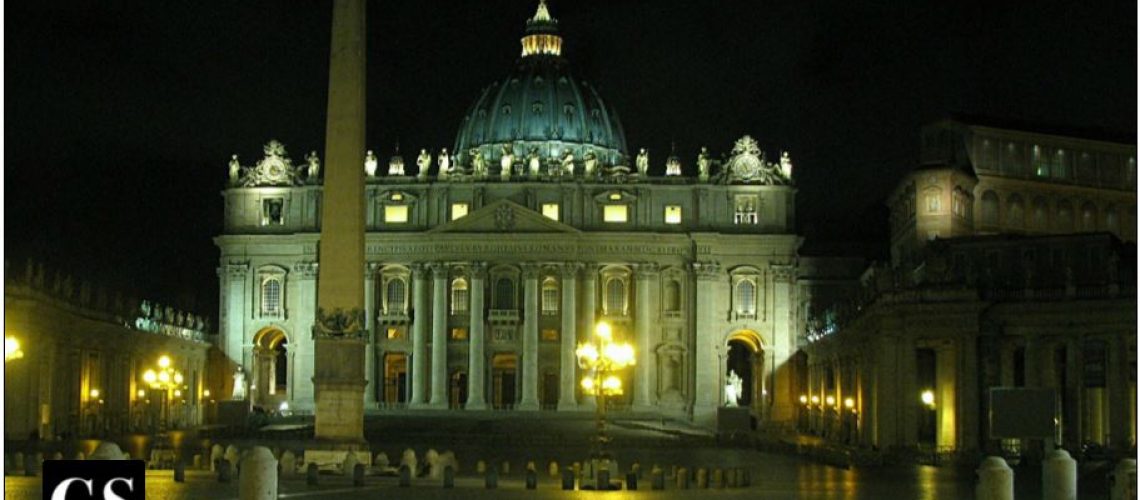
Prior to Vatican II (1965) the Church was committed to religious tolerance. Vatican II changed the situation by declaring religious freedom.
Since that development there has been much discussion about whether that change was a change of doctrine, a change of policy or just a change of language.
A question that is less frequently explored is the question of why the Council made the declaration.
1. Election Problems
At the beginning of the twentieth century, Catholics were encountering problems when they tried to run for public office.
Running for public office had been encouraged by Pope Leo XIII in 1885, when he said:
It is in general fitting… that Catholics should… give their attention to national politics… To take no share in public matters would be as wrong as to have no concern for… the common good. (Immortale Dei 44)
However, non-Catholics were sometimes resistant to the idea of voting for Catholics. They said that the Catholic version of religious tolerance meant that Catholics were not fit to hold public office. This is because they thought that Catholic religious tolerance only obliged Catholics to be tolerant until they were powerful enough to be able to stop being tolerant, at which point a Catholic politician would have to change a country’s laws to make them conform to Catholic doctrine. So, electing a Catholic to public office potentially meant that laws might change, such as banning divorce (etc.).
The problematic nature of accusations like that became particularly clear in the 1928 US Presidential Election, where the Democrat Al Smith was defeated by the Republican Herbert Hoover. Al Smith was a Catholic and one of the reasons why he lost the election was that he was confronted with a significant amount of anti-Catholic scaremongering.
The political problem of Catholics was reiterated in American publications during the 1930s, 40s and 50s. Catholicism was explicitly cited as a reason for the 1948 Manifesto, Americans United for Separation of Church and State. Catholic views on religious tolerance were criticized by non-Catholic authors such as Paul Blanshard (American Freedom and Catholic Power, 1949). The issues were also noted as a problem by Catholic authors, such as Joseph Baierl (The Catholic Church and the Modern State, 1955).
What this all meant was that Catholics had a problem. On the one hand Pope Leo XIII encouraged them to engage with politics. But on the other hand, public perception of the Church’s views about religious tolerance was potentially undermining the credibility of Catholic candidates for public election.
2. The Kennedy Election
These political problems came to a head in the 1960 US Presidential Election, where the Democratic candidate John F. Kennedy was contending against the Republican Richard Nixon.
In the same way that anti-Catholic claims about religious tolerance had arisen during the 1928 election, so the same sets of issues were raised to undermine Kennedy’s election campaign.
This meant that Kennedy had to give significant time and attention throughout his campaign to dealing with the issue of his Catholic faith. (See, for example, his Address to the Greater Houston Ministerial Association, 12 September 1960.)
Kennedy was eventually successful and duly became president.
But the US bishops remained very concerned. In recent history there had been two presidential elections involving Catholics, and on both occasions the issues of religious tolerance had represented a major problem to the Catholic candidates. If that trend continued, then there was a serious risk that US Catholics might not be elected in the future.
As the US bishops headed to Rome for Vatican II in 1962, they were clear in their minds that there needed to be a clear and unambiguous declaration of religious freedom, so that there would be no more risks of the electorate thinking that Catholic politicians would be duty bound to override the religious sensibilities of other citizens.
Speaking in 2013, Pope Benedict XVI recalled the determination of the US bishops when he said:
In the third session [i.e., 1964] the Americans told the Pope: we cannot go home without bringing a declaration on religious freedom voted by the Council. (Address, 14 February 2013)
3. Ecumenism and the World Council of Churches
Another set of issues which influenced attitudes towards religious tolerance was ecumenism.
Prior to World War II (1939–45) Catholic attitudes towards ecumenism were somewhat stand-offish. Essentially it was the view that Protestants just needed to repent and return to the Catholic Church. (See Pope Pius XI’s 1928 Mortalium Animos.)
Attitudes changed after World War II, and it was partially due to reflection on how Christians had responded to Nazi plans to murder 6 million Jews. Reflection identified that although some Catholics had heroically resisted Nazi plans, others had acted sporadically and inconsistently, especially when it involved working together with Protestants.
One of the implications was that relationships needed to be improved with Protestants, so that Catholics and Protestants could work together more effectively in future, especially when it came to dealing with political injustice. Improving relationships meant that ecumenism needed to be more of a priority.
In 1948 Protestants came together in the World Council of Churches. In 1949 Pope Pius XII agreed that Catholics could now participate in ecumenical meetings. (See On the Ecumenical Movement.) Pope John XXIII continued to be supportive of ecumenism and in 1960 he set up a Vatican department specifically tasked to move its work forward.
However, in the background of the Church’s growing willingness to participate in ecumenicism, there was a serious problem.
When the World Council of Church’s met in 1948 and 1961 it decided that the Catholic position on religious tolerance was unacceptable. That is because the Catholic position was consistent with suppressing other religions, and so ecumenical dialogue with Catholics could be like negotiating under a threat: agree with us or else we’ll suppress you when we’re powerful enough to do so. (See “Religious Freedom and the World Council of Churches,” Concilium 18, 1966.)
This meant that on the eve of Vatican II the Vatican was warming to the idea of ecumenical dialogue. But it also knew that matters could not move forward until it made a clear and unambiguous commitment to a religious freedom which renounced the possibility of suppressing other religions. (See Freedom or Tolerance, 1967, pp. 65–67.)
In 1953 Pius XII actually admitted the theoretical possibility that the Church should refrain from suppressing other faiths, even when it was able to enforce such a suppression. (See “Ci Riesce.”) But, at the time of Vatican II, there still needed to be a formal authoritative Church statement of what Pius XII had merely implied.
4. Ecumenism and Catholic Unity
On the eve of Vatican II another ecumenical problem was arising due to the traditional idea of Catholic Unity.
The importance of maintaining Catholic unity was one of the traditional explanations for why the Church allowed the suppression of other religions. That is because allowing other religions could fragment the religious unity of a population.
One of the countries where Catholic Unity was a very real issue was Spain, where there were legal limitations on the public expression of non-Catholic religions.
That situation led to a 1946 UN declaration deploring the lack of religious freedom in Spain. It also led to news articles accusing Catholics of “persecuting” Protestants (see New York Times, 10 September 1948) and to articles saying that Catholics were “discriminating” against Protestants (The Catholic Standard, 12 April 1963).
The situation in Spain also led to accusations of double standards and hypocrisy when Catholics demanded religious freedom for themselves in other countries.
In 1962, on the eve of Vatican II, Cardinal Bea summed up the problems in the following words:
Today this question [of Religious Freedom] is of very great interest to non-Catholics, who have repeatedly reproached the Church for being intolerant in those places where her members are in the majority, and of clamoring for religious liberty in those places where they are but a minority. Each and every case where intolerance has been found has been carefully noted and brought up. This objection harms to the utmost all the efforts expended to bring non-Catholics to the Church. (Quoted from Archbishop Marcel Lefebvre’s reflections in “Preparing the Council”)
The Church’s previous policy of religious tolerance had been focused on protecting Catholics in specific countries (like Spain) from religious error. But what Cardinal Bea was saying, is that that country-by-country approach to religious tolerance was now undermining the work of the worldwide Church, because it was generating negative attitudes towards Catholicism in non-Catholic countries. (For further details see, “Did Vatican II Reject Pope Leo XIII’s Doctrine of Religious Freedom?”)
Part of the problem was that bishops from Catholic countries like Spain and Italy did not experience the scale and the seriousness of this problem. For example, in 1953 Cardinal Ottaviani (the Italian head of the Holy Office) was still publicly saying that the situation in Spain represented the ideal scenario for the Catholic Church. (See his Duties of the Catholic State in Regard to Religion.)
This meant that as the Church gathered for Vatican II, many bishops were becoming uneasy with the previous approach to religious tolerance. They were looking for a new approach which would be more adequate in the different context of the modern world.
5. Overmighty Governments
Another set of issues in the background of Vatican II, was the way that modern governments were becoming increasingly overmighty and dictatorial, with negative implications for Catholic citizens and the work of the Church. In 1931 Pope Pius XI said that the overmighty governments were guilty of state-idolatry, or “statolatry,” when they tried to get citizens to focus on the interests of the state above all else (Non Abbiamo Bisogno 44).
When the bishops of Vatican II met in 1962, they were well aware of the excesses of Fascism and Communism. Cardinal József Mindszenty had been imprisoned for seven years until 1956. Cardinal Josef Beran was imprisoned for 14 years and only released into exile in 1965. Cardinal Štěpán Trochta was detained so thoroughly that he was unable to attend any sessions of Vatican II.
The bishops at Vatican II insisted that they wanted a clear and unambiguous statement of religious freedom which could be used against Communist governments. They wanted a statement which avoided anything that a Communist government could latch onto and misuse against the Church, such as any language which seemed to allow for a possibility that a religion can be suppressed by a government.
The bishops were so worried about the risks of Communists misusing their own words, that Cardinal Raúl Silva Henríquez of Chile spoke on behalf of 58 other bishops and asked that wording of the declaration on religious freedom should closely follow the 1948 UN declaration of Human Rights.
The practical importance of these issues for dealing with Communism, was explicitly noted by Pope John Paul II when Marcel Lefebvre met with him in 1978. When Lefebvre expressed reservations about Vatican II’s view of religious freedom, the pope’s response was very simple:
You know, the Decree on Religious Liberty has been a great help to us in [Communist] Poland. (Apologia Pro Marcel Lefebvre)
6. Governments and Church Autonomy
Another governmental issue bubbling in the background of Vatican II concerned the Church’s autonomy.
Whenever the Church has historically been able to co-opt government to promote and support its work, it has always paid a price for doing so. That price has usually involved a loss of autonomy, with governments having the right to nominate or veto the appointment of bishops.
At the beginning of the nineteenth century, before all the turmoil of revolutions and secularization which undermined church and state relationships throughout the pontificate of Pope Pius IX (1846–78), it has been estimated that of the 646 bishops in Europe, 555 were appointed by kings and monarchs. (See Losing a Kingdom, Chap. 5.) That means that in the so called “golden era” of European church-state collaborations, the Church only had full control of the appointment of around 15% of its bishops.
Over time that lack of control over episcopal appointments led to serious problems. It meant that bishops mirrored the social and political views of the ruling elites, rather than properly representing the Church and its needs. At its worst, it meant that a witty repartee at a dinner party could become as important a criterion for a government wanting to appoint a bishop as theological competence.
Even in the Spain of the Concordat of 1953, which Cardinal Ottaviani held up as the gold standard of Catholic religious tolerance (see section 4), the state’s willingness to support the Church was entirely dependent upon its right to nominate bishops.
Over time that right became a point of serious frustration in the Vatican. Pope Paul VI repeatedly asked General Franco (the head of the Spanish state) to renounce his right of nomination. Franco repeatedly refused. He died in 1975 still refusing to renounce the right, as controlling the episcopate was just too useful for his government.
This means that in the background of Vatican II there was an increasing awareness in the Vatican that the previous policy of religious tolerance was just not working. The Church was paying too high a price to governments, when it had to surrender control of the appointment of bishops, just to get states to implement the Church’s policy of religious tolerance. What was needed was a new approach to religious tolerance.
7. Vatican II and the Election Problems
Vatican II responded to the political problems creating difficulties for the election of Catholics. (See sections 1 and 2.)
It did so by reaffirming Pope Leo XIII’s insistence that Catholics should run for public office. The Council stated:
[Catholics] should make the weight of their opinion felt in order that the civil authority may act with justice and that legislation may conform to moral precepts and the common good. Catholics skilled in public affairs… should not refuse to administer public affairs. (Apostolicam Actuositatem 14)
Then the Council stated:
This Vatican Council declares that the human person has a right to religious freedom. This freedom means that all men are to be immune from coercion. (Dignitatis Humanae 2)
Those words meant that electing a Catholic to public office would not mean that the Catholic had an obligation to try and impose Catholic doctrine on the country. On the contrary, Vatican II had made it absolutely clear that a Catholic elected to public office would have an obligation to respect the religious freedom of each and every citizen.
That declaration immediately undermined the whole thrust of the anti-Catholic polemic which had so troubled the election campaigns of Al Smith (section 1) and John F. Kennedy (section 2). It means that since Vatican II, Catholic politicians have no longer had to defend themselves against the charge that Catholicism makes them automatically unfit for public office.
8. Vatican II on Ecumenism
Vatican II also dealt with the issues of ecumenism. (See sections 3 and 4.)
It explicitly stated a commitment to ecumenism:
The restoration of unity among all Christians is one of the principal concerns of the Second Vatican Council… Division openly contradicts the will of Christ, scandalizes the world, and damages the holy cause of preaching the Gospel to every creature. (Unitatis Redintegratio 1)
Then the Council addressed precisely the problems raised by the World Council of Churches and by the situation in countries like Spain. It stated:
No one is to be forced to act in a manner contrary to his own beliefs, whether privately or publicly, whether alone or in association with others, within due limits. (Dignitatis Humanae 2)
Those words meant a clear and unambiguous rejection of the idea that Catholics could suppress the practice of other religions. Vatican II’s declaration meant that in future all citizens would be able to practice their faith(s) in private and in public.
That change of approach is a change of policy which recognized that suppressing other religions does more harm than good. To express the point in the Church’s older terminology, it recognized that suppressing other religions cannot (or can no longer) promote the “Common Good,” when the Common Good is evaluated in terms of the whole world, rather than in terms of a country-by-country analysis, which is how it was evaluated prior to Vatican II. (See “Is Vatican II’s Religious Freedom Just Tolerance by Another Name?”)
9. Vatican II on Governments
Vatican II had little to say about the relationship of church and state. Arguably, it simply assumed the continuity of the Church’s earlier rejection of the separation of church and state. (See “Did Vatican II Change Doctrine About the Separation of Church and State?”)
In dealing with the issue of overmighty governments (section 5), Vatican II followed Leo XIII’s 1885 view that
the ecclesiastical and the civil… Each in its kind is supreme… in… [their] fixed limits. (Immortale Dei 13)
So the Council asserted that church and state are
in their own fields… autonomous and independent. (Gaudium et Spes 76)
The declaration on religious freedom re-emphasized the Church’s independence by insisting further, that:
The freedom of the Church is the fundamental principle in what concerns the relations between the Church and governments and the whole civil order. (Dignitatis Humanae 13)
Those strong statements of freedom and independence drove Vatican political engagement in the years after Vatican II. They led to the renegotiation of concordats so that governments (such as Spain) lost their control over the appointment of bishops.
10. Conclusion
When the bishops at Vatican II considered the issue of religious freedom, they were not just exploring an abstract idea about human rights. Instead, they were trying to solve very specific and real problems which were having a serious negative impact upon the Church and its members. (See sections 1–6 above.)
Vatican II was so successful in solving those problems (sections 7–9) that the problems have largely fallen out of modern consciousness.
Unfortunately, that means that there is now the risk of a memory gap which can influence how some modern people understand the Declaration on Religious Freedom. Sadly, it can even contribute to the assertion of misinformation and conspiracy theories which impugn the motives or intentions of the bishops who voted for religious freedom.
Hopefully, a better understanding of which problems the Church was trying to solve, will help people to better understand the content of the Declaration on Religious Freedom, as well as to better appreciate the sincerity of the bishops who worked so hard to bring it about.

