

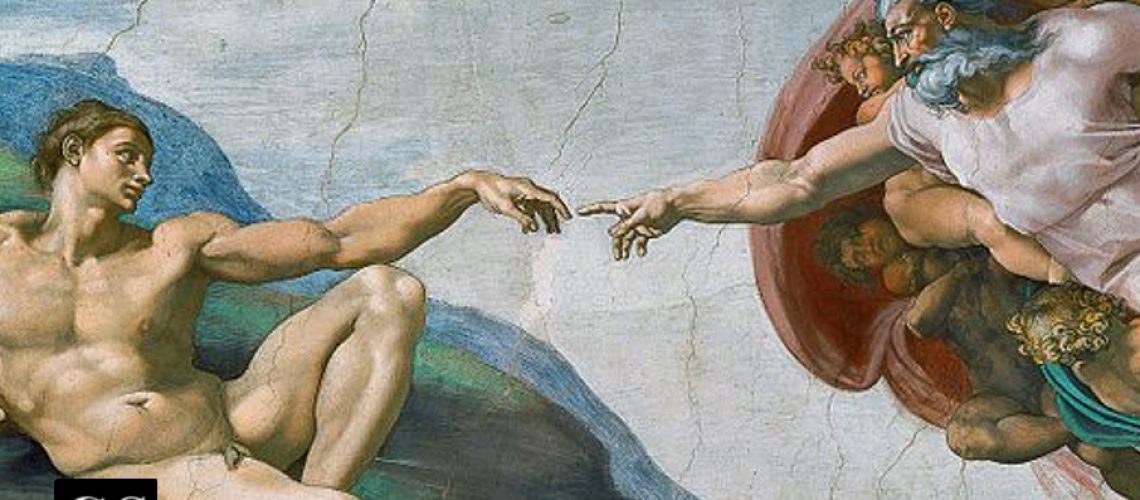
DC Talk, a Christian rock and rap trio from 1987, wrote a song, “Like It, Love It, Need It,” with these lyrics, “You gotta like it, you gotta love it/I know you need some Jesus in your life.” These lyrics might come to mind when contemplating John 15:5. Here, Jesus tells us, “I am the vine; you are the branches. If you remain in me and I in you, you will bear much fruit; apart from me you can do nothing.” But do we really believe this verse?
In his podcast, Fr. John Grieco, an Opus Dei priest, suggests that many of us hear John 15:5 and consciously or subconsciously think, “I can kind of do a bunch of stuff without him. I’ve done all sorts of stuff without him, as a matter of fact.” In response to this attitude, Fr. John references a homily by St. Josemaria Escriva which recalls a scene involving Jesus cursing a fruitless fig tree in the Gospel of Mark. Here, Escriva says,
Jesus curses the fig tree because in it he has found only the appearance of fruitfulness — many leaves. Let this be a lesson to us. There is no excuse for being unproductive (Friends of God: “Time is a Treasure”).
Extrapolating from this, Fr. John Grieco concludes we can’t bear lasting fruit alone; at best, we can just have leaves.
In this sense, DC Talk’s song is correct. We can achieve a lot in our lives, but the center will be hollow without God. Deep down, everyone has to know this, but so much of the time, we are busy trying to fill the void. Sometimes only when things go wrong are we forced to acknowledge this void. Such moments of sadness and self-doubt can force us to acknowledge our helplessness and need for God. We can come to see that we cannot do anything without him in the end. We come to see that we have not really built our house on solid rock.
A World Drowning in Substitutes for God
Still, more than ever it seems difficult to convince our secular peers that they really need Jesus in their lives or to convince them that there is something missing. More than ever, it seems easier to accumulate pleasures and possessions that can block out the void. Sometimes, even to us, Christianity seems like a needless complication, a self-imposed punishment. Wouldn’t it just be better to enjoy life, to lose ourselves in the various pleasures around us? These atheistic thoughts are a sign that we are doing it wrong. In fact, this attitude is much like the older brother in the parable of the Prodigal Son. He stayed with his father, but never really loved him. He may have even envied his brother’s prodigality.
A great encapsulation of this feeling is Psalm 73, which talks about the envy of the godless. The psalmist laments,
But as for me, my feet had almost slipped;/I had nearly lost my foothold./ For I envied the arrogant/ when I saw the prosperity of the wicked. They have no struggles;/ their bodies are healthy and strong (Psalm 73:2-5).
Probably, every Christian has experienced these thoughts when faced with the prosperity and material pleasure of secular people. Perhaps, we have all thought “Surely in vain I have kept my heart pure/ and have washed my hands in innocence” (Psalm 73:2-5). Yet, just like the Psalmist, we eventually come to see the mighty perish, and we have to ask “Whom have I in heaven but you?” (Psalm 73:25). The psalmist realizes that God has been guiding him all along and that there is nothing he really wants except eternity with God.
Science as the Answer
Today, we have come to believe in science. Perhaps, we’ve lost hope in a God that doesn’t intervene and “fix” things because he respects our free will. Many want a powerful force that can set things on the right course, and science largely answers promises to answer this need through new drugs and inventions. It can provide what many people would consider wonderful solutions to human suffering, but it cannot make our lives meaningful. The idea that science will somehow answer the deepest questions and needs is foolish. It is also wrong to see science as the sole arbiter of truth. In the past, thinkers recognized this but in our day and age, it seems we have decided not to belief solely based on scientific fact. It might be helpful to remember that the scientific method itself relies on rationality and logic.
We Rely on a Hidden God
St. Paul writes, “For now we see only a reflection as in a mirror; then we shall see face to face. Now I know in part; then I shall know fully, even as I am fully known” (Cor. 13:12). Now, we live in this false belief that we do not need God because we do not see God face to face. Yet, every breath we take depends on him. Not able to understand divine providence, we fail to understand the suffering in our lives. Instead, we wonder how a good God could allow it. In fact, the way that God shapes our lives is often veiled from us, and we don’t feel that a God who fully knows and loves us is directing our lives.
We credit ourselves for our achievements but don’t realize that God has made these things possible. In reality, we are nothing–“remember that you are dust and to dust you shall return.” Still, we often fail to see our puniness until we are faced by death or loss. I’m doing alright, we tell ourselves. I could do alright without God, too. But, truly, if we saw beyond this world of reflections, we would see our need for God.




3 thoughts on “You Can Do Nothing Without Me”
Pingback: TVESDAY EDITION – Big Pulpit
Such a powerful spiritual reminder.
Thank you.
The world is drowning in substitutes for God: even within Christianity. When Christian churches substitute feel-good teachings and practices to maintain membership, people will continue to feel distant from God. This is why Pelagian Christianity is today’s norm.
God wants our connection with Him through our dependence and trust directly in His Son. This approach to God appears to be too simple a message to teach for most Churches.