

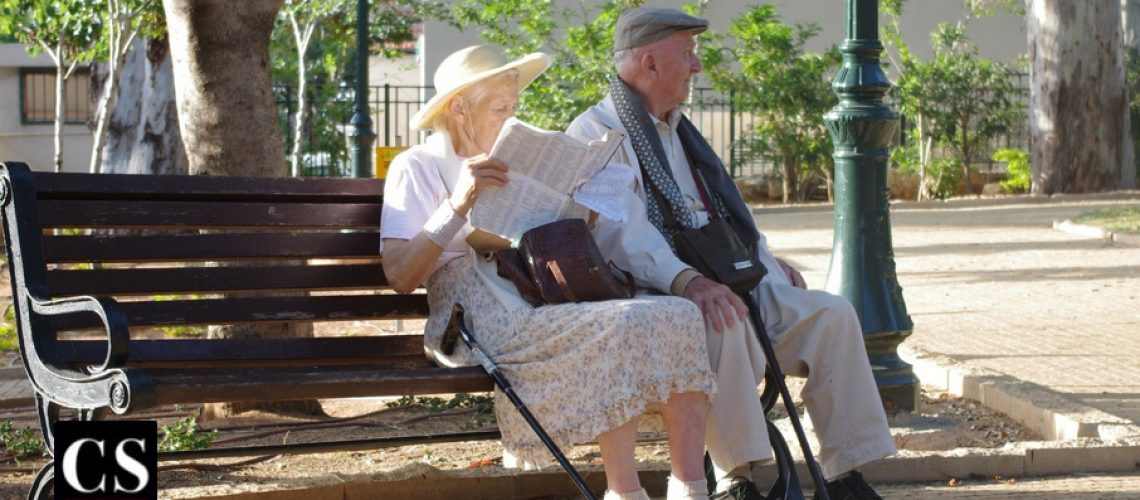
Alzheimer’s. The dreaded demon that lurks and insidiously works its way into the mind.
Are not two sparrows sold for a penny? Yet not one of them will fall to the ground apart from your Father. And even the hairs of your head are all counted. So do not be afraid; you are of more value than many sparrows (Matthew 10: 26–33).
So What Exactly is Alzheimer’s?
Alzheimer’s disease is a brain disorder that slowly destroys memory and thinking skills and, eventually, the ability to carry out the simplest tasks. (The National Council on Aging)
First identified in 1905
Dr. Alois Alzheimer first identified the disease in 1906. A patient of his had died from an unusual mental illness.
When he examined her brain, he found some abnormal clumps and tangled bundles of fibers.
These plaques and tangles are still considered the main features of the disease, although many have since been added.
New features include loss of connection between nerve cells in the brain and from the brain to muscles and organs in the body.
This Lurking Demon initially attacks parts of the brain involved in memory loss. As it progresses, it affects those parts responsible for language, reasoning, and social behavior.
It is widespread
More than six million Americans sixty-five and older may have Alzheimer’s. But many more under sixty-five also are afflicted.
People live longer, which is considered the most critical risk factor for Alzheimer’s disease.
There is an urgent need for studies on how to treat or prevent Alzheimer’s.
Mild Cognitive Impairment
Early-onset Alzheimer’s Disease has the same symptoms as MCI (Mild cognitive impairment.)
People with MCI do not have personality changes as occur in Dementia and Alzheimer’s.
Losing things often.
Forgetting to go to events or appointments.
Having more trouble coming up with words than other people of the same age.
Not everyone with MCI develops Alzheimer’s
Alzheimer’s patients have problems with daily life, which escalate into repeatedly asking the same questions, getting lost, being confused, and, sadly, becoming worried, angry, and even violent.
Alzheimer’s is a form of Dementia. I tumbled down a new rabbit hole when I researched Dementia, but for those interested, here is a link.
https://www.nia.nih.gov/health/what-is-dementia
I Volunteer For a Study
Why, then, did I volunteer for a two-and-a-half to three-year study in Alzheimer’s? No one in my family had had the disease.
Well, I’m interested and concerned for myself. For family. For friends.
Aging
I‘m getting up there in years. My family is not long-living, so who knows what might have happened if they had got this far. I want to think that my foils and foibles are those of typical old age.
Mislaying articles
If I don’t put my car keys, telephone, dog leashes, and more in the same spot, when I look for them, and they are not there, I’m lost.
At least if I mislay my phone, my husband can call me, and I can hunt down the instrument, but you can’t call car keys, a Kindle, sunglasses, and a pair of yoga socks. Or a water bottle.
Hunting for words
Often times I know what I want to say, but the words escape me. They then arrive but at inopportune moments.
Like in church, when I should concentrate on the higher, or in a Pilates class, when I should concentrate on the lower.
But are these signs of early-onset Alzheimer’s or typical signs of aging?
Getting lost — a short story
I don’t count getting lost because I have never had a sense of direction. How I ever found my way from a small town in northern Spain to a small town in Switzerland with a small roadmap in a snowstorm, I don’t know.
I went to see my daughter, who was at school in Saanen. I cried most of the way. I got lost. I ended up driving a dangerous back road up the Swiss Alps at night.
Yup, no GPS in those days. It was me, God riding shotgun, and a mother’s love that would not give up.
Working In a Nursing Home
But I experienced firsthand what Alzheimer’s is like when I worked in a nursing home as an aide.
Miss Suzie
There was Miss Suzie, the sweetest lady imaginable who, with every mealtime, would come out of her room, stand there until one of us passed by, and ask,
“Dear, which way is the dining room?”
For the two years I worked there, it never changed. But came five-o-lock, she would get grumpy, difficult. But not super nasty. What we called Sundown Syndrome.
She was a bed-wetter, so if I worked the night shifts, I would get her up at least once to go to the bathroom. She had no idea who I was but would give me the biggest smile, wrap one arm around me, and off we’d go.
It was always a challenge. I weighed around 125 pounds, and Miss Suzie rocked the scale around 250. But we made it work.
No one ever came to visit.
Mrs. Dana
Then there Was Mrs. Dana. It would be hard to find a more dignified lady. She always wore these shirtwaister dresses, nicely cinched in with a belt. My mom wore dresses precisely like that in the fifties and sixties.
I had a soft spot for this lady. She covered the walls of her room with family photos.
A well-thumbed Bible graced her bedside table.
There was an empty walk-through area between her room and the hair salon. This area had minimal furniture to make it easier for residents with walkers.
In one corner, there was a chair that served no purpose aside from being ornamental.
Mrs. Dana would walk up to the chair, pull up her dress, pull down her pants, and use the chair as a toilet. Quite often.
I was so happy that her mind was gone. Dignified as she was, the lady would have died from embarrassment if she knew what she’d done.
Her family visited often, but I did not share the chair-toilet story with them.
Mrs. Tutt
Then there was a tiny, wizened lady, ninety pounds wet, with beady eyes and a nasty disposition. I loved her, and the other aides were only too happy to leave her to me.
She rarely spoke. She would throw food and spit it out at mealtimes but not with me. I would sit and stare at her. She would stare back.
I would pick up the spoon, still staring, and she’d open her mouth, and that was that.
And one of my best memories was when she looked at me and yelled,
I like you
No one ever came to visit.
When You Can No longer Care For Your Loved One
It’s hard to admit your loved one has Alzheimer’s. It’s even harder to accept you cannot take care of her, and it would be better for everyone if she were in an appropriate residence.
A very distraught daughter cornered me the day she brought in her mother. Mom was a lady used to the best. Beautiful clothes, good jewelry, refined speech.
Her daughter made me promise that her mom would still be dressed like that every day.
Mornings can be rushed when working in a nursing home. But on the days I was there, I’d ask Mom’s opinion on what she wanted to wear. Which earrings she wanted, and maybe add a lovely broach.
The only non-fashion statement was her shoes. She happily wore pretty bedroom slippers. Her 4th and 5th toes reached over the third one — testimony of years of pointy 3-inch stilettos.
Here, as well, a well-thumbed Bible graced her bedside table.
The daughter often popped in.
And Now It Gets Personal
No matter how kind the staff is, I don’t want to be in a home with people looking after me. I pray about this on a daily basis, but I know I do not control my future.
If I can help find a cure, if there is something in my makeup, the fact that I do not show signs of Alzheimer’s at age eighty, then I have to help.
Of anything out there that could happen to me, the ghost of Alzheimer’s is the most terrifying.
And so it was, of all things, a Facebook ad that caught my eye. I completed the form, got a phone call, set an appointment, and went off.
The gentleman presented me with one of those fancy little pads where you type in your answers and sign. Pages and pages of legalize. I remember only one line.
The study is confidential.
Next came a blood test.
What are the scientists looking for?
I did not consider information from the Internet confidential, so I went spying.
They found that a molecule named glial fibrillary acidic protein (GFAP) could be a potential indicator for disease onset, so assessing for concentrations of this molecule in the blood could help physicians diagnose hereditary Alzheimer’s disease years sooner than traditional assessments allow (Jan 13, 2023).
It was the date that struck me. January 13, 2023. I knew that until now the protein they looked for was
P-tau
It was named after those pesky tangled bundles Dr. Alois Alzheimer identified so many years ago.
The National Institute on Aging urged caution –
At present, blood test results alone should not be used to diagnose dementia but may be taken into consideration along with other tests. However, the availability of these diagnostic tests is still limited (Jan 19, 2023).
It can take up to six weeks before my blood test results are available to the local test center. These results will determine whether I am a suitable candidate to continue with the trials.
I hope I am suitable. I have friends who are caregivers for Alzheimer’s patients. It is a cruel disease that robs the individual of their dignity.
And in the end, when the patient doesn’t care because they don’t know, it is the family that suffers.
So I pray.
I pray for the victims and for those who take care of them. And I pray for myself and my family. I beg. I plead. And I hope and trust. And I remind myself –
The Lord himself goes before you and will be with you; he will never leave you nor forsake you. … Do not be afraid; do not be discouraged (Deut:31-8).
Names have been changed for privacy.




6 thoughts on “Why Do Some People Get Alzheimer’s and Some Not?”
I’m currently participating in a drug study. I’m glad that science is working on this. Thanks for this wonderful, compassionate view of Alzheimer’s patients.
I am so very moved by this post. I’m currently doing a Doctorate on The Impact of Faith on the Dementia Journey and this post is so timely for me, and so moving.
Thank you for sharing!
Tamara
Your doctoral study is extremely interesting. I remember reading about the “Nun’s Study,” elderly nuns who had the physical basis for Alzheimer’s but exhibited no symptoms. Alzheimer’s is prominent in my mother’s family. Best wishes in your work!
Pingback: FRIDAY EDITION – Big Pulpit
Thanks for this!
I too saw this during my five years as Hospice volunteer and came away with this ironic observable fact – ‘they’ don’t lose their dignity’ – however, we do take on the loss of our own just by witnessing. My most memorable Alzheimer’s patient, Josie, had progressed to the point where dialogue became ineffective and needless, I let the quiet moments speak for us both. So I prayed our prayers, held her hand and was startled when she began to speak again about people on her mind. It was my last visit, a few days before her passing that jolted me awake as to how this insidious disease cannot take everything. Josie didn’t respond to my soft inquiries after the rosary. I knew her time was close. “ You gave me memories I’ll treasure forever,” I promised, and said goodbye with a soft kiss on her forehead. “ I love you Josephine.” were my last words, even as I tried to recall when and what hers had been – and maybe even to me. “ I love you too,” she purred, just before I crossed the threshold. All these seven years later I still replay that reply when I want to smile, or just feel blessed.
Lesson : Losing an illusion makes you wiser than finding a truth. Ludwig Borne