

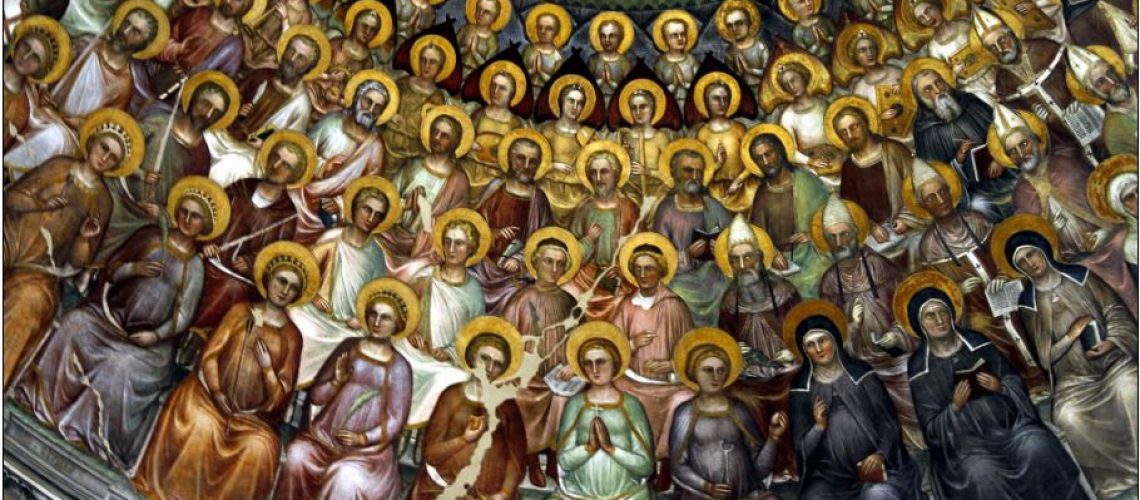
The word “catholic” means universal or all-inclusive. You find out how true this is if you write about different saints.
I have written articles about saints who came from many places around the world. These places include France, Portugal, Belgium, Germany, Mexico, the United States, Ireland, etc. Yet, I have only scratched the surface. There are also saints from places such as Korea, Poland, Uganda, Brazil, Britain, Australia, and many more.
They Emptied Themselves
I have found that the common denominator among all of these people is that when it came down to fully answering Christ’s call, they all invariably emptied themselves, offering their very lives up to Him. Their own needs, comforts, and desires took a permanent back seat to their love of Jesus. First and foremost, they wanted to do for Him whatever He called upon them to do.
Some willingly went through unimaginable pain and torture in doing so. They never wavered from the all-consuming love of the Savior whose warm embrace was awaiting them at His door. These are the people that represent the “best of the best” in our Catholic world and are shining examples for all of us.
St. Therese of Lisieux was quoted long ago as saying, “My soul is at peace, for long ago I ceased to belong to myself.” All saints eventually cease to belong to themselves and surrender to Christ.
Canonization Process
The journey to sainthood is available to all of us. It should be what our ultimate goal always is. However, most of us (like myself) often let the things of the world get in our way.
Those who have been declared Saints by the Church and those in the queue (this includes the Blessed, the Venerable, and Servants of God), however, have either reached the mountaintop or are on the way up. Since these folks are dead, how do we know this for sure? We accept the process and decision as put forth by Holy Mother Church. It is the Canonization process, and it is not an easy one.
The first steps in the process begin at the local or diocesan level. After a person is dead for five years, the person’s name may be presented to the local Bishop. The Bishop will decide whether or not the evidence warrants his calling a Diocesan Tribunal together to open an investigation into the person put forth. If he chooses to move ahead, he will appoint a Postulator who is usually one of the priests assigned to the diocese.
Servant of God
The Postulator assigns several others to help in the investigation. These people conduct interviews and investigate the character of the proposed candidate. The person’s writings are checked, and their overall life is opened and inspected.
If the Diocesan Tribunal and Bishop approve the person, they are declared a “Servant of God.” All documentation is then forwarded to the Vatican.
Venerable (a life of heroic virtue)
The second step involves the Congregation of Saints. Nine theologians determine whether the case should move forward. If so, it is presented to the Bishops and Cardinals in the congregation.
Approval by the Bishops and Cardinals moves the case to the Pope for a decision. If the Pope agrees, the person in question is deemed to have lived a life of “heroic virtue.’ The person is then declared “Venerable,” i.e., Venerable Fulton J Sheen.
One Miracle or Martyrdom
The third step is the beatification process. This process begins when a miracle has supposedly taken place through the intercession of the Venerable person in question. Once the miracle is validated, the person can be beatified and is called “Blessed.” In the case of martyrdom, the miracle can be waived, and the Holy Father can declare the person “Blessed,” as he has done in the case of Father Jacques Hamel.
Canonization
The final step is the actual Canonization of the beatified person by the Holy Father in Rome. This step is usually predicated on a second irrefutable miracle. This miracle must be the result of the future saint’s intercession. Note that a miracle must be spontaneous, complete, and defy a medical explanation.
Once the miracle is approved, the person is declared a saint. A huge celebration is scheduled at the Vatican and a date is set to elevate the person to Sainthood. Tens of thousands of people are often on hand for a Canonization. Obviously, reaching that saintly mountain peak is no easy task.
We are all family
I call the Catholic saints and those following them up the ladder members of the Catholic Hall of Fame. They are the “best of the best,” from the Apostles and the earliest saints, down through the ages to St. John Paul II and St. Teresa of Calcutta.
Our heritage is filled with such rich and abundant spirituality. The inspiration, motivation, perseverance, patience, humility, and fortitude of the saints are all available at all times. All we have to do is reach out, grab hold of one our saints and ask for a bit of help. They are there for us. After all, we are all family.
Mother Angelica perhaps said it best:
“Where most men work for degrees after their names, we work for one before our names: ‘saint.’ It’s a more difficult degree to attain. It takes a lifetime, and you don’t get your diploma until you’re dead.”




6 thoughts on “We All Are Called to Sainthood; Why Do So Few Get There?”
My grandfather was a humble man. He obeyed the commandments, didn’t say a bad word about anyone, did not complain, suffered well, was a loving father, prayed every night before the crucifix. After he died, the priest who was with him when he died met with my grandmother and said, “Congratulations, your husband went straight to heaven”.
Pingback: THVRSDAY EDITION – Big Pulpit
Maybe the title is a bit misleading. Of course many folks attain sainthood without being known about. –the point was to present how the canonization process works. Maybe it should have read, Why are so few Canonized?” However, it is a very hard road to journey, especially when it comes to validating miracles.
Canonization is just a church proclamation. I completely agree with some of the other commenters that there are tons of people in heaven who haven’t been canonized. I also wouldn’t be surprised if the church isn’t exactly batting 1.000 in terms of who they have canonized. The process seems to be driven by politics at times rather than the true merits of the individual – which are really for God to judge.
I agree with Peter. The saints are not just those who have been canonized. I have met many saints in my life who have inspired many people, but are unknown outside their circles of influence.
Canonized sainthood is only a Church certification. Sainthood is for those who live holy lives. Saints need to be sanctified while they are still alive. If they are not, they are not real saints after they are dead. God knows of the real number. All we have to do is reach out to God for a bit of help, as real saints do. Reaching out to saints merely postpones the process of sanctification until we are ready to reach out to God. Real saints point you to God in order to be like them (see Tobit 12:18; Revelation 19:10; 22:8-9).