

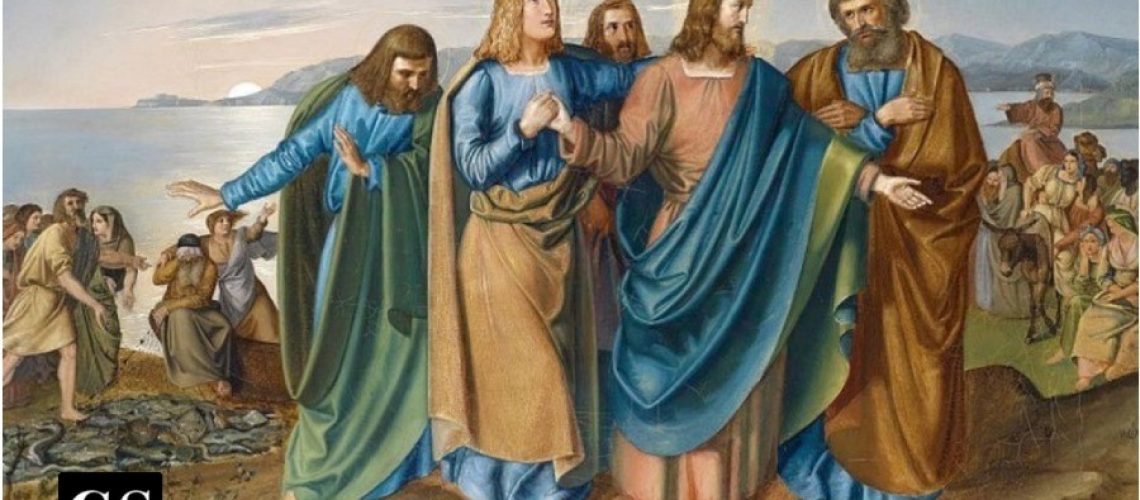
In 1907 Pope Pius X condemned the Modernist view that
Revelation … was not completed [completa] with the Apostles. (Lamentabili Sane 21)
The last Apostle to die was John the Apostle (or John the Evangelist). St. Irenaeus (d. 202) tells us that John was still alive until the reign of the emperor Trajan, who came to power in the year 98 (see Against Heresies 3, 3, 4). So, John’s death is usually assigned to a date around the year 100.
This means that the positive content of Pope Pius X’s teaching (above) is the claim that revelation was completely communicated to humanity by the death of the last Apostle, i.e., by around the year 100.
On the surface that seems to be a fairly clear and straightforward teaching. However, there are some complications…
1. Natural Manifesting
The first complication is the traditional idea that God is continually self-revealing through nature. As the Psalms put it:
The heavens declare the glory of God. (Psalm 19:2)
That text can be understood to mean that every time someone looks at the heavens, then they have a revelation of God. As people can look at the heavens in 2025, that challenges Pius X’s view that revelation was completed by the death of the last Apostle.
Or does it?
The Church has traditionally distinguished between Natural Revelation (also called General Revelation) and Supernatural Revelation (also called Special Revelation).
A natural revelation is the self-manifesting of God through nature, which was what the Psalms described (above). It is available to all people, and at all times, regardless of their religious or cultural backgrounds. However, it is a very general manifestation. It can be thought of as almost non-religious, in the sense that it does not convey information which is specific to a particular faith, such as Christianity.
The other type of revelation (Supernatural Revelation) is the revelation of the Gospel. It appeared in the historical words and actions of Jesus. It is that communication of the Gospel which Pope Pius X was referring to, when he said that revelation was completed by the death of the last Apostle.
2. Continuous Revelation
Another complication arises because many Christians believe that God continues to communicate and reveal information, long after the death of the last Apostle.
We can see instances of this in the lives of saints. For example, St. Augustine (d. 430) believed that God revealed information to him when he was told to “pick up and read” a book, which completely changed his life. St. Patrick (fifth century) believed God guided his footsteps, when he heard a voice saying: “Behold, your ship is ready!” And St. Francis of Assisi (d. 1226) believed that God communicated with him, when he heard a voice telling him to “repair my Church.”
There are also modern religious communities which are fully committed to the idea that God is continually revealing new ideas. Thus the Mormons believe in additional Scriptures, such as the Book of Mormon. And the Jehovah’s Witnesses believe that God can give “new light” at any moment. Pentecostal and Charismatic communities also tend to believe that God can communicate prophecies to modern worshipers.
The idea that God continues to reveal specific information is sometimes called the doctrine of Continuous Revelation. Its existence seems to challenge the teaching of Pope Pius X that revelation was completed with the Apostles.
Or does it?
3. Informal Guidance
The Church has traditionally distinguished between two modes of revelation: Public Revelation and Private Revelation. The Catechism summarizes the differences as follows: Private revelation may be believed, and often is beneficial to believers; but unlike public revelation, private revelation does not require the assent of all the members of the Church, and it does not improve or complete Christ’s definitive Revelation (CCC 67).
This distinction states that the (historical) revelation of the Gospel is the public revelation. It is a guaranteed FORMAL communication from God which all Christians are therefore obliged to accept and respond to with religious Faith.
A private revelation is an INFORMAL guidance, communicating information which may (or may not) be from God. It is not a guaranteed form of communication, so it may also involve confusing obscurities which can mislead people. It typically needs to be interpreted very carefully. (See “Norms for Proceeding in the Discernment of Alleged Supernatural Phenomena”.) These factors mean that Christians are not obliged to accept or believe in any of the informal guidance which is typically called “private revelation.”
Referring to that kind of informal guidance as “private revelation” can be confusing. This is because a private revelation can occur (privately) to an individual, such as when St. Bernadette (d. 1879) said that she was told to dig to find a spring in the Marian apparitions at Lourdes. But “private revelations” can also involve groups and crowds, such as the 50,000 people who gathered in 1917 at the Fatima miracle of the sun.
This means that the fact that there are ongoing (informal) communications from God, does not conflict with Pius X’s teaching that (formal) revelation was completed by the death of the last Apostle. It just means that after the death of the last Apostle, all communications which are alleged to have come from God, are automatically to be considered as instances of informal guidance (i.e., as private revelation), rather than as revelation which must be responded to with Faith. (See “Has Revelation Ended or Does God Continue to Reveal Himself to Us?”)
4. Official Clarification
Another complication with Pius X’s teaching is that the Church has traditionally claimed that the Holy Spirit is at work in the Church, constantly revealing the meaning of Scripture to the Church. The ongoing work of the Holy Spirit means that the original revelation can always be interpreted and promulgated through the Church’s magisterium.
That view can be seen in these 1870 comments of Vatican I:
For the holy Spirit was promised… that… by his assistance… [the Church]… might religiously guard and faithfully expound the revelation… (Pastor Aeternus Chap. 4, 6)
The doctrine… which God has revealed… [has been]… committed to the… [Church]… to be… infallibly promulgated… (Dei Filius Chap. 4, 13-14)
The idea that the Holy Spirit is constantly helping the Church to understand revelation, by constantly clarifying its meaning, can be understood as a claim that there must be an ongoing divine revelation of clarification from the Holy Spirit. If so, then that would again challenge the teaching of Pius X that revelation ended with the death of the last Apostle.
Or does it?
The Church has traditionally distinguished between revelation and clarification. Revelation consists of God’s providing of information (i.e., revealing the Gospel). The magisterium’s role of clarification is a divinely assisted interpretation of the original revelation. This means that clarification is not a form of revelation, as it is not providing new information.
The distinction between revelation and clarification is at the heart of the doctrine of the development of doctrine. That doctrine states that the content of revelation can be developed over time, through clarification. But, the meaning of the original revelation cannot ever be changed by the addition of new information, as there has been no new revelation which could provide that new information.
Understanding the role of the magisterium as clarification (and not revelation) also explains why the Church cannot oblige members to accept a private revelation, such as Fatima (see “Must Catholics Believe in Fatima?”). The Church could only know for sure that Fatima is a genuine revelation from God (and thus oblige people to accept it), if there were to be a new revelation from God telling the magisterium that it is indeed genuine. But the magisterium only receives clarification regarding the original revelation of the Gospel. So, all that the Church can do with private revelations is to assess them and say whether they are consistent with the original revelation of the Gospel, and thus whether they are believable (or not, as the case may be).
Understanding the role of the magisterium as clarification rather than as revelation, means that the activity of the magisterium does not conflict with the claim that revelation ended with the death of the last Apostle.
5. The Revelation of Scripture
Another complexity with Pius X’s teaching arises from the dating of Scriptural documents. At the time that Pius X wrote (i.e., 1907), it was widely believed that all the documents of Scripture were written by the death of the last Apostle. But some Scripture scholars now believe that some New Testament documents (such as 2 Peter) may have been written at a later date. So, biblical scholarship now seems to conflict with the teaching of Pius X.
Or does it?
Besides the fact that biblical scholars are in disagreement about the dating of New Testament documents, there is the additional factor that the Church has never believed that Revelation is reducible to Scripture. So, issues about the date when Revelation was completed, cannot be reduced to issues about when Scripture was completed.
In the background of these issues is the separate question of whether the divine inspiration of Scripture is to be understood as (just) a revealing of information, or whether it could also be an assisted recalling of previously revealed information. If it is understood in the latter sense, then divinely inspiring a Scriptural text after the year 100 does not mean that the content of the text is itself being revealed after the year 100.
The implication of these issues is that the dating of Scriptural texts is not necessarily relevant to the dating of the original revelation itself, so the dating of a specific book of the New Testament has no implications for the teaching of Pius X.
6. The Revelation of Apostolic Tradition
However, if a distinction is to be made between the original revelation and its communication through a (later) Scripture, then this raises a question about how revelation was first communicated.
The Catechism clarifies that matter as follows:
The Gospel was handed on in two ways: orally “by the apostles…by the spoken word of their preaching, … [and] by the example they gave,” [And] in writing “by those apostles and other men associated with the apostles who, under the inspiration of the same Holy Spirit, committed the message of salvation to writing [as Scripture].” (CCC 76)
What this means is that there was an oral transmission of revelation, before it was communicated in Scripture. The Catechism calls that oral transmission a “Holy Tradition” (CCC 81), but it is also sometimes called “Apostolic Tradition.”
However, there is a complication, as the word “tradition” can refer to other communications of information, besides the communication of the original revelation. To clarify the point, the Catechism states:
The Tradition here in question comes from the apostles and hands on what they received from Jesus’ teaching and example and what they learned from the Holy Spirit… Tradition is to be distinguished from the various theological, disciplinary, liturgical or devotional traditions born in the local churches over time… In the light of Tradition, these traditions can be retained, modified or even abandoned, under the guidance of the Church’s Magisterium. (CCC 83)
In this paragraph the Catechism distinguishes between Tradition (with a capital “T”) which is communicating the divine revelation of the Gospel; and tradition (with a lowercase “t”) which is communicating human ideas and customs. It notes that the Church has authority to change tradition (i.e., to change human customs) but it has no authority to change Tradition (i.e., to change the content of revelation), as revelation comes from God, not from humans.
These issues can become confusing when there is discussion of ideas and practices which could be understood as either a Tradition or a tradition. For example, we know that the Church in the first century used to fast on Wednesdays and Fridays (see Didache, Chapter 8). That practice may well have originated in an instruction from an Apostle. But if so, then it is a tradition (not a Tradition), and so it has been changed over time.
Once we recognize that revelation can be conveyed through (Apostolic) Tradition, as well as through Scripture, then we can also see why Pius X would have said that revelation ended with the death of the last Apostle. This is because once the last Apostle died, then there were no more Apostles who could provide input into the content of an (Apostolic) Tradition.
7. What the Catechism States
Pius X published his view of revelation in 1907. So, perhaps a question arises about the status of his view, and whether the Church still holds the position that revelation was completed by the death of the last Apostle.
The Catechism states:
The Christian economy… is the new and definitive Covenant,… no new public revelation is to be expected… Revelation is already complete [completa]… (CCC 66; Latin text)
God has revealed himself fully by sending his… Son… The Son is his Father’s definitive Word; so there will be no further Revelation after him. (CCC 73)
Jesus Christ… is the perfect and definitive Word of the Father. In the sending of the Son and the gift of the Spirit, Revelation is now fully complete. (Compendium of the Catechism 9)
These texts are unambiguous. They explicitly agree with Pope Pius X, that revelation has been completed.
However, they do not clarify a timescale, or a date by which revelation is supposed to have been completed.
Or do they…?
8. What Does ‘Completed’ Mean?
Although the Catechism is not explicit about when revelation was completed, it does make comments which have implicit implications.
To see those implications, we need only reflect on what the purpose of revelation is supposed to have been; as another way of saying that revelation has been completed, is to say that its purpose has been achieved.
The Catechism summarizes the purpose of revelation as:
[to] open up the way to heavenly salvation. (CCC 54)
If revelation exists for, and to the extent that, it enables people to achieve salvation, then revelation would have been completed (i.e., completely communicated to humans) by the point at which humans began to achieve salvation.
The Church has always taught that the earliest Christians in the first century were able to achieve salvation. That includes martyrs, whose heavenly intercession was requested, but it also includes the wider faithful who, as St. Paul put it, “have fallen asleep in Christ” (1 Corinthians 15:18).
If the faithful in the Apostolic era were able to achieve salvation, then they must have had access to the revelation which makes salvation possible. That means that revelation must indeed have been completed by the death of the last Apostle.
9. Conclusion
Pope Pius X taught that revelation (of the Gospel) was completed by the death of the last Apostle.
That teaching is consistent with wider teachings about the natural manifesting of God as General Revelation (see section 1) and the informal divine guidance of Continuous Revelation and Private Revelation (see sections 2-3). It is also consistent with an understanding of the role of the magisterium as clarification (section 4), and it is not dependent upon issues about the dating of Scripture (section 5) or the role of Apostolic Tradition as a communication of revelation (section 6).
The teaching of Pius X is also repeated in the modern Catechism, partially explicitly (section 7) and partially implicitly (section 8).
On the surface, this issue of the completeness of revelation can seem somewhat trivial and of marginal relevance for modern Christians. But it can have some serious theological implications.
Before we enquire about those specific implications, there is another problem which impinges upon these issues. That is the allegation that Vatican II has taken a different view and that it has denied the teaching of Pius X. That issue will be the focus of the follow-up piece: “Did Vatican II Reject the Completeness of Revelation? – Part II”




3 thoughts on “Was Revelation Completed by the Death of the Last Apostle? – Part I”
Pingback: Did Vatican II Reject the Completeness of Revelation? – Part II – Catholic Stand
What was, or maybe revealed, is of no consequence juxtaposed to how it is interpreted. The Apostles, in handing down the chain of custody -deposit of faith-, did not consecrate more Apostles, but lesser Versions of themselves. Attenuation resulted in the Borgia, the inquisitors and the flock of flawed red and purple hats we have today.
And in the background is the philosophical question of whether, and to what extent, there can be a revelation, that is not also an interpretation at the very point of revelation itself. Its like the question of whether perception is a ‘raw’ experience which humans then interpret, or whether all perceiving involves an automatic interpreting.