

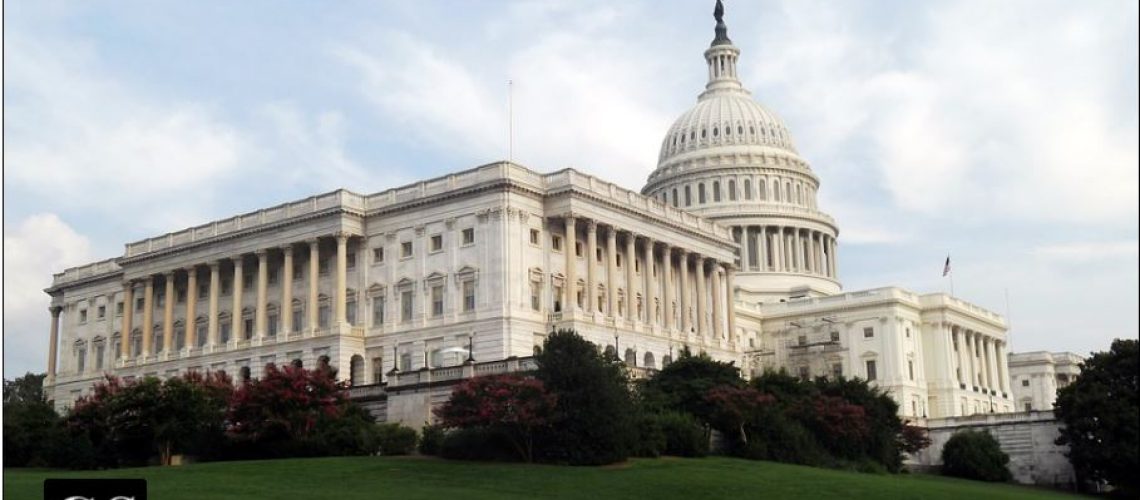
With Election Day looming (November 6th), we once again need to ask: Is there a Catholic way to vote?
In order to be good Catholics, our lives should be lived in a relationship with God, a relationship that accepts His Revelation. Politics is part of a Catholic’s life, either actively or passively, so politics in general and voting in particular should be part of our response to God. This column will suggest how we should be Catholic about politics and then, in that context, how to vote Catholic.
Four Steps
In his Apostolic Letter Octogesima Adveniens (also known as A Call to Action), Pope St. Paul VI implied that there are four steps to having a Catholic mindset in politics (and generally practicing social justice). He wrote:
In the face of such widely varying situations [in which Christians find themselves] it is difficult for [the pope] to utter a unified message and to put forward a solution which has universal validity. Such is not [the pope’s] ambition, nor is it [the pope’s] mission. It is up to the Christian communities to analyze with objectivity the situation which is proper to their own country, to shed on it the light of the Gospel’s unalterable words and to draw principles of reflection, norms of judgment and directives for action from the social teaching of the Church (4).
The pope then breaks down four steps or dimensions of Catholic political engagement:
Step 1 of Catholic politics is taking to heart “the Gospel’s unalterable words,” which is “seek first the Kingdom [of God]” (Matthew 6:33). Since the Kingdom is the ultimate human reality, it is far greater than either the Democrat or the Republican parties’ politics. A Catholic’s first commitment and final objective is the Kingdom of God.
Step 2 is knowing Catholic social doctrine, which St. Paul VI refers to as “principles of reflection, norms of judgment and directives for action from the social teaching of the [Catholic] Church.” Like any Catholic teaching, social doctrine is formulated only by the Magisterium, i.e., the bishops in union with the pope. Catholic social doctrine is a vast body of teachings about what God wants for society and from society. The most important social doctrines can be found in the Articles on the Ten Commandments in the Catechism of the Catholic Church. If there is there an issue this Election Day for which we need to know Catholic doctrine, we go to the Catechism.
Step 3 of Catholic politics is “analyz[ing] with objectivity the situation” in which we find ourselves; in other words, social analysis. True social analysis provides an accurate understanding of a given political, economic, cultural, or natural situation. It is to politics what diagnosis is to medicine. Whereas Catholic social doctrine tells us what should be, social analysis tells us what is. Vatican II’s term for social analysis was “scrutinizing the signs of the time.”
Step 4 is “to put forward a solution” to social problems and then “action” to solve the problem, to do God’s will as members of society; in other words, social strategy. Social strategy is the application of social doctrine to a particular situation known by social analysis.
In sum, there should be a certain logic to Catholic politics: Because of a social doctrine (of what should be); and because of a social analysis (of what is); therefore, a social strategy (for making what is closer to what should be).
Of course, Catholic reasoning can start with what is and then consider what should be in order to draw a conclusion: Because of a social analysis; and because of a social doctrine; therefore, a social strategy.
Should Catholics Always Agree on Politics?
The teaching of the Vatican II document, Gaudium et Spes (43), needs to be heeded:
Often enough the Christian view of things will itself suggest some specific solution in certain circumstances. Yet it happens rather frequently, and legitimately so, that with equal sincerity some of the faithful will disagree with others on a given matter. Even against the intentions of their proponents, however, solutions proposed on one side or another may be easily confused by many people with the Gospel message. Hence it is necessary for people to remember that no one is allowed in the aforementioned situations to appropriate the Church’s authority for his opinion [emphasis added]. They should always try to enlighten one another through honest discussion, preserving mutual charity and caring above all for the common good.
In order to be good Catholics, we must agree on Steps 1 and 2. We must agree that the “Gospel message,” which transcends “solutions proposed on one side or another,” is the message about the Kingdom that is best expressed in Catholic doctrine.
However, we also need to keep in mind what the US Bishops have said: “[W]e are aware that the movement from principle to policy is complex and difficult and that . . . moral values . . . do not dictate specific solutions . . . [which depend] not only on the moral force of our principles, but also on the accuracy of our information (Economic Justice for All, 134).” In other words, moving from Step 2 (doctrine) to Step 4 (strategy) is usually “complex and difficult.”
Two Catholics who disagree on politics can be equally good Catholics if they are both basing their strategy on all Catholic doctrine and objectively true social analysis. The temptation with social analysis is to pick only those facts that fit a pre-ordained conclusion rather than finding all the facts and following the truth wherever it leads.
Doctrine is a matter of Faith. Social analysis and strategy are matters of Reason. God does not reveal what the best social analysis and strategy are. He leaves that to us. Reasonable Catholics may reasonably disagree on social analysis and strategy. In the words of Vatican II, no one is allowed to appropriate the Church’s authority for his own social analysis and strategy.
The Church’s Social Teaching
It is crucial to know that the Magisterium’s social teaching includes not only doctrine but also social analysis and strategy. For example, when Pope Francis’ encyclical on the environment, Laudato Si, states, “The climate is a common good, belonging to all and meant for all,” that is doctrine. When it states, “[A] number of scientific studies indicate that most global warming in recent decades is due to the great concentration of greenhouse gases . . . released mainly as a result of human activity,” that is social analysis. And when it states, “There is an urgent need to develop policies so that, in the next few years, the emission of carbon dioxide and other highly polluting gases can be drastically reduced,” that is strategy.
Only doctrine is infallible (and not all doctrine is infallible). The social analysis and strategy of a pope, an individual bishop, or conference of bishops are not infallible. Although a good Catholic takes the Magisterium’s social analysis and strategy seriously, one does not have to agree with them in order to be a good Catholic. The Magisterium’s expertise is Faith and Morals, not social analysis and strategy.
When it comes to social analysis, a bishop or pope is like the rest of us. His social analysis will only be as good as the sources to which he turns. In the case of Pope Francis’ analysis of the climate, there are scientists whose data shows (convincingly, in my opinion) that global warming has not increased to a significant degree, if at all, or that any increase is not the result of human activity. Mistaken social analysis leads to mistaken strategy. If Pope Francis’ analysis about global warming is mistaken, then his strategy to urgently and drastically reduce certain gas emissions is mistaken.
The Magisterium usually does not make clear what part of its teaching is doctrine, what part is social analysis, and what part is strategy (unfortunately, in my opinion). When someone says, “But the Church teaches . . .,” the real question is, “What exactly is the nature of that Church teaching?” Is it doctrine, social analysis, or strategy? Our discussions will be much clearer if we stop using Church teaching as a synonym for doctrine. When we mean doctrine, we should say doctrine. When we use a Church teaching’s social analysis or strategy, we should not present it with the same authority as we present doctrine.
Voting
Voting is an example of social strategy. Good voting depends not only on faithfulness to doctrine, but also on good, accurate, objectively true social analysis.
It is Catholic doctrine that some acts are intrinsically or inherently evil, which is to say that they are always wrong, no matter what one’s intention is or what the situation is. See 1753, 1756, and 1761 of the Catechism. But to identify an act as evil is not to attribute guilt or blame to the person performing the act. Someone who commits an intrinsically evil act might or might not be blameworthy for the act. See 1790 and 1793 and 1860 of the Catechism.
The Magisterium has clearly taught the doctrine that abortion and euthanasia are intrinsically evil because they directly take innocent human life. See 2270-2276 of the Catechism. (Again, this does not mean that those who have committed or assisted these acts are always and automatically blameworthy. Furthermore, even if someone is personally at fault for committing or assisting one of these acts, he or she can always find forgiveness from our good and gracious God. Everyone, at any time, can repent and be saved.)
Can a Catholic ever be justified in voting for a politician who is pro-abortion or pro-euthanasia? No. Here is why.
Abortion and euthanasia are not like other issues. In the words of St. John Paul the Great, “In the case of an intrinsically unjust law, such as a law permitting abortion or euthanasia, it is therefore never licit to obey it, or to take part in a propaganda campaign in favor of such a law or vote for it [emphasis added]” (Evangelium Vitae, no. 73). Whereas reasonable Catholics may reasonably disagree on their analysis of and strategy for other issues, such as global warming, immigration, taxes, etc., no one who is pro-abortion or pro-euthanasia can accurately claim to be Catholic on those issues.
But what about voting for a politician who is pro-abortion or pro-euthanasia but on other issues has strategy in harmony with Catholic doctrine? The most direct and briefest guideline for answering this question that I know of was given by then-Cardinal Joseph Ratzinger as Prefect of the Congregation for the Doctrine of the Faith: “When a Catholic does not share a candidate’s stand in favor of abortion and/or euthanasia, but votes for that candidate for other reasons, it is considered remote material cooperation, which can be permitted in the presence of proportionate reasons [emphasis added].”
Let us focus on abortion. What “proportionate reasons” could possibly permit voting for a pro-abortion politician? None. It is tempting to find some “proportionate reasons” when we think about abortion in the abstract. The concrete fact is that there are over 3,000 surgically-induced abortions in the US every day. In order to justify voting for a pro-abortion candidate, one would have to show that the good he or she can accomplish out-weighs the murder of 3,000 unborn babies every day. Could “I am voting for Candidate A even though he supports the daily murder of 3,000 (Fill in the blank with any other group besides unborn babies) because he is so good on issues X, Y, Z” ever be said by a good Catholic? No.
Molly Smith, the Executive Director of Cleveland Right to Life, rightfully calls the pro-life movement “the greatest civil rights movement of our time” (on her radio program, From the Median). Use the “Four Steps” to decide whether to support a politician on an issue when he or she is not advocating an intrinsic evil. Do not vote to elect a politician who advocates an intrinsic evil like abortion over one who does not. When having to choose between two pro-abortion politicians, use the “Four Steps.”



10 thoughts on “Voting Catholic”
A Catholic cannot vote for a Democrat for any reason. Including support for welfare programs at any level. To do so would break God’s Commandment of thou shalt not steal.
A very belated Thanks, Mr. Sto, for your excellent correction of my column.
Pingback: 243 Years after our Founding - The State of the States - Catholic Stand
Here we go again, using dichotomy to solve America’s political polarization. Dividing Charged vitriol of Pro-Life and Pro-Choice just add to the division. The church holds responsible for the true meaning. I know some Pro-Choice folks that profess to be the opposite, but refuse to allow exceptions of rape, incest and the life threat of the mother. They are not EVIL!
We are uncertain of whom we will vote for in 2020. After hie disaterous two years in office, Trump will not be our choice. Talk about EVIL. He is only now trying to goad the Catholic Church into believing that he is Pro-Life, which he is not. He is only Pro-Donald. Now where does that leave us in social politics?
The EVIL Democrats are flash showing over 20 candidates. The apparent front runner, Joe Biden a catholic just did a flip on the Hyde amendment. Can we vote for him? Most all are favoring a woman’s choice saying emergency abortion to save the mother must not be a crime. In Missouri the Governor signed a bill doing just that. Justice John Roberts argued that Roe was settled law of the country.
We abhor abortion on demand and that should be changed. However, we don’t want America to mirror Ireland before Mary Robinson where a mother will lose her life if she doesn’t fly to another country for her abortion. Our political options are minimal given that we have been Republicans all our lives, but find Trump EVIL and unfit to serve another term.
I don’t envy US Catholics their current political choices, and I certainly do not recommend voting for a pro-choice candidate. However, the Ratzinger statement is mis-interpreted if one says that “no proportionate reasons” can ever exist in case of abortion due to the severity of this topic. They are rare, but must be considered; an exemplary explanation is given here: https://www.catholicculture.org/culture/library/view.cfm?id=6159 — if voting for a pro-life candidate is most likely going to result in a strong abortionist to be elected, then it may be a necessary “minor evil” to vote for a more moderate abortionist.
No- you can always not vote or write in someone else. So-called “proportionate reasons” analysis MUST take into account ALL democrat positions, which includes their full support of numerous intrinsic evils. . And we must note so well: to say one cannot vote for any democrat is NOT to say vote GOP! I have spoken more in detail about this elsewhere: No Catholic with a well-formed conscience, as this is defined by the Church, can vote for any democrat at any level of government: .http://sinvote.democrat/faith-filled-citizenship-voting-catechism/.. In addition to the intrinsic evils of abortion, same-sex “marriage,” and mercy murder, the Dem Party of Death is also dead wrong on several other issues that the Church says are “nonnegotiable” and also intrinsically evil: . http://www.the-american-catholic.com/2018/10/20/democrat-candidate-hillary-priests-bishops-cardinals-dont-come-near-me/ . Guy McClung, Texas
Guy, thanks for your reply. However, I think you may not have fully considered in your argument the concept of lesser evil, which of course requires to look at all aspects and not only the gravest one (e.g. a candidate‘s position only on abortion). An absolute such as „a Catholic must never vote for any Democratic candidate“ seems too rigid and does not allow for the necessary consideration. This is also true for the arguments on the website you’ve linked to.
For a Church approved guidance of the US Bishops’ Conference on preparing for voting, see here: http://www.usccb.org/issues-and-action/faithful-citizenship/forming-consciences-for-faithful-citizenship-title.cfm
Also, it seems to me you‘re mixing up the positions of a party (which you are not electing) with the positions of specific candidates (which you are voting for) – this is different in some countries, where indeed just the party and not a specific candidate is getting votes.
a fine article Marty. Your approach is so balanced that I had to read it carefully to see that you regard sanctity of life issues as of prime importance and that you don’t agree with Pope Francis’s push for fighting “climate change.”
I’ve written elsewhere (Essay 8 of my web-book, “Truth cannot contradict Truth” and a post on this blog, “Galileo Redux…”) about the dangers of the Church making judgments on science. Pope Pius XII was all set to make Abbe LeMaitre’s Big Bang hypothesis part of Catholic teaching until dissuaded from so doing by LeMaitre.
The point here is that science changes. What was accepted 50 or 100 years ago has been superseded by new theories, new data. Church dogma and doctrine are eternal. So how can science be incorporated into dogma or doctrine? It can’t. And Pope Francis and the bishops who plug climate control should know that
One more point regarding voting: Democratic senators–Casey, Donnelly, Manchin–who call themselves “pro-life” but vote to fund Planned Parenthood are sailing under a false flag. Considering who controls policies and positions taken by the Democratic party, I can’s see how anyone who holds the Catholic position regarding the sanctity of life could vote for a Democrat.
Bravo and AMEN! This is what I would like every Christian in the nation to read. Your analysis is crisp, logical, and clear. Thank you!
Pingback: THVRSDAY AFTERNOON EDITION – Big Pulpit