

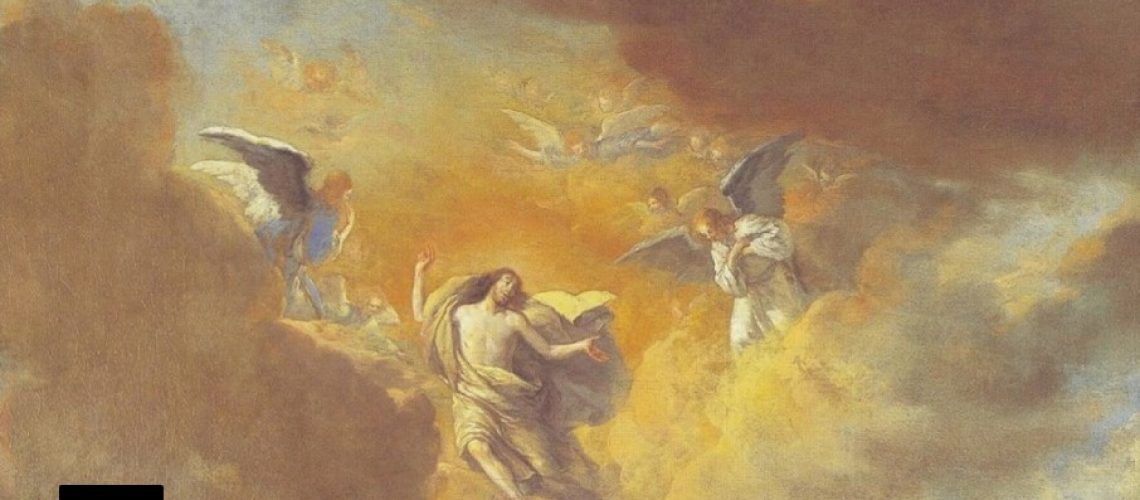
Background
Way back in a fifth-grade classroom conversation, I recall citing Fatima and/or Lourdes as proof for God’s existence. To myself and the 50+ other eleven-year-olds, the sister replied that Catholics were not required to believe in such. I was confused, as I suspected there were other classmates. I remain confused as to why Sister thought it was a good idea to make this sophisticated point with eleven-year-olds.
Fast forward 54 years and I have been trying to clearly understand the Dicastery for the Doctrine of the Faith’s Norms for Proceeding in the Discernment of Alleged Supernatural Phenomena (5/17/24) and its implications. I believe that I have made some progress! To a very large extent, it makes the point that Sister was attempting 54 years ago.
As per the Catholic World News (5/17/24), Norms for Proceeding in the Discernment of Alleged Supernatural Phenomena makes
issuing a final pronouncement on reported apparitions, after an investigation by the bishop of the diocese” the role of the Vatican’s Dicastery for the Doctrine of the Faith. It further states that “no such pronouncements will affirm with certainty that the phenomena are of supernatural origin and merit the belief of the faithful…[They] allow for a range of judgments, including various degrees of caution.
Actually, that is not a big change at all.
Highlights/Quotes from the Presentation of The Document
So, what is being presented?
[the] action of the Holy Spirit can also reach our hearts through certain supernatural occurrences, such as apparitions or visions of Christ or the Blessed Virgin, and other phenomena….
in some events of alleged supernatural origin, there are serious critical issues that are detrimental to the faithful; in these situations, the Church must respond with utmost pastoral solicitude.
one should not overlook…the possibility of doctrinal errors, an oversimplification of the Gospel message, or the spread of a sectarian mentality.
Finally, there is the possibility of believers being misled….the Dicastery recently proposed to the Holy Father the idea of concluding the discernment process not with a declaration of “de supernaturalitate” but with a “Nihil obstat”….the possibility always remains that the Holy Father may intervene exceptionally by authorizing a procedure that includes the possibility of declaring the supernaturalness of the events….the possibility of declaring an event as “not supernatural” remains, but only when there are objective signs that clearly indicate manipulation at the basis of the phenomenon.
Highlights/Quotes from the Introduction
Though we progress slowly in understanding Christ’s Revelation, He is not a moving target! He has given us His full Revelation!
Jesus Christ is the definitive Word of God….In the revealed Word, there is everything necessary for the Christian life….While all that God has willed to reveal he has done through his Son and while the ordinary means of holiness are made available to every baptized person in the Church of Christ, the Holy Spirit may grant some people distinct experiences of faith…. occasionally phenomena occur that seem to exceed the bounds of ordinary experiences and present themselves as having a supernatural origin (such as alleged apparitions, visions, interior or exterior locutions, writings or messages, phenomena related to religious images, and psychophysical phenomena) ….To assist Diocesan Bishops and Episcopal Conferences in discerning phenomena of alleged supernatural origin, the Dicastery for the Doctrine of the Faith promulgates the following Norms for Proceeding in the Discernment of Alleged Supernatural Phenomena.
Highlights/Quotes from the Document’s General Guidelines
The first part of the General Guidelines is just that: general.
as a general rule, it is not foreseen in these Norms that ecclesiastical authority would give a positive recognition of the divine origin of alleged supernatural phenomena….Even when a Nihil obstat is granted for canonization processes, this does not imply a declaration of authenticity regarding any supernatural phenomena present in a person’s life….The discernment of alleged supernatural phenomena may reach conclusions that are usually expressed in one of the terms listed below.
Nihil obstat….
Prae oculis habeatur….
Curatur….
Sub mandato….
Prohibetur et obstruatur….
Declaratio de non supernaturalitate….as a rule, neither the Diocesan Bishop, nor the Episcopal Conferences, nor the Dicastery will declare that these phenomena are of supernatural origin, even if a Nihil obstat is granted….It remains true, however, that the Holy Father can authorize a special procedure in this regard.
The second part of the General Guidelines is much more specific about procedures.
Conclusion
In trying to gain more knowledge of Norms for Proceeding in the Discernment of Alleged Supernatural Phenomena (May 17, 2024) and indicated changes, I found one review particularly helpful.
the Dicastery [for the Doctrine of the Faith] will be publicly involved and importantly, a bishop must submit his decision to the Dicastery for final approval….
This document lists six levels of classification when evaluating claims of the supernatural.
Nihil obstat
Prae oculis habeatur
Curatur
Sub mandato
Prohibetur et obstruatur
Declaratio de non supernaturalitate….they range from “no aspects that are particularly critical or risky have been detected” (Nihil obstat) to declaring that the phenomenon is not supernatural (Declaratio de non supernaturalitate). The classifications in-between those two extremes reflect the various differences that can occur among phenomena, including any risks perceived in a phenomenon and the resulting fruits associated with it….no bishop, episcopal conference, or the DDF itself can declare a phenomenon to be supernatural in origin. This is reserved for the pope alone, and it seems this is intended to be a very rare occurrence….it’s likely we’ll never see an authentic apparition like Lourdes or Fatima make as great an impact on the Church as long as these norms are in place….the desire for extraordinary signs…can lead to ignoring the ordinary signs in our midst such as the Eucharist and the presence of God in daily life….[Christ] publicly gave the whole Church: the Sacraments, charity, and prayer. By clinging to those instead of chasing after visions, we can surely be saved. (Eric Sammons of Crisis Magazine, 5/22/24)
As indicated, the norms seem to hammer home the very point that my fifth-grade teacher was attempting 54 years ago.
Just like way back when, I hope these norms will be used gently to avoid crushing delicate growths of the Faith.
[Social media appeal: Hello, readers! If you think my article, or any other article at Catholic Stand, will help others better understand and/or spread the faith, please post a link to your social media account(s). Thank you!]



5 thoughts on “Understanding Norms for Discerning Alleged Supernatural Phenomena”
Pingback: The Good News: San Fran Opens 'Free' Food Market: Costs Taxpayers $5M+, and More Dispatches. . . - Catholics for Catholics
Pingback: MONDAY AFTERNOON EDITION | BIG PULPIT
Faithful & Nate,
Thank you both for your comments.
What I wonder a bit on is how some Apparitions are approved by the local Bishop if I am getting this correct. Perhaps, this means that the Vatican will get the final say on approval. I see how this could get complex.
OTOH, Our Lady of LaVang appeared in Vietnam yet, it happened so long ago and in a remote part of the world at least for back then, the apparition does not seem to have official Bishop or Vatican approval
But if one reads the Miracle Hunter’s website, it seems to have a tacit approval, the Basilica is recognized or something of that nature. The Miracle Hunter is a good reference.
Good stuff, Joe! Thanks for digging into this!