

A great deal has been said of late about the upcoming Synod on Synodality: there have been a lot of positive comments, a great deal of negative responses, and perhaps more than anything, copious amounts of confusion. Regardless of the interplay of the different interpretations, ideologies, and fears, at the very least, we can be sure of this: there is a great need for renewed efforts at evangelization, both for those who have never heard the Gospel before, but also, and particularly, for those who live in countries that were Catholic but have since become secularized.
The theme of the new evangelization is at least part of what we see reflected in the documents for the Synod: for instance, in the International Theological Commission’s document “Synodality in the Life and the Mission of the Church,” we are reminded that all the members of the Church need to “take an active part in her evangelizing mission” (6), and that hopefully the process can lead to “stimuli to discovering new methods of evangelization” (74) and “sparking new processes for evangelising culture” (85). Indeed, the hope is that the synod will lead to “the beautiful, tender and strong style of this new phase of evangelization” (121).
Need for Creative Approaches
The idea of a “New Evangelization” has been around for some time. However, it is essential to recognize it for what it is: while the tools, methods, expressions, incentives, and fervor might be new, adjusted for the times and places where the evangelization is taking place, the heart or purpose of evangelizing is always the same, “namely, the experience of Christian faith: the encounter with Jesus Christ, God the Father’s Gospel to humanity, which transforms us, gathers us together and introduces us, through the gift of the Spirit, to a new life” (Instrumentum Laboris, 17).
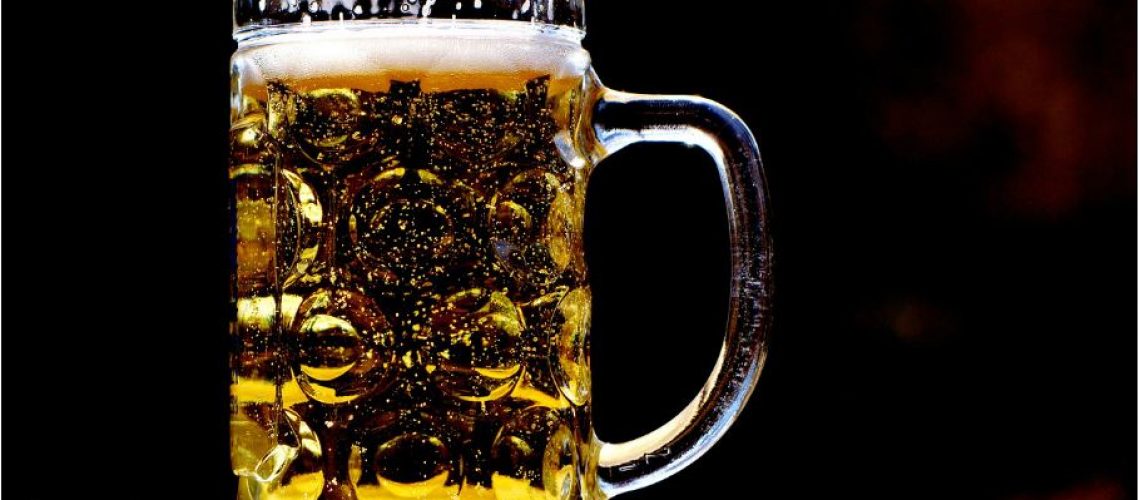
To evangelize, then, we have to bear in mind the essential truths, some things that never change. Likewise, there are other things, be they traditions, beliefs, or attitudes, that can never be reconciled with the Gospel. However, a wide range of tools and expressions can be used to spread the Gospel. One such example, and one that might even be used today, is that of beer.
The Evangelizing Character of Beer
Today, there is a certain association between the Church and beer: after all, there are abbey ales, Trappist beers, and monk brews. However, in the early days of Christianity, the relation between beer and Christianity was far less jovial.
Indeed, based on a faulty translation of Isaiah 19:10, wherein the Egyptian “beermakers” became despondent (the term in the NABRE is, rather, “hired laborers”), many patristic writers, among them Eusebius, Saint Cyril, Theodoret, and even Saint Jerome, rejected beer in favor of wine. After all, Christ used wine, and not beer, at the Last Supper.
Nevertheless, as Providence would have it, there is nothing doctrinally binding about this interpretation of the Church Fathers. Indeed, in Ireland, as the first evangelization of that country took place, there was no problem to be found between brew and belief.
In fact, the Celts were known for their beer drinking traditions. While there is no record of Saint Patrick having brewed beer, it is said that he imparted some wisdom regarding beer to Saint Brigit of Kildare. It seems that she took his advice to heart, as Cogitosus, in his Life of St. Brigit, recounts the following miracle:
Another wonderful occurrence was this: lepers asked the venerable Brigit for ale. Since she had none, seeing some water prepared for the baths and blessing it with the power of faith, she changed it into excellent ale and drew it in abundance for the thirsty men. For He who changed the water into wine at Cana in Galilee also changed water into ale through the faith of this most blessed woman. (From The Journal of the Royal Society of Antiquaries of Ireland, Vol. 117, 15-16.)
What is noteworthy is not only the quality of the beer she provided but also that it was prepared for lepers as an act of charity. Other traditions recount Brigid providing an entire diocese with enough beer at Easter that the beer was entirely consumed after the Easter octave. Likewise, three men drank poisoned beer yet were unharmed because they had praised the Irish saint.
Missionary Beer
A short time after, Saint Columban, the Irish missionary who evangelized Europe, brought with him his knowledge of beer and is himself said to have worked numerous beer-related miracles. Among others, he multiplied two loaves and a little beer so that sixty monks could all eat and drink their fill.
Another miracle of Columban attests to a “purification” of beer. Beer drinking was associated with pagan practices, and while Columban did not reject beer, he made sure it was seen only in light of the Gospel without other connotations. The story is recounted as follows:
As Columban was mixing with some townsfolk, he was informed that there was to be a pagan offering of beer to their god. At a distance, Columban simply breathed upon the huge barrel containing the beer, which immediately shattered and blew out all the beer with it. Rather than become enraged the barbarians were shocked, and listened to Columban’s admonitions from the Gospel. As a result, many were converted.
Whether these saintly miracles are true down to the last letter, or if some aspects are pious exaggerations, the essential truths remain the same. Even if beer had been rejected earlier, at the right time, the right place, within the right context, it became a very effective means for evangelizing.
Indeed, it was so effective that the abbey plan of St. Gall, from the early 800’s, already contained three different breweries: one for beer for the monks, another for distinguished guests, and one for pilgrims and paupers. Beer not only gave the monks sustenance but was also an offering given to the poor and travelers.
Still a Mission Tool
So, what does this mean for us? On the one hand, we need to consider the different possibilities we have to evangelize. Many things can be used to help people encounter Christ: we can think of digital media, personal conversations, and so many other means. Evangelization requires creativity, but ultimately it is about helping people enter into a relationship with Jesus Christ.
The truth is that sin never makes people happy for very long. Indeed, anything other than Christ is bound to disappoint. Many people are simply “content” in their lives: they are not happy, not sad, but just getting by. Such a life, however, is a far cry from what Jesus came to give us: “I came so that they might have life and have it more abundantly.”
Few people today live that abundant life; they survive but do not thrive. It is the task of evangelizing to bring others to the fullness of life. Perhaps beer can even play a role now: Theology on Tap has seen success, but perhaps even more effective is a one-on-one conversation with a friend or colleague. It would make Patrick, Brigid, and Columban proud.
———-
I am indebted to the research found in Max Nelson’s The Barbarian’s Beverage: A History of Beer in Ancient Europe, as well as (to a lesser extent) Richard W. Unger’s Beer in the Middle Ages and the Renaissance.





11 thoughts on “The Evangelizing Power of Beer”
No beer in heaven? Says who?
Pingback: VVEEKEND EDITION – Big Pulpit
Unfortunately the parishes in my area think a “men’s group” is gathering before dawn on a Saturday morning to watch a DVD in the “That Man Is You” series or similar packaged product that some church-nerd has deemed a proper “social life” for men. No beer and I suspect very little conversation involved.
Hi Larry; yeah, unfortunately while those programs might work for some guys, I think a lot of guys just want to sit around, drink a beer, and talk. In fact, I know a couple of parishes where the men’s group just does that: they get together once a week or once every couple of weeks, usually on Thursdays, just the guys, and have some beer or a barbecue, and hang out with the priests. There’s no formal plans, no talk schedule: just guys (with a priest or two), beer, and hanging out. If a guy wants something more formal or more formative, that’s fine, and there’s opportunities for that, but this gathering is just for gathering (with beer).
A Synod on Synodality? A meeting on the importance of meetings?
Yes, I agree. Beer would make this less confusing. To be specific, great amounts of beer.
So far, the correct term is Sin-od. Alternate: heresy. Guy, Texas
You know, CaptCrisis, in the monastery where I live, I actually brew beer. There’s a lot of paperwork that has to be done (it is Italy, after all) in order to sell it, but maybe I can piggyback on some of the Synod publicity. We could market something like “Synodality Ale” or “Conversation Starter.” I think it’s got potential.
And Guy: I get where you’re coming from. There’s a lot of things that make me scratch my head and wonder, but I think in the end it reminds us of the need to pray. Truth be told, I’m actually pretty hopeful for this Synod: not because I trust completely in the human beings in it (or behind it, as the case may be), because we’re all sinful and able to be mislead, but rather because I trust in my God, who can get good out of anything (even me, as Saint Therese said).
This morning I was reading Acts 5, and the words of Gamaliel seem to apply perfectly to this situation: “If this endeavor or this activity is of human origin, it will destroy itself.” But, if it comes from God, He’ll make it work out.
Of course, I should also add that Aquinas points out that hope abounds in drunkards (ST I-II, q. 40, a. 6). Don’t get drunk, but beer can help in this regard as well.
Fr.,
I’m reminded of those ads for Bass Ale in the 1980’s. Mark Twain asking “Can anything compete with life’s simple pleasures?” Franz Kafka: “What is man’s greatest fear?”
The slogan: “Bass Ale helps you get to the bottom of it all.”
Ha! Or, even more biblically, a priest friend of mine used to cite Psalm 49:4: “With the Harp I will solve my problem.” Nothing like a nice lager to get to the bottom of things and find solutions.
In heaven there is no beer . . . That’s why we drink it here, Guy, Texas
Yes! This is quite true!