

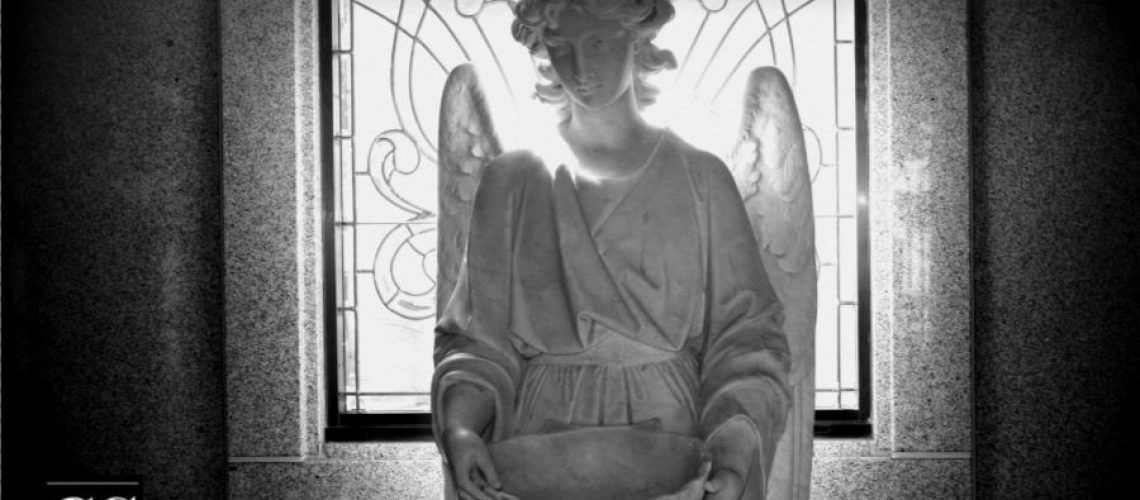
Statues/Graven Images
Many Protestants believe that statues, especially those in churches, are idols. They base their erroneous belief on a misinterpretation of the First Commandment, which states,
I am the Lord your God …. You shall have no other gods before me. You shall not make for yourself a graven [engraved or 3-dimensional; also, dead] image, whether in the form of anything that is in heaven above or that this on the earth beneath, or that is in the water under the earth. You shall not bow down to them or worship them (Exodus 20:2-5).
First, notice the commands that immediately precede and follow the prohibition against making graven images. They say that we shall have no other gods and that we shall not bow down to them or worship them. Therefore, the context of this passage implies that we must not make graven images that we then treat as “other gods.” The command does not suggest a universal prohibition against image-making. Rather, the command is against image-making for the purpose of worshipping that image or the false god it represents.
Second, Catholics do not worship anyone or anything other than the one God, the God of Abraham, the Trinitarian God, the eternal Creator. Third, in Exodus 25:17-19, God instructs the Israelites to construct the Ark of the Covenant with graven images of creatures in heaven. In Numbers 21:8-9, God instructs Moses to make a bronze serpent. 1 Kings 7:25-29 tells us that King Solomon commanded statues of lions, oxen, and cherubim be placed in the temple. In 1 Kings 9:3, God approved Solomon’s work. (For more on why the bronze serpent points to Jesus, please click here.)
This last verse (1 Kings 9:3) is of great importance. It shows that God approved the use of statues in temple worship without commanding Solomon to make them. If Exodus 20 were teaching us that an inextricable link between images and idolatry exists, God’s command to create images and His approval of images for use in temple worship or otherwise would make no sense.
Images In Us
Furthermore, do we not create images in our minds? If I have an image of a rare bird in my mind and I want to share the image with others, I can draw it, carve it, or mold it, and none of these images would constitute worship. We make images in our minds continuously. This is part of how humans think; it’s part of how we form concepts. God created us to make mental, 3-dimensional, graven (dead) images to reason about his creation. Therefore, the mere creation of images does not equal idolatry.
Creating Images Is Good
Additionally, creating images is not intrinsically evil because God creates human beings who are made in His image and likeness. As those made in his image and likeness, we have intellects that God designs to create images. We reflect God’s image-making power when we create images for good purposes. Therefore, creating images is not intrinsically evil.
The point of the First Commandment is not to prevent humans from creating images. Rather, it instructs us not to create them for worship.
Finally, Catholics use statues and other images to remind us of our faith’s great heroes, those family members who went before us. If you see a Catholic kneeling before or kissing a statue, that person is venerating (showing respect or reverence) the individual represented and not the statue itself.
Additional Resources
If you have questions about a Catholic teaching, please visit Catholic Questions by clicking here.
For more short answers or other articles, please click here.
[Social media appeal: Hello, readers! If you think my article, or any other article at Catholic Stand, will help others better understand and/or spread the faith, please post a link to your social media account(s). Thank you!]



11 thoughts on “Short Answers: Does Possession of Statues Violate the First Commandment?”
Pingback: A World Upside Down, Leila Lawler on Divorce, College, and the Dual-Income Home, and More Great Links!| National Catholic Register – Catholic Mass Online Search
Pingback: VVEDNESDAY MORNING EDITION | BIG PULPIT
Thank you Nate, your explanations are clear and true. If I’m not mistaken the Ark of the Covenant, built by Jews, includes statues of two angels. The two statues were not there to be worshipped but to represent real angels present in the Ark as guardians of the “inner room” where sanctity and divinity resided. This one example should be sufficient to satisfy any reasonable objection to your main premise.
Thank you, Richard! You basically distilled my article into one sentence. Perfect. God bless!
Then why do Jews agree with Protestants on this issue? The Commandments were given to them first and they’ve obeyed it. I don’t see any statues in synagogues.
I’ve made this so simple that even you can understand it. Try reading paragraphs three and four.
So why do Jews agree with Protestants on this issue? Are you saying they don’t understand their own Torah?
Did the Jews create statues for their temple or not?
Better question: Did God command and approve the creation of statues for the temple?
The Jews, gone astray under Aaron, could not have been really worshipping that golden calf. After all, they made it. They must have been worshipping what it represented. Which makes it indistinguishable from what you’re saying about Catholics — they are praying to what a statue represents.
I’m trying to get inside the minds of today’s Jews and today’s Protestants. Anyway that is my guess as to what they’re thinking.
Crisis – I see that you do not want to answer my question, “Did God command and approve the creation of statues for the temple?” That says a lot about your lack of integrity. My article is clear. Scripture is clear. The problem, as usual, exists on your end.
Some Protestant churches have statues, murals, and stained glass windows to represent God’s creation and those saints who have gone before us. Therefore, to say that Jews agree with Protestants on this issue is a gross generalization. Further, I’m speaking of ancient Jews while your speaking about contemporary Jews. What contemporary Jews believe is of no consequence to my article’s thesis and the evidence I laid out. The fact of the matter is that the ancient Jews understood that the First Command did not prohibit statue making. It prohibited worship of statues and other dead images. The Catholic Church nowhere teaches that we are to worship images.