

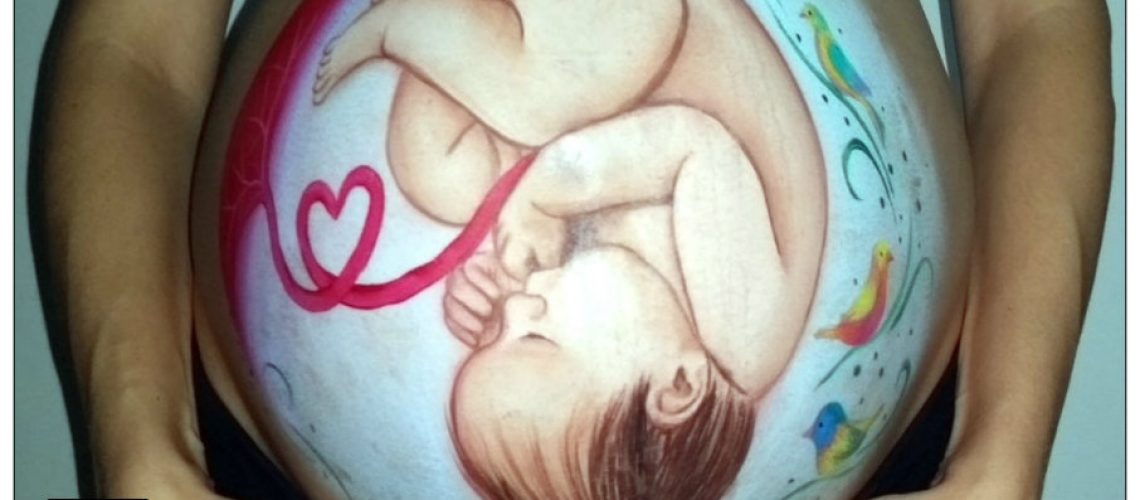
“Human life is sacred because from its beginning it involves the creative action of God and it remains for ever in a special relationship with the Creator, who is its sole end. God alone is the Lord of life from its beginning until its end: no one can under any circumstance claim for himself the right directly to destroy an innocent human being.”
—Catholic Catechism, 2258
ABORTION AND POLITICS
In response to the Supreme Court’s decisions on the Alabama and Texas Abortion laws, our Chief Operating Officer (J. Biden) has said he doesn’t think life begins at conception (See here.) Moreover, he contends that religious teaching (including, presumably, that of his own Catholic Church) says abortion is OK. To show that this position contradicts what science tells us, I’m offering a selection from my web-book, “Truth Cannot Contradict Truth,”(Essay 8). I give arguments that life begins at conception and thus, abortion at any stage is murder. Further, it is important to realize that there are many atheists who also argue against abortion on scientific grounds (see this web-search).
EMBRYOLOGY: CONTINUOUS DEVELOPMENT, CONCEPTION TO BIRTH
Embryology tells us that the development of the human from conception to birth is continuous; there are no sharp changes, no sudden metamorphosis, caterpillar to butterfly. Thus the full humanity is present in the 8 cell blastopod as well as in the baby emerging from the birth canal. There is a fine Youtube depiction of this continuous development by Alexander Tsiaras.
The Princeton philosopher, Peter Singer, recognizes that there is no logical distinction between the child in utero, unborn, and the infant, the child which has emerged from the birth canal. Thus it is as permissible to kill an unwanted child after it is born as before:
‘Newborn human babies have no sense of their own existence over time. So killing a newborn baby is never equivalent to killing a person, that is, a being who wants to go on living [emphasis added]…Sometimes, perhaps because the baby has a serious disability, parents think it better that their newborn infant should die. Many doctors will accept their wishes, to the extent of not giving the baby life-supporting medical treatment. That will often ensure that the baby dies…My view is different from this… I believe it should be possible to carry out that decision, not only by withholding or withdrawing life support — which can lead to the baby dying slowly from dehydration or from an infection — but also by taking active steps to end the baby’s life swiftly and humanely.’ …More recently, in an April interview with WND’s Aaron Klein, Mr. Singer said bluntly: ‘I don’t want my health insurance premiums to be higher so that infants who can experience zero quality of life can have expensive treatments.’ ”[emphasis added]
—Peter Singer, as quoted in the Washington Times
WHEN IS HUMAN; WHO IS HUMAN
We use terms like “zygote” and “fetus” — and for that matter “adolescent” and “adult” — to describe human beings at different stages of development. A fertilized human egg is simply a human being at its first stage. [emphasis added]… But certain individuals like to use these terms as though they describe entirely different creatures, not stages of the same creature. They do this to disguise what they actually believe, which may also be stated quite simply: that some human lives are worth less than others.”
—Peter Christofferson, comment on “The Banality of Evil, Redux: Do Planned Parenthood Officials Sin?“
Some abortion proponents attempt to justify killing the unborn by denying the humanity of an embryo or fetus; they use the following arguments:
- A fetus is not human until it totally emerges from the birth canal (a presumed justification for partial-birth abortion);
- Before some arbitrary time mark, say 24 weeks after conception, it is permissible to abort a fetus;
- Since self-awareness is a prime criterion for being human, it is permissible to abort an embryo or fetus before it is self-aware.
TIME LIMITS TO ALLOW ABORTION ARE ARBITRARY
In many states an arbitrary time after conception is set for abortions to be allowed: before that time abortion is legal; afterwards, not. Other criteria might be used, for example, when the first fetal heart beat can be heard, as in the recent Texas State law. But such demarcation points between human and non-human are also arbitrary, since the potentiality of humanity is present, as Catholic teaching AND science tell us, from the moment of conception, in the first single fertilized cell.
Some interesting questions occur, naive though they may be. First, how do you determine (without drastic invasions of privacy) when conception occurs? Drawing a curtain over that issue, we can ask if a fetus at 19 weeks, 6 days, 23 hours, and 59 minutes after conception is non-human, i.e. legally eligible for abortion, and if a fetus 20 weeks, and one minute after conception is human, not to be aborted. I should hope it’s clear that any time marker to legalize abortion is arbitrary, without any rational basis.
THERE IS NO SHARP POINT AT WHICH A HUMAN IS SELF-AWARE
The third of the comments above asserted that an embryo or fetus would not be human because it would not be self-aware and, therefore, could be aborted without qualms. Really? If we’re deeply asleep, do we then become non-human, zombies? What about people in deep comas from which they later awake? Are they non-human while in coma and then become human again when they recover?
It appears that immediately after birth, infants are capable of demonstrating already a sense of their own body as a differentiated entity: an entity among other entities in the environment (Level 1).
—Phillipe Rochat, Five levels of self-awareness as they unfold early in life
And if this awareness is present immediately after birth, should it not also be present before birth? And if the development of consciousness is a continuous process, when is it that not one smidgeon of self-awareness is present? Remember, the brain is present as a partially developed organ some 5 weeks after conception.
ALLOWING ABORTION HAS MORAL CONSEQUENCES
The Nazis did not regard Jews as humans, nor, evidently, do Planned Parenthood doctors regard unborn babies as human.
Once it is admitted that a person “no matter how small” can be classified as non-human, then there are no limits:
Assuming as a principle that humans can be selectively classified as unworthy of life—as elderly, as disabled, as unborn, as ethnically impure, as mentally challenged–violates that which is, or should be, written in the conscience of every man.
Since Roe vs Wade there has been a decline in sexual morality, a rise in fatherless families and, generally, all that contributes to bad times. Whether there is a causal relation as some contend can be debated. (See The Myth about Abortion and Crime and Does Abortion Really Reduce Crime.) So where does that leave us? That only evil can come from abortion.
CONCLUSION
Abortion at any stage, except perhaps to save the mother’s life, is wrong. And even in that circumstance, the Catholic “Double Effect” teaching has to be operative: the death of the unborn child is an unintended, unsought consequence of the measures taken to preserve the mother’s life.
The proponents of abortion (they call themselves “pro-choice,” but that is an extreme euphemism) do so because abortion seems to offer a “convenient” way not to undergo the trials and effort of bearing and raising a child. In our day there is no shame to bearing a child out of wedlock, so that is not a reason to kill the unborn. And if it is impossible for financial or other reasons to raise a child, offering the child for adoption is an alternative. Accordingly, there is no good reason to kill the unborn if you believe that human life is a good. Killing the unborn is a sin, but remember, sins can be forgiven through the Sacrament of Reconciliation.
NOTE
*This article was published previously on Catholic Stand, in somewhat different form.




4 thoughts on “Science Says:<br> Life Begins at Conception*”
CC, thanks for your comment. I assume you’re referring to Aquinas’s judgment that abortion should not be performed after “quickening,” that is when movement of the fetus was first evident. However, Aquinas did believe the soul was imparted at conception as did the Patristic Fathers. See here:
https://www.catholic.com/magazine/print-edition/when-babies-get-their-souls,
and CC 366 and the writings of Pope Paul VI, Pope Pius XII, and Pope St. John Paul II (don’t have time to put down all the links) if you have another source for your comment, please cite it so I can learn something new.
The site you directed me to also says that Aquinas did not believe the fetus has a soul until 40 – 80 days after conception (40 days for boys, 80 days for girls). See https://www.catholic.com/qa/did-st-thomas-aquinas-believe-ensoulment-occurred-40-or-80-days-after-conception-making-abortion
This teaching would seem to survive the discovery of the mammalian ovum in 1829. No matter whether conception is at “quickening” or at sperm meeting egg, ensoulment is at a later point, or so the teaching went.
For centuries after that, official Catholic teaching went back and forth as to whether the fetus before “quickening” (around 20 weeks) was or was not a human being (and therefore whether termination was homicide). In 1588 Sixtus V tried to put his foot down and held that the fetus was a human being beginning with conception. But that was quickly undone by Gregory XIV in 1590 who returned to the prior teaching and set ensoulment at 24 weeks. It was only in 1869 (40 years after the discovery of the ovum) that Pius IX issued “Apostolicae Sedis” which finally set it for good at conception. Again, up until then this debate about ensoulment was about what happens post-conception.
So the Church was wrong when it talked about “ensoulment”?
The Church never made a definitive statement about any conception until it pronounced on the Immaculate Conception in 1854, so it was never wrong about “ensoulment.” There were simply differing views of theologians, leaders, and so on as you set forth, but no definitive “Church teaching.” The differing views/speculations were due in large part to a false understanding of embryology and development of the child in the womb until scientific advancements in embryology, etc. finally demonstrated when a new being in the womb begins its distinct existence as an individual human being from the very first moment of its conception.
Actually, with the definition of the Immaculate Conception in 1854 that refers to the very first moment of Mary’s conception, for all intents and purposes the Church’s understanding of ensoulment was virtually complete and no longer open to speculation at that time as it makes no sense to define the Immaculate Conception as pertaining to Mary’s first moment of existence and declare such to be the Immaculate Conception if the first moment of existence and conception are not one and the same and Mary did not receive a soul at that same moment that was preserved free from the stain of original sin.