

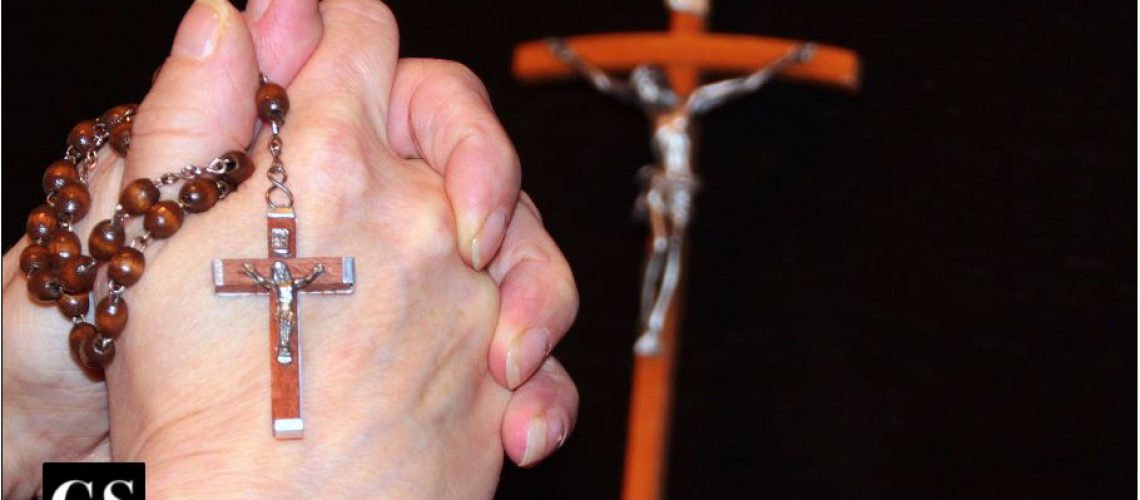
Because of a past professional career in exercise science and physical fitness, I like to make analogies from the physical domain to the spiritual domain of faith. And there are many.
I recently had a conversation with an old colleague that made me think of a new analogy. We were discussing the fact that many folks break their New Year’s resolutions to exercise often within just 3-4 weeks. This led to a further discussion of all the health problems caused by “hypokinetic disease.”
Hypokinetic disease
In the fields of preventive medicine, fitness, and exercise, there is a term used to describe the relationship between lack of exercise and health. That term is “hypokinetic disease.” (Hypo means deficient or low, and kinetic means motion.)
Hypokinetic disease refers to diseases influenced and caused by sedentary living. Sedentary living – living an inactive lifestyle – has been associated with many conditions and diseases. Such a lifestyle can cause heart disease, stroke, back pain, and obesity.
My friend is an epidemiologist (one who studies the causes of disease) and we discussed the “epidemiology triad” detailed below and its relation to hypokinetic disease. In reflecting on that conversation, I came to the conclusion that there are many similarities between hypokinetic disease and not practicing our faith.
The epidemiology triad
The epidemiology triad is a model that focuses on three things 1) the agent or cause of a condition, 2) the host or recipient of the agent, and 3) the environment that sets the stage for “infection.”
When looking at a given condition, the issue at hand is how can we “immunize” the host against the agent. A simple example is the use of vaccinations to prevent small pox. Small pox is the agent, the person is the host, and the vaccination is the environmental intervention.
Taking obesity as another example, the agents can be overeating and sedentary (excessive sitting, lack of exercise) habits. These habits cause a calorie imbalance leading to weight gain. The host is the person and his/her obesity. And the environment is the social and physical setting that is conducive the inactivity and overeating.
An example intervention to immunize the obese host would be to alter the environment. Changing the individual’s personal habits accomplishes this. Exercising on a daily basis, following a specific diet, and reducing sitting time are all effective alterations.
The triad offers a unique model for viewing one’s faith life if that faith is inactive or “hypokinetic.”
Overcoming a hypokinetic faith
Being inactive towards one’s faith can take many forms. Not going to mass, not spending any time in faith based activities, ignoring the teachings of the Church, and just not thinking about God can be hypokinetic examples.
The epidemiological question is how can we immunize ourselves and others from becoming hypokinetic towards our faith? Personal experience on my own faith journey and experiences in teaching in RCIA and other parish education courses has shown that this isn’t always easy.
I think there can be three habit domains for immunization.
First is the physical domain that requires a physical involvement in faith based activities. Attending mass on a weekly or even a daily basis is one habit to instill. Going outside one’s self to get involved in faith based activities such as pro-life efforts, Knights of Columbus, or the Alter Society are other examples.
Second is the cognitive domain. This can be anything from regular Scripture and Catechism reading to more detailed Bible studies. It can also be a habit of reading authors who write faith based fiction and nonfiction books such as C.S. Lewis and G.K. Chesterton.
Third is the spiritual domain. This can include acquiring the habit of daily prayers or Eucharistic adoration. It can also include participating in sacraments such as confession, and participating in spiritual retreats and pilgrimages.
There are many other efforts that can assist one to develop an active faith habit. For all those efforts to blossom requires the strength of will that requires self-discipline, especially by applying the virtues of diligence and patience.
A training model to overcome a hypokinetic faith
There is an analogy between developing a muscle and developing faith activities. Think of faith as a muscle. Developing a muscle takes use and exercise. Likewise, developing one’s faith means practicing faith-based activities.
There are seven (7) major exercise habit principles to increase physical fitness and muscle development. These can transfer to habit development principles to increase one’s practice of faith activities.
Regularity: A faith habit must be practiced on a regular basis with a schedule. Once in a while doesn’t get the job done.
Reversibility: Just as a faith habit can develop with regular use so it can dissipate with nonuse. The old adage of “Use it or lose it” applies.
Overload: Improving a faith habit means constantly overloading the demand on it. In other words, additional time or effort is necessary to consistently improve.
Progression: For a faith habit to develop over time it must be on a gradual basis. Small steps are required leading to bigger steps. Trying to do too much at first can lead to fatigue and loss of interest.
Balance: To achieve a well-rounded faith activity habit a balance and a variety of activities works best. This is preferable to just focusing on one activity.
Individuality: For a faith habit to develop the activity needs to be individualized. This means tailoring it to ones’ needs, interests, convenience, and preferences. This will help a person stick with it.
Moderation: Whatever the faith activity, it should be applied with moderation to prevent “burnout.”
Application of those principles
Many need some structure to develop a new activity habit whether for physical fitness or for faith. In designing a faith activity program, it’s necessary to consider all of the principles. So it’s necessary to know how often, how focused, how long to do the activity, and what activities to undergo. An acronym from exercise science that defines those key factors is FITT.
While FITT is the universal guideline for designing an exercise program, it can be readily applied to designing a faith activity program.
F = Frequency – How often to do the activity.
I = Intensity – How much effort, energy and attention are necessary to do the activity.
T = Time – How much time or duration is required.
T = Type – What types of activities will be performed.
An example of the FITT process being applied to develop physical, cognitive, and spiritual faith based activity habits could look like this:
TYPE (Example Activities)
| Attending Mass | Bible Study | Saying a Rosary | Attend a Pro-life Activity | |
| Frequency | Weekly | 1 hour 2x/week | Daily | Once Every 2 Weeks |
| Intensity | Moderate | Low | Low | High |
| Time | One Hour | One Hour | 30 Minutes | One to Two Hours |
Conclusion
I recognize that drawing parallels between exercise training and developing faith-based activities habits may seem a “stretch” for some. However, many Catholics have a “hypokinetic “faith and all avenues need to be explored for overcoming that inactivity. The epidemiology triad, training principles, and FITT process provide a potential model to help in that effort.
Any effort to expand one’s faith activities requires, as previously mentioned, willpower. Self-discipline, diligence, patience, and desire are all necessary.
Sometimes, however, forcing oneself to try out a faith activity will result in understanding or appreciating what one is accomplishing. As Mikey says in an old cereal commercial, “try it – you’ll like it.” I have seen this numerous times in developing exercise lifestyles. Perhaps the same can occur in the development of faith-based activities and habits.
“Avoid profane and silly myths. Train yourself for devotion, for while physical training is of limited value, devotion is valuable in every respect, since it holds a promise of life both for the present and for the future” [1 Timothy 4:7-8].




3 thoughts on “Overcoming a Hypokinetic Faith”
Pingback: Spiritual Transformation as Training
Pingback: MONDAY EDITION – Big Pulpit
Wonderful, just wonderful, and so very true. With a background in Exercise, I understood only too well your analogies. And so true.
Yes, use it or lose it.
Thanks again.