

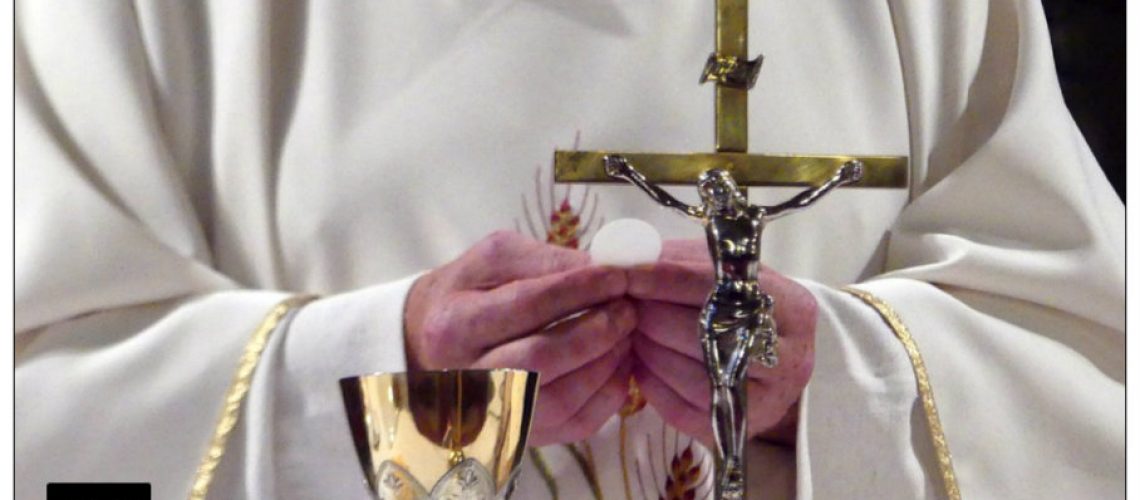
Part 2 – Garabandal and the Eucharist
The Greek Philosopher, Plato, said that although we have emerged from being cave dwellers, built great cities to live in, and decorated them with beautiful artistic masterpieces, we still live spiritually like cave dwellers. We live in a world of shadows, blind to the most important truths that could really change our lives. We have lived in this world of shadows for so long, he said, that when someone comes to tell us the truth, we do not want to know, do not want to listen, and if they keep pestering us we become angry. And if they persist and keep trying to tell us the truth that we do not want to hear, we put them to death, as they put Socrates, his mentor to death.
The Price of Truth is Death
His fellow countrymen had for years believed in over two thousand different gods but Socrates said there could only be one, so in the end they called him an atheist and put him to death for perverting the young. Four hundred years later, Jesus Christ came to tell everyone the truth and like Socrates before him, was condemned to death because they did not want to hear it. Socrates wanted all who listened to him to live the good virtuous lives that would make them happy as did Jesus. But Jesus was able to help them to live good virtuous lives by giving those who listened to him the power to do it.
He was able to do this because he was not just a man, but the son of God, a God of love. It was this love that would make what was impossible to the followers of Socrates, possible. Without love, even the best of men and women would never succeed in living good virtuous lives for long. That is why when their descendants saw the followers of Jesus filled with love and living the good virtuous lives that they were unable to maintain, they asked to join their ranks.
Spiritual Decline
Gradually Christians began to forget what Jesus taught and what was once a powerful vibrant faith began to decline. Although in subsequent centuries there were many new and successful beginnings, decline usually set in again. By the time the twentieth century arrived, things were so bad that short of some sort of heavenly intervention it seemed nothing could be done to save, not just unbelievers, but believers too from perdition. That intervention came many times over in the person of Our Lady, the Mother of God. She has appeared many times to young children to tell them once more the truth that the adult world to which they belonged had forgotten. It was exactly the same message that Jesus gave, and that had been lived out in the early Church, but explained so simply that the children and those to whom they related the message could understand it too.
Our Lady’s Message
The four words that sum up the message that Our Lady delivered to the children at her appearances can be expressed as a single word, love. The first, to ‘Repent’ means to turn back to the love of God and then keep turning to receive what can alone change our lives permanently for the better. The genuine happiness and joy it brings will enable us to share what we have received with others. For the first Jews, there was no such thing as someone who has repented but only for someone who is repenting and who continues to repent, or who turns to God and who keeps turning to God to receive his love in return. It is a lifelong action of loving that continues every day for the rest of our lives, in and out of formal prayer, through all and everything we say and do and all whom we try to love and serve.
A Truly Catholic Life
That is why the second word that Our Lady uses to sum up a life of loving God, is the word, ‘Sacrifice’. In order to do this you have to give up a hundred and one other things that you would prefer to do for your own personal pleasure and satisfaction. So a truly Catholic life is a life full of sacrifices, not done for its sake, or to show how you can make yourself perfect like the stoics, but to show how like Mary herself, everything that is said or done is done for the love of God.
The third word that she uses to describe that loving is ‘Prayer’. Why? It is because prayer is the place and the time set aside to practise repentance, to practise sacrificing in concentrated periods of time set aside for that purpose. It is rather like a spiritual gymnasium. People use a secular gymnasium to prepare their physical bodies to enable them to act with ever greater ease and facility through the rest of the day. However, it is in endlessly trying to turn back to God in the spiritual gymnasium which is prayer, by repeatedly turning away from the distractions and temptations that are always there, that our sacrificial loving is not only practised but fused and surcharged with the fruits of Christ’s own sacrificial loving. It is here then that a person is made capable of doing all things possible for God, even the impossible.
It Is Like a Powerful Mystical Force
The final word that sums up her message for the modern world, particularly at Garabandal is the word, ‘Eucharist’ or the Mass. It is here that what has been primarily done in private is done in public with all other Catholics present, offering all the sacrifices that have been made in practising repentance inside and outside of prayer to God. However, we do not do it alone because Jesus Christ himself is present during every Mass in a very special way. He is present, as our ever-loving and glorified Saviour who is doing two things simultaneously. He is loving God and he is loving us. His love for us is like a powerful mystical force that draws up all who are open to receive him into himself. Then in him and with him, everyone is united together in his mystical body to be one with each other in offering all the sacrifices made since we last came to Mass, to our common Father.
But that is not all. Christ is always present to anyone who is open to him through repentance, helping us to live the same sort of sacrificial life that he led. But at Mass, he becomes present in the sacred bread and wine. so that we can both physically and spiritually receive him into our hearts and minds and bodies. He does not do this as a reward for being good, but to help us to be good as he was good, by continually giving us the help and strength to keep loving God every moment of our daily lives as he did.
I praise You, Father, Lord of heaven and earth that You have hidden these things, these spiritual truths from the wise and intelligent and revealed them to little Children (Matthew 11:25).




2 thoughts on “Our Lady’s Teaching On Prayer: A Lenten Course on Prayer”
Nice analogy at the beginning to Socrates. We do not like being told what to do, especially in modern times. Those who are most virtuous are often persecuted for making others look bad. Our lady calls us to overcome this tendency with nothing cool or complex–she simply calls us to the basics of Catholic spiritual practice. We do not need to read the next super cool psychology book to attain to any of this.
Pingback: TVESDAY AFTERNOON EDITION – Big Pulpit