Decades ago, when I was serving as a military legal officer, some classified documents in my command went missing. I advised referring the matter to a senior command for investigation. Back then, regulations issued in the aftermath of the Navy’s devastating Walker family espionage scandal mandated immediate referral of such matters to senior authorities. I explained to my command that missing classified documents required sending the case upstairs. Eventually, I won the day and the command followed the prescribed process. For several weeks beforehand, however, I kept hearing that the documents were not really lost, they just hadn’t been found yet.
A similar kind of wordplay and interpretation game has wormed its way into our daily lives. It has infected our culture and our law. For example, religious freedom is colloquially being reduced to ‘freedom of worship,’ and some are pressing officials to recognize freedom from the religion of others. There are very strong anti-Catholic forces afoot and they have become more emboldened in recent days. There are cultural and legal developments that are about to severely impair Catholic schools and parishes.
Troubles From the Supreme Court
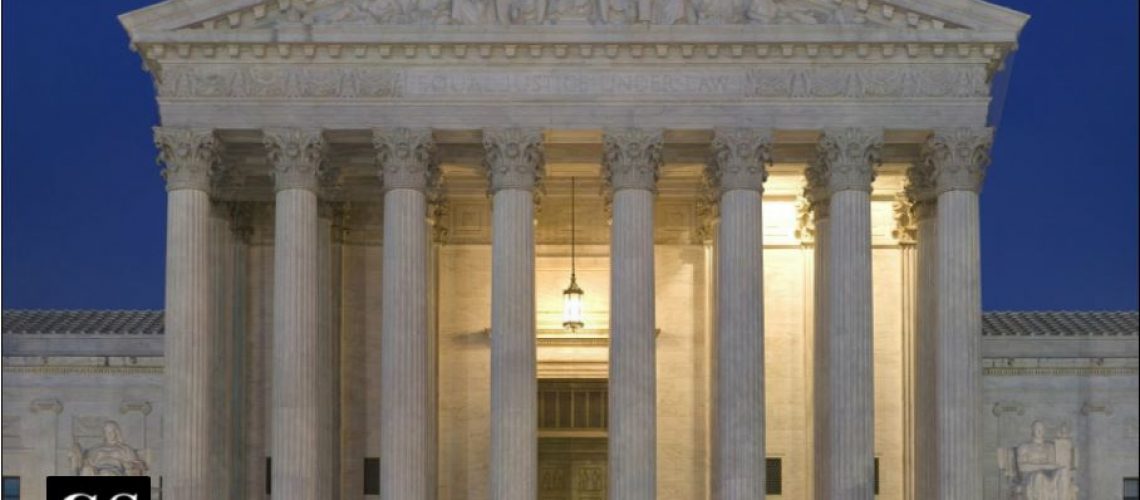
Only days ago, the Supreme Court issued a ruling (
Bostock v. Clayton Co., Georgia). which, in essence, inserted LBGT to the category of sex, in the text of the 1964 Civil Rights Act. The law prohibits employment discrimination based on race, sex, color, religion, or national origin – but now, per the Court, it also includes LBGT persons. As one
opinion piece put it, the
Bostock opinion:
. . . will live in infamy for accomplishing a double whammy of jurisprudential destruction: (1) it has opened up the floodgates of future litigation against churches and religious institutions of every kind (move over “Bake the cake,” and say hello to “Men in dresses must teach catechism!”), and (2) it did so by claiming to adhere to Justice Scalia’s textualist approach to the law while actually betraying it.
Another commentator stated the
Bostock decision “threatens the stability of our Republic” and likened it to the extreme injustice of the Dred Scott case in 1859, (which ruled that a slave living in a free state was not and could not ever be a citizen, paving the way to the Civil War).
The point of this hot rhetoric is to call out the justices on the obvious wrongness of the ruling. It is a clear and radical departure from simple, everyday principles of law and legal interpretation. Consider the centuries of division and misunderstandings still emanating from another capriciously added word to an important document in history: Martin Luther’s addition of “alone” to Romans 3:28. The rewritten text supported new teaching that people are saved by faith alone. This has been a source of ecumenical friction for over 500 years and shows the incredible destruction that misplaced words can cause, (partially remedied by a 1999 Catholic and Lutheran Joint Declaration on the Doctrine of Justification).
I think it is no legal subtlety that the Bostock court snuck in new words to pretend that is what Congress intended. It is closer to a legal coup d’état. I dare say, in principle, it is worse, more glaringly erroneous than the legal subterfuge employed in Roe v. Wade (declaring abortion as a Bill of Rights shadow right). My point is not at all about the merits of whether LBGT persons should or should not have the employment rights awarded by the Court. It is about snatching the decision away from The People and imposing a decision on society.
Catholic and other religious institutions, I predict, will be in for a blitzkrieg of legal attacks to starve the Church and bludgeon her with cries of bigotry, unfairness, and illegality in hiring and firing. The legitimate fear is that LBGT legal challengers will claim a right to be employed in Catholic churches and schools. If successful, they may spread their beliefs about sexuality which are contrary to Catholic teaching, undermining the Church itself. This
Bostock case was issued on the heels of at least
100 Catholic schools being economically driven to close by the lengthy governmental coronavirus shutdowns.
Other Anti-Church Legal Shenanigans
During the pandemic stay-home orders, in the Midwest, one state completely closed churches until further notice. Another state suddenly and dramatically increased restrictions on church attendance just as other public venues were being allowed to open up more fully. Churches and people of faith initiated Constitutional challenges based on freedom of religion and the unequal treatment compared to other open establishments.
In Illinois, it occurred by filing a lawsuit.
In Wisconsin, it was by a legal-brief letter with a threat to file a lawsuit. In both cases, the states reversed their edicts just prior to their probable legal defeat. I think it is more than fair to say that the governmental entities caved in because they knew that their actions were legally indefensible.
I will venture a guess there will be more to come of this sort of anti-religious brinksmanship. Repression will likely be premised upon some fig leaf reason to benefit the public if any reason is given at all. At present, there are loud rumblings of a second wave of the virus which could result in additional shutdowns and more economic adverse impact on religious institutions.
The situation is alarming. As 1 Peter 5:8 says, we need to “Be alert and of sober mind. Your enemy the devil prowls around like a roaring lion looking for someone to devour.” To mix my metaphors, the fox is already inside the hen house. I think there is more persecution coming around the corner and the Church is likely to lose more people. Much like what Cardinal
Ratzinger predicted when he was still a priest there is a bleak picture for the future of the Church – followed by an eventual resurgence:
But when the trial of this sifting is past, a great power will flow from a more spiritualized and simplified Church. Men in a totally planned world will find themselves unspeakably lonely. If they have completely lost sight of God, they will feel the whole horror of their poverty. Then they will discover the little flock of believers as something wholly new. They will discover it as a hope that is meant for them, an answer for which they have always been searching in secret.
What to Do
I certainly wish I could offer more helpful coping suggestions. St. Teresa of Calcutta lived for 50 years in spiritual dryness, yet kept up her ministry to the poor, sick, and dying. She demonstrated perseverance in emulating. Today, there are more than 5,000 sisters in the order she founded and missions in over 130 countries. Things happen in life that is sometimes spiritually paralyzing, at least temporarily. When I am knocked down by some experience, I only know to stay down until I can regroup and then get up and begin again, spiritually and otherwise. So, I suggest that’s what we do. In so doing, even the most devout Catholics may well learn to tap into depths of spiritual power they/we had not previously known or understood.
First, feel firm in the promise in Matthew 16:18, the gates of hell will not prevail against the Church. Responses to the prowling lion’s tricks might include:
- Really heartfelt pleading prayer – that Catholics become stronger in their faith; pray for our enemies who suffer in the darkness of misunderstanding; pray that we may not devolve into anger and revenge
- Undertake new ways of pumping up our faith and holiness, spiritual reading by saints or commentators, the Catechism, the Bible, radio or TV or Catholic blogs can be very quick and helpful; if possible, become involved in some form of corporal and spiritual works of mercy or a faith group
- For those who have children, look into homeschooling for the near future
- Practice your faith visibly. Attend Mass and be present for fundraising, church picnic types of events. When things happen that you know or believe to be discriminatory against the Church, write elected officials, even when it seems useless; put out religious Christmas decorations in your yard, front window or apartment door
- Support public interest law firms which take on religious freedom cases and take solace in the history of the church’s persecution and its overwhelming persistence
The monolithic Roman Empire failed to defeat Christianity. The repression of Catholics in England in the 16
th century spawned St. Thomas More, the Recusants, and much later, Cardinal John Henry Newman. More recently,
In 1979, approximately three million ordinary Poles living under Soviet satellite oppression, gathered to attend Mass and pray with the Polish pope. The Poles’ nine-day peaceful confrontation with their overlords led to a workers’ union in a communist country. It was a first step to unraveling communism and brought the return of religious freedom.
Redemptive Suffering
Catholics will undergo suffering in the form of church and state clashes. It will present opportunities for Catholics to venture more deeply into redemptive suffering, that is, consciously offering their pain and distress as a form of reparation for sins in the world. There are holy people and saints who have suffered greatly and been able to say that it brought them joy. Joy! I don’t know of any road map to reach that level. We can only follow the path of our faith more vigorously. A well-known Catholic who suffered a great deal,
St. Padre Pio, left some pithy tips which are worthwhile for the Church’s near future.





10 thoughts on “New Clashes Between Church and State”
IN the late 1980’s, Judge Robert Bork wrote an essay entitled “Law, Morality, and Thomas More” that discussed law and morality as seen through the life of Sir Thomas More. This extraordinary essay by Judge Robert Bork recounts several prescient points from Thomas More that illuminate what has happened within our legal system, since Roe v. Wade redefined the morality of destroying innocent human life, and the Supreme Court has given ascent to redefining marriage. Furthermore, it is a disapprobation of the judicial bench for giving the legitimacy of law to that which is understood as immoral, and by creatively interpreting the Constitution not from morality based in the natural law, but in accordance with the personal preferences of the judge. Some excerpts from Bork’s essay follow that in my opinion are on point –
“But there is more than the fear of lawlessness and tumult. There is the thought that he is not sure about morality, he may be wrong. When Roper says to him, “the law’s your god,” More replies, “Oh, Roper you’re a fool, God’s my god. . . . But I find him rather too subtle. . . . I don’t know where he is nor what he wants.” … .
“It is this behavior that causes Bolt to refer to More as a “hero of selfhood.” Indeed it was extraordinary behavior: More was the only person, not a member of the clergy, who refused the oath and thus chose martyrdom.
Yet the refusal to take the oath need not, of course, be viewed as disobedience at all. There was a law higher than Henry’s, and More knew that the oath violated that law. As to this ultimate thing, he, at last, knew where God was and what he wanted. At this extremity, God was no longer too subtle for him, and More obeyed God’s law and went to his death. This was not disobedience but obedience, a thought he expressed in his last words as he lay down before the headsman: “I die the King’s servant, but God’s first.”
For More, then, until law changed, it was to be obeyed, and that in-junction he applied as much to the judge on the bench as to rioters in the street. We all recognize rioters or draft resisters as civil disobedients but we are less likely to recognize that the judge who ignores law or who creates constitutional law out of his own conscience is equally civilly disobedient. I had not thought of it that way until Alexander Bickel, in his wonderful book, “The Morality of Consent”, recounted the recent American experience with the phenomenon in the streets and then said, “The assault upon the legal order by moral imperatives was not only or perhaps even most effectively an assault from the outside.” He argued that it came as well from a court that cut through law to do what it considered “right” and “good.” The theoretical justification for that peculiarly corrupting form of civil disobedience is now being constructed by many of the most prominent constitutional scholars in our law schools. It is the philosophy that judges should create and enforce as constitutional law individual rights that are not to be found in the Constitution.”
(The Catholic Lawyer – “Law, Morality, and Thomas More” by Robert Bork https://scholarship.law.stjohns.edu/tcl/vol31/iss1/2/ )
Within the constructs of Judeo-Christian belief, as well as, Islamic belief, homosexuality is held to be immoral. The following is excerpted from http://www.Catholic.com illustrating the tension the will exist between the Court’s Bostock decision and the Church’s teachings on homosexual behavior.
“All of Scripture teaches the unacceptability of homosexual behavior. But the rejection of this behavior is not an arbitrary prohibition. It, like other moral imperatives, is rooted in natural law—the design that God has built into human nature. … The Catholic Church teaches that such acts are always violations of divine and natural law. ”
“The Catholic Church thus teaches: “Basing itself on sacred Scripture, which presents homosexual acts as acts of grave depravity, tradition has always declared that homosexual acts are intrinsically disordered. They are contrary to the natural law. They close the sexual act to the gift of life. They do not proceed from a genuine affective and sexual complementarity. Under no circumstances can they be approved” (Catechism of the Catholic Church #2357). Moreover, for homosexuals who desire to live chastely, as prescribed by Church teachings, they can contact Courage, a national, Church-approved support group for help in deliverance from the homosexual lifestyle. Web: http://cour;agerc.net.” (https://www.catholic.com/tract/homosexuality)
While this is the Church’s teachings, in my own experience as a Catholic, I have observed and been counseled by many priests and military chaplains, that it is appropriate to hate the immorality of the sin represented by homosexual/lesbian behavior, while showing compassion and love for the sinner. Perhaps it is this schizophrenic approach fostered by the post-Vatican-2 Catholic Church that influenced the Supreme Court in the Bostock case. It is interesting to note that a majority of the Supreme Court Justices (5) proclaim to be Roman Catholic, while one other Justice is Episcopalian but was raised as a Catholic. With all that be said, I would not want to be the parent that is trying to raise their children with traditional morals and ethics based on natural law in today’s environment. Also, I believe that as the moral basis that traditionally has underpinned the nuclear family, this society we become more and more disenfranchising to people of faith, and the moral decay will inevitably lead to a total breakdown in the social order.
As a sidebar, there is a question as to how this unfortunate SCOTUS pronouncement will effect the U.S. military’s ability to maintain “Good Order and Discipline” and cohesion within its military organizations and formations, if the military as an employer no longer has the option of rejecting for enlistments, appointments, or commissions those applicants who proclaim their gender as LGBT. I ask this question because some years ago when I was a USMC officer, and subsequently an NIS agent – which was long before there was a “Don’t Ask, Don’t Tell” policy, this was a very serious practical issue due to “Good Order and Discipline” and unit cohesion that was needed in order to field an effective fighting force that would defend the United States of America and its geopolitical and economic interests.
Just yesterday (6/25) a new study has been added showing that being gay is the result of nurture and not the result of nature:
https://www.pewresearch.org/global/2020/06/25/global-divide-on-homosexuality-persists/
https://catholicstand.com/explosive-proof-against-the-gay-gene-theory/
https://www.catholicleague.org/mass-producing-lgbt-people/
US Supreme Court: “An employer who fires an individual merely for being gay or transgender defies the law” (Bostock v. Clayton County).
Catechism of the Catholic Church: “Every sign of unjust discrimination in their regard should be avoided” (#2358).
Since you want to quote the CCC, let’s not forget —
1899 The authority required by the moral order derives from God.
1902 Authority does not derive its moral legitimacy from itself.
1903 . . . If rulers were to enact unjust laws or take measures contrary to the moral order, such arrangements would not be binding in conscience. In such a case, “authority breaks down completely and results in shameful abuse.”
SCOTUS abused its authority when it ruled that it’s okay to kill innocent children. Then it took it upon itself to redefine marriage. Now it is again legislating from the bench by adding language to an existing law that was never intended when the law was passed.
And also let’s not forget CCC #2359: Homosexual persons are called to chastity.
So you’re rejecting #2358. Glad you admit it.
Unless you’re saying that the Supreme Court is violating the Catechism by “legislating from
the bench”. I refer you to Loving v Virginia, Brown v Board of Education, Miranda v Arizona. . .
Nice try, but we all know the two statements are poles apart, because when the court says “being gay or transgender” it really means “actively living and promoting sodomy as if there’s nothing wrong with it and actively living and promoting the biological absurdity that sex (“gender”) is mutable and a matter of choice”. Of course no Catholic institution has ever or would ever fire anyone for literally merely being gay or transgender.
Bostock was fired for playing in a gay softball league. I can tell you for a fact that it is against the rules of softball to commit sodomy on the field, even with two outs.
The Bostock decision combined three separate cases, as you should know. The travesty in the decision is that SCOTUS redefined sexuality and added words to an existing law that were never intended. This has nothing to do with having compassion for or being sensitive to the plight of homosexuals.
What possible point could there be to a “gay softball league” than to promote sodomy as a harmless or even positively good thing to do? It’s not just a bunch of guys playing softball who by an amazing coincidence all just happened to be also practicing and promoting sodomy.
If you’re going to reject the Catechism, you should just admit it.
US Supreme Court: “An employer who fires an individual merely for being gay or transgender defies the law” (Bostock v. Clayton County).
Catechism of the Catholic Church: “Every sign of unjust discrimination in their regard should be avoided” (#2358).