

Part 1: What do we Preach?
Preaching Christ, and Him crucified was a theme that was developed by St. Paul. In 1 Corinthians 1:23, he writes that “we preach Christ crucified”. But in the verse before this, he decries the attitudes of Jews and Greeks alike, “Jews demand signs and Greeks look for wisdom”! He first tackles the Jews, who demand proof in the form of miracles and signs. And why? Because they cite Moses, whose miracles it is lost to them, that these were totally overshadowed by the good works that the Lord Jesus did while He lived amongst men as the God-man. Paul, who became all things to all men so that by all possible means he might save some (cf. 1 Corinthians 9:19-23), puts his foot down on this matter. He emphatically states that no matter what others may do, we must preach Christ. We do not dare to modulate; we cannot tone down; and, we will not modify or adjust the great subject matter for which we were commissioned to go out to preach. This matter is the Lord Jesus Christ, and Him crucified.
Then there were the Corinthian Greeks, who looked for what they esteemed to be wisdom. But theirs is the wisdom of the world, not the Wisdom of God which Paul preached. The Greeks also much-valued memories of the articulateness of famous public speakers and thought that true wisdom surely must come from such skilful vocalizations. To these, St. Paul writes that he determined to know nothing amongst them except the Lord Jesus Christ, and Him crucified. Adding that he even came amongst them in weakness and fear, and with much trembling. And it is for this very reason that his message and preaching were not in persuasive words of wisdom. They were but in the demonstration of the Spirit and of power so that their (our) faith would not rest on the wisdom of men, but on the Power of God (cf. 1 Corinthians 2:2-5).
Is This Theme Relevant Today?
There are some in the world today, who behave like the Jews and Greeks of Paul’s time. For them, this Jesus remains a stumbling block and utter foolishness. They would rather prefer that Christ crucified is not preached. They advocate for intellectual preaching to be at the forefront, even though neither the heavens nor they themselves can understand this kind of preaching which takes no reference to the Bible. These are the sort of people who chase after so-called eloquent preachers, whose sermons require you to have a dictionary at hand! Yet we know that some of these intellectual indulgences have led many to a downfall; for such preaching is not blessed by God for the salvation of souls.
But to the faithful believers, those whom the Lord God has called, the Lord Jesus Christ is the Power of God and the Wisdom of God (cf. verse 24). We learn from St. Paul that the foolishness of God is far much wiser than human wisdom, and the weakness of God is so much stronger than human strength (cf. verse 25). This is why the Christian must endeavour to preach Christ, and Him crucified even when others endorse worldly philosophies and arguments. This Christ who died for sinners, the people’s Christ, will be preached in simple language and plain speech so that the common people can also understand.
What do We Preach?
The preaching we do should be modelled to St. Paul, the model for all preachers who says, “we preach Christ crucified” (cf. 1 Corinthians 1:23). If we are to preach the gospel fully, we must have a very clear description of the Person of the Lord Jesus Christ:
- We preach Christ as God
For us, the Lord Jesus Christ is true God and true Man (CCC, 464). His Incarnation does not make Him part God and part man; neither does it imply that he is the result of some form of a mixture of the divine and the human. We preach that He became truly man while remaining truly God. As the early Church did, we too must defend and clarify this truth of the faith against any heresies that falsify it.
Thus, we preach not a man-made into God, nor God degraded to the level of a man, nor something that is in between a man and God. We preach the Absolute God; the Creator of Heaven and Earth; the Triune God Himself. He who is one with God the Father in every attribute. He who is eternal, and without beginning of days or end of life (cf. Revelation 22:13). He who is all-present, all-powerful and all-knowing. He who knows all things from eternity. Him who is the great Creator, the Preserver, and the Judge of all. He who is in all things equal and exact in the image of the invisible God (cf. Colossians 1:15).
The preaching shall not err on the Deity of Christ – we shall preach a Divine Saviour upon whom our souls are trusting. We identify that it is only the shoulders of the almighty God which can carry the enormous weight of human guilt and human need. We preach Jesus Christ the Son of Mary and the reputed Son of Joseph, who worked in the carpenter’s shop, all the while being the God who made the heavens and the earth.
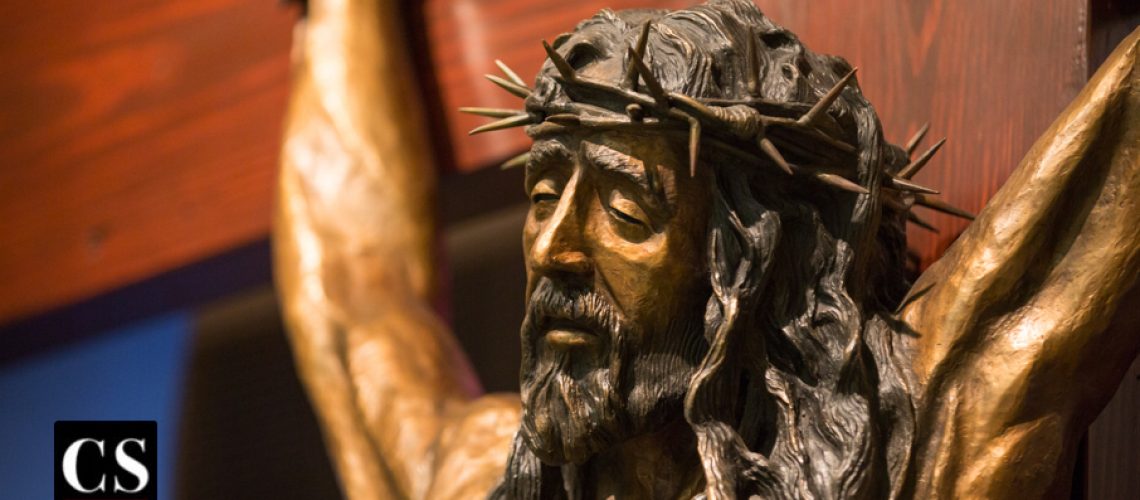
We preach Christ, who had no place to lay his head. Him who was despised and rejected by men, but who is nonetheless the Eternal God, and Lord of the Universe (cf. Psalm 145:1-7). We preach Christ who was nailed to the cross, bleeding from every pore, and dying on the cross; yet in spite of everything, living forever. We preach the Christ who suffers indescribable agonies, yet all together being the God at whose right hand are the eternal pleasures.
We preach Christ who was man and therefore could sympathize with us so He could suffer in place of us. In order to be the covenant head, He had to have been made in every way like the sons and daughters of Adam and Eve (except that He was without sin). With this one exception, he was bone of our bone, and flesh of our flesh; nevertheless, He was as truly God as He was man. The very one of whom Isaiah prophesied to be called the Wonderful Counsellor, the Mighty God, the Everlasting Father, the Prince of Peace (cf. Isaiah 9:6). So, as we preach Christ crucified, we preach the glory of heaven in union with the beauty of the earth. We preach the perfection of humanity unified with the glory and dignity of Deity.
- We preach Christ as the Messiah
We preach Christ as the One sent from God. We preach Jesus of Nazareth who was that promised Deliverer of whom it was written in both the law and the prophets. We preach the great Deliverer who would come as a light for revelation to the Gentiles, and the glory of his people Israel. We preach Him who was sent from God to be the Saviour of sinners. We preach Him who took this responsibility on himself without authority, that He could truly declare, “Here I am, I come to do your will, O God” (cf. Hebrews 10:9 and Psalm 40:7-8).
We preach He, who became the Substitute for sinners by divine decree because “the Lord has laid on him the iniquity of us all” (cf. Isaiah 53:6b). We preach our great High Priest, who was divinely anointed; we preach our matchless Prophet, who was sent to us from God; we preach the King of kings and Lord of lords, who is rightly ruling as the eternal Son of the eternal Father.
We preach this truth which should bring hope and comfort. We preach God’s Anointed Christ, who does what He does by God’s appointment. We preach Him who speaks for his Father as well as for Himself, who has the authorization of the Eternal to support His declaration. We, therefore, must come confidently to him, putting our trust in him. This should lay a firm foundation of whom we preach so that we can then preach what He does.
- We preach the Work of Christ
The Lord God made this everlasting covenant with humanity, in which the Lord Jesus Christ stood as the Security and Representative of His people. It was in the fulness of time that He came down from the heavenly Throne, and was dressed in the flesh. First, He produced active righteousness by the perfect obedience of his daily life. In the end, He provided passive righteousness by His sufferings and death on the cross. Right from the Incarnation, to the Suffering and Death, to the Resurrection, and the Ascension; now in the Intercession before the Father’s Throne, and looking forward to His glorious second coming. Here is a theme that the angels might yearn for; a theme that could awaken hope in my sinful heart. But we preach Christ crucified, whose wounds and bruises remind us to tell how “He was pierced for our transgressions, and crushed for our iniquities; the punishment that brought us peace was upon him, and by his wounds, we are healed” (cf. Isaiah 53:5). Salvation is to be found at Calvary, where the Lord Jesus bowed His head and gave up His spirit; where He defeated the powers of darkness and opened the kingdom of heaven to all believers.
Every true servant of Christ must be able to speak very distinctly about the Lord Jesus Christ standing in the place of sinners, and being numbered with the transgressors not because of His own, but of their transgressions; Christ paying our debts and discharging all our liabilities (cf. Isaiah 53:12). A truth we can only preach if we can take the place of the Lord Jesus as He took ours, so that we are beloved, accepted, made heirs of God. And we believe that in due time we will be glorified with Christ forever (cf. Romans 8:17). Those who hear the preaching must always clearly recognize that the Lord Jesus Christ is a divine and all-sufficient substitute for the sinner. Everyone who puts their trust in Him will be eternally saved (cf. John 3:15).
- We preach Christ’s offices.
In His earthly ministry, the Lord Jesus Christ carried out three functions – Priest, Prophet and King (cf. Hebrews 1:1-3). In baptism, we are We appreciate and preach the Lord Jesus Christ as the one great High Priest, who always lives to make intercession for us (cf. Hebrews 7:25). We recognize and must preach him as the Prophet whose words are divine, which come to us with an authority that cannot be repealed. We acknowledge and remember to always preach Him as King. The preaching must put the crown of praise on His royal head, claim from His people the unfaltering allegiance and loyalty of their hearts, and assert the undivided service of their lives.
We must preach the qualifications of Christ for these offices. His love and tenderness; His patience, power, and perseverance; His self-giving sacrificial love. His ability to save completely those who come to the Lord God through Him; His gentleness that will not break the bruised reed, nor snuff out the smouldering wick (cf. Isaiah 42:3). We must delight to preach Christ who bends over the broken-hearted and wraps up the wounded (cf. Psalm 147:3); who readily hears the cry of a contrite spirit (cf. Psalm 34:18).
The preaching must bring out the magnetic character of the Lord Jesus which attracts sinners to Himself (cf. John 4 & Matthew 9). His glorious nature, excellence and charm (cf. Revelation 5) preached should make sinners fall in love with Him and trust Him to save them. He sure is the sinner’s only hope. He is the remedy for the diseases of the soul (sins) – from the raging fever of lust, to the shivering fever of doubts and fears, and the cruel infection of despair. We preach the Lord Jesus who heals them all – from the blind eye to the deaf ear; the hardened heart of stone to the dull and seared conscience. We preach how He is the mighty one who will save (cf. Zephaniah 3:17). The preaching must tell the sinner clearly that there is no other hope, but in the Lord Jesus Christ (cf. Acts 4:12).
The Lord Jesus Christ is to preach as the Christian’s only joy. When we were sinking in the waves of sin, He was the life preserver. Now that He has brought us safely to land, we must have Him for our food and drink. When we were sick in our sins, He was our medicine; now that He has restored our souls, we want Him as our continuous sustenance. The Lord Jesus Christ supplies our every need in giving Himself to us in the Holy Eucharist. All we need to do is take all of Him and enjoy Him to our heart’s contentment. All that He is, and all that He has, He has given to us (cf.2 Peter 1:3).
We must hold onto the Cross of the Lord Jesus as our only confidence; we must look for light to the Sun of righteousness; we must crucify our whole beings with the Lord Jesus (cf. Galatians 2:20 & 5:24) so as to be taken up to Heaven to live and reign with Him for eternity (cf. 2 Timothy 2:12). We preach Christ as such.





1 thought on “Learning to Preach Christ, and Him Crucified ( Part I)”
fine point: we do not receive Christ in the eucharist to “enjoy” him, but to receive his strength and grace to live “as” him. “Better perfection does not come from enjoying my presence, but by doing my Father’s will” – Jesus to St. Teresa of Avila.