

As a body we have ascended at last from the shrouded valleys of Lent into the brilliant light of Christ’s Easter joy. For fifty glorious days, we as Catholics are called to celebrate Christ’s defeat of death, sin, and the pompous works of Satan.
These festive days ought to be marked with feast, song, and acts of great charity and grace, yet so many of us struggle with finding the right way to live out a holy life, to quote St. Paul’s exhortation to St. Timothy, “both in season and out of season” (2 Timothy 4:2).
Living Dogma
Catholic theology transcends the academic strictures of the professional theologian because it is utterly entwined with the lived experience of ordinary men and women striving to live a holy life. This living systematic theology, far from conflicting with the magisterial teaching of the Church, enfleshes it. We know how we ought to live out the right belief of the Church not just because we’ve been given a guidebook, but because we have seen and indeed met holy men and women of heroic virtue carving out little embassies of the Kingdom in this Valley of Tears.
It is precisely this organic, living dogmatic theology which is captured in a few of my favorite theological quotes. St. Teresa of Avila famously exhorted her sisters to find Christ not just in the corporate celebrations of Mass and the Offices, but in the mundane and humble chores required of a family to maintain the common good. She told them, “know that even when you are in the kitchen, our Lord moves amidst the pots and pans.” How desperately we need to remember this truth!
The Danger of Idolizing an Ideal
I was raised in a Christian tradition which idolized the missionary and the martyr, and not without just cause. They exemplify a biblically attested surrender and devotion to service which can burn away the vines of doubt and the tepid devotion of the lukewarm.
As a young man, I attended a mission-focused evangelical bible college where we constantly held up the missionary’s surrender to God’s call to serve Him radically, whether as a single Christian or with our families. This is, of course, beautiful on the surface. There are countless stories of great saints across time who have said yes to poverty, homelessness, sickness, and even took on the hatred of their neighbors – in radical imitation of Christ.
Yet, for Catholics in particular, there has always been a deep assumption that the only way to cultivate that level of sanctity in an individual is to raise up holy families which instill in each member the character and devotion needed to become saints in our time, regardless of the vocation or situation in which we find ourselves.
To return to the danger of idolizing a given state or vocation, the problem is not isolated to Protestant Evangelicals. Catholics have long had a tendency to raise up the religious or priestly vocations to a lofty pedestal. I am drawing a fine distinction here against a reasonable celebration of those vocations because they are so critical to the ongoing life and mission of Christ’s Church and because they are objectively beautiful and good.
In the same way that my Protestant roots held up the missionary as the icon of spiritual service, the danger for Catholics is in the details. We must be mature enough, especially as parents, to celebrate, encourage, and magnify the beauty of a religious vocation without denigrating the beauty of the married state.
One of the things I saw as deeply lacking and troubling as a young man studying for ministry was that there was a unique kind of clericalism in my Evangelical background which assumed that to be serious about one’s faith meant pursuing full-time ministry. I followed that train of thought because I felt called to ministry, yet I didn’t have a very robust vocabulary for living a normal Christian life, and from a pastoral standpoint, it really bothered me.
Called to Be Saints
Christian history resounds with a glorious chorus of known and unknown saints humbly raising families and working, serving God and His Church through the everyday workings of life. Farmers, clockmakers, artists, lawyers, painters – the list of careers for saints is as long as there are ways to earn our bread. Finding the call to ministry is, to lean upon St. Mother Teresa’s vocabulary, something of a “call within a call.”
Every Christian is called to be a saint. The way we live out that call is unique to each of us, but we are given millions of opportunities to lay down ourselves and take up our cross. Most of us are called to marry, raise families, and live out holy lives of relative obscurity. Some men are today called from within that ordinary rhythm to serve as deacons, but it is for them, out of that original call to lead holy families, that they are further called to serve their local Church.
Some are called indeed to lay down that good and noble vocation to radically surrender themselves to freer-service to God as priests or religious. This is and should always be celebrated by Christians as a sign of the kingdom and of the value of our eternal goal. We as a Body can’t exist without the surrender of men to God’s call to the priesthood, offering for us the Holy Sacrifice of the Mass. We would likewise be shriveled and palsied without the fervent work of religious in prayer and service.
Through cooperating, the local Church brings together the many small, domestic churches and unites them with the Catholic Church across space and time to bind together so many like grains of wheat on the hillside bound up into the goodness of bread.
Transformational Sanctity
No matter the vocation which we embrace, be it foreign missionary or rural parish secretary, the way in which we see the face of Christ in the tiny, seemingly insignificant tasks of our day will transform that vocation into a holy furnace.
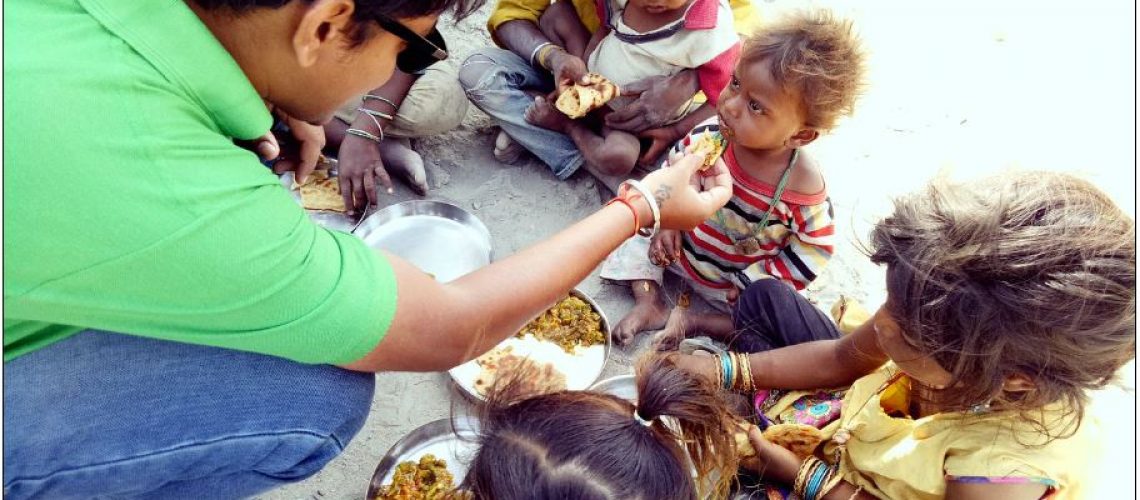
St. Mother Teresa once remarked that many people would come to her mission or write her saying they longed to serve the poor with her. Seeing through their zeal, she realized they were looking to do something great for God. It is always tempting to see ourselves as super-disciples, following Christ with the unique ardor of His chosen few, yet it is far less likely that in seeking to be those super-disciples we will achieve the holy ends we profess because we don’t have the sanctity to love those immediately at hand.
St. Teresa of Calcutta knew that it was relatively easy to do big things for God. It is a bit like leaping upon the spiritual grenade to die for a friend. It’s a simple, one-time decision, which once made and followed through on, is finished and all too easily placed upon a shelf to be admired. Far more difficult, and far more sanctifying for those around us, is to daily bear the cross to live for a friend.
Heroic Virtue in Small Things
To become so devoted to the good of another that our own interests subside or to offer St. José María Escrivá’s acts of heroic virtue in smiling and giving a kind word when we don’t feel it – these seemingly small acts are insignificant from the outside, but they are the kind of self-mortification which burns away the mildew of pride in us and conforms us far more closely to the pattern of Christ.
Jesus took up His cross and died for us. This is the Gospel message which makes all the difference in the world. The Passion is a limitless source of riches for us to meditate upon as Easter’s joy has opened up for us once more. In it, Christ showed us how we might die to the world for the glory of God’s everlasting Kingdom.
Yet, it was in each step with the pressing of cruel wood on His raw shoulders and the shifting of stones beneath His exhausted legs that He showed us the way to live that life, transformed by a cruciform imagination by which we can unite each day to that day.
May we offer ourselves, therefore, as living sacrifices, seeing the glory of God in the joyful sweeping of floors, scrubbing of pots, and changing of diapers. May our lives be so marked by holy simplicity that we strive only, always, and in all our doing for that eternal goal of union with our Good God. May we be transformed by degrees into brilliant flames of the Father’s divine love, setting the world ablaze while we but walk along our humble way through it.





3 thoughts on “Jesus of the Pots and Pans”
Pingback: Jesus of the Pots and Pans + Emberings Be
Pingback: FRIDAY EDITION – Big Pulpit
Thank you that! So many times I feel like Martha. Resentful of the daily tasks while I see others receiving the thanks!