

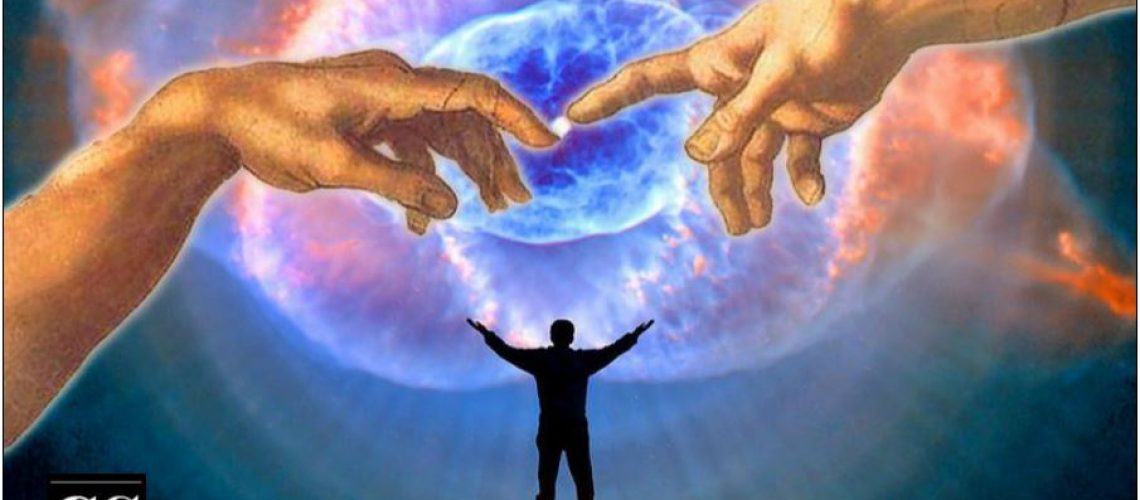
Are all human beings biologically identical, or, is each person distinct – one from another? Are there not many shared similarities in terms of biological traits – while each individual remains exclusively unique and unrepeatable?
Science attributes variation among living beings to (DNA), deoxyribonucleic acid: “a molecule that contains the genetic instructions used in the development and functioning of all living organisms. It is the very code that determines how cells behave, how they replicate, and how they interact with each other. Essentially, DNA acts as a set of instructions for building and maintaining your body.”[1]
And, although:
The human genome consists of approximately 3 billion base pairs of DNA. It is often said that all humans share about 99.9% of the same genetic code. This means that, despite the vast differences in appearance, behavior, and health among humans, the genetic makeup of all people is remarkably similar. Yet, the 0.1% of genetic variation is what makes each person uniquely themselves.
This small percentage of variation accounts for everything from your physical characteristics, such as eye color, height, and susceptibility to diseases, to more complex traits like your mental health, cognitive abilities, and even some aspects of personality. Though our genetic makeup is mostly shared, it is this 0.1% that drives the vast diversity we see in humanity.[2]
This fact alone, is nothing short of astonishing – that all humans share 99.9% of the same genetic code – and that 0.1% of genetic variation drives the vast diversity seen amongst humanity. To encounter such diversity within a 0.1% genetic variation, has to suggest that there is a God, a God who created all things and holds them in being: “‘Before I formed you in the womb I knew you, and before you were born I consecrated you; I appointed you a prophet to the nations.’”[3]
It is at conception (fertilization) that a new life is formed, with his, or her, own unique DNA, distinct from the DNA of Father and Mother:
Once a sperm fertilizes an egg, a BRAND NEW, unique and WHOLE ORGANISM is created with [his or] her own DNA. The chromosomes from the parents help determine the new human being’s sex, eye color, skin and hair color, balding, even earlobe attachment. After fertilization nothing new is added or needed to the human except oxygen, nutrition and time (cf. “The Drama of Fetal Development”, American Baby. Jan. 1989. p. 45. Print).[4]
[I]t is the life of a distinct, unique, new individual who has never existed before in history and will never exist again. Nothing will be added to the new organism except nutrition, and it will continue to grow and develop until death occurs due to injury or illness.[5]
From the time of conception (fertilization) all inherited traits are present, nothing new is added or required except oxygen, nutrition and time. The zygote develops into a blastocyst, embryo, fetus, and lastly, a baby is born – the same human being from conception until death occurs – due to old age, injury, or illness.
The teachings of the Roman Catholic Church coincide with science in this regard, but interject a far exalted character and purpose for the existence of human life:
The human person, created in the image of God, is a being at once corporeal and spiritual. The biblical account expresses this reality in symbolic language when it affirms that “then the LORD God formed man of dust from the ground, and breathed into his nostrils the breath of life; and man became a living being” (cf. Gen 2:7). Man, whole and entire, is therefore willed by God.
In Sacred Scripture the term “soul” often refers to human life or the entire human person (cf. Mt 16:25–26; Jn 15:13; Acts 2:41). But “soul” also refers to the innermost aspect of man, that which is of greatest value in him (cf. Mt 10:28; 26:38; Jn 12:27; 2 Macc 6:30), that by which he is most especially in God’s image: “soul” signifies the spiritual principle in man.
The human body shares in the dignity of “the image of God”: it is a human body precisely because it is animated by a spiritual soul, and it is the whole human person that is intended to become, in the body of Christ, a temple of the Spirit (cf. 1 Cor 6:19–20; 15:44–45).
Man, though made of body and soul, is a unity. Through his very bodily condition he sums up in himself the elements of the material world. Through him they are thus brought to their highest perfection and can raise their voice in praise freely given to the Creator. For this reason, man may not despise his bodily life. Rather he is obliged to regard his body as good and to hold it in honor since God has created it and will raise it up on the last day (cf. GS 14 § 1; cf. Dan 3:57–80).[6]
Here one can see, man is created in the image of God, he, or she, is a being at once corporeal and spiritual. And, “it is because of its spiritual soul that the body made of matter becomes a living, human body; spirit and matter, in man, are not two natures united, but rather their union forms a single nature.”[7] Without the “soul” (spiritual principle) man would not have the breath of life. And, “[b]ecause each human person is created in the image and likeness of God, each one of us possesses innate and inviolable human dignity. This dignity is present in each person from the moment of their conception and throughout their lives.”[8]
Therefore, God in His Providence has chosen to impart the sacred gift of life, through His infusing a soul into this body, a male, or female, made in His image and likeness. And, further through His permissive will – by allowing the physical characteristics inherited from one’s parents, such as eye color, height, susceptibility to diseases, or more complex traits like mental health, cognitive abilities, and aspects of personality.
Thus, it seems clear, that God has not relinquished to man, His sovereign and moral authority over life, (outside of the strict conditions outlined concerning just war doctrine). Therefore, no man may intentionally take it upon himself, or engage others, in the act of taking a life. And, as man is wholly incapable of giving life without the help of God, who infuses the soul, then it stands to reason that God has not given man authority to intentionally end a life through abortion, euthanasia, or murder.
The Catechism of the Catholic Church speaks of this, and of just war doctrine in paragraphs 2307 and 2309:
The fifth commandment forbids the intentional destruction of human life. Because of the evils and injustices that accompany all war, the Church insistently urges everyone to prayer and to action so that the divine Goodness may free us from the ancient bondage of war (cf. GS 81 § 4.[9]
The strict conditions for legitimate defense by military force require rigorous consideration. The gravity of such a decision makes it subject to rigorous conditions of moral legitimacy.
At one and the same time:
— the damage inflicted by the aggressor on the nation or community of nations must be lasting, grave, and certain;
— all other means of putting an end to it must have been shown to be impractical or ineffective;
— there must be serious prospects of success;
— the use of arms must not produce evils and disorders graver than the evil to be eliminated. The power of modern means of destruction weighs very heavily in evaluating this condition.
These are the traditional elements enumerated in what is called the “just war” doctrine.[10]
In His Providence, every life God infuses with a soul, has a specific purpose that is completely unique and unrepeatable.
For the sake of argument then, it seems likely that many things may not have come into existence, had the choice been made to end a life. For example, if the mother of Michelangelo had chosen to have an abortion, the world would be devoid of the sculptures and paintings he was gifted by God to create.
And, it is this very idea, that Padre Pio spoke of – to a woman who entered the confessional:
“Close your eyes and tell me what you see.”
The lady obeyed, closed her eyes and said: “I see a huge square with a lot of people. Among the people, I see a procession that moves solemnly. I see many priests, bishops and cardinals in court: they all precede a pope who is taking over the throne. Yes, I precisely see a pope on the throne (it was the gestational chair) and a large crowd acclaiming this pope, very beautiful… But what does all this mean?”
Padre Pio replied: “The child you killed in your womb with abortion, in God’s design, should become this pope.”
The poor woman screamed and fainted next to the confessional (cf. E. Boninsegna, Ero curato, ora sono da curare, Verona, Professional manuscript, 2019, p. 139).[11]
The truth is, life at every stage is sacred; consequently, each life should be revered for the gift of God it is! And yet, if the dignity of the human person is not respected, and protected, as regards the unborn, how can one hope that it will be respected by others at later stages of life?
Padre Pio speaks not only the grave nature of an intentional choice to take a unique and unrepeatable life, but also, of its effects on the person who willingly makes this choice, a choice that essentially obstructs the continuation of the human race:
Abortion is not only homicide, it is suicide and with these people, we see on the point of committing two crimes. Do we want to show our faith? Do we want to save them? You would understand this suicide of the human race, if with the eye of reason, you could see the heart populated by old men and depopulated by children, burnt as a desert.
Oh, what a darkness is hovering over the world. Souls are being lost in such great numbers because of their sins against the fifth commandment, which forbids murder. These crimes cry out for justice to Heaven and for retribution from God. How can these people sleep, eat and work, knowing they have the blood of innocent children on their hands?
The tragedy of abortion is experienced by those who perform it, those who undergo it and those who allow it. If only they could understand that the child is a gift from God, that it is created in His image and likeness, that it is destined to eternal life, that it is loved by the Heavenly Father even more than by its earthly parents, they would not dare to commit the crime.[12]
[1] Science News Today. What Makes Your DNA Uniquely You? P 3. accessed October 10, 2025. https://www.sciencenewstoday.org/what-makes-your-dna-uniquely-you#google_vignette
[2] Ibid., P5–6. accessed October 10, 2025.
[3] Catholic Biblical Association (Great Britain). The Holy Bible : Revised Standard Version, Catholic Edition, Translated from the Original Tongues, Being the Version Set Forth A.D. 1611, Old and New Testaments Revised A.D. 1881-1885 and A.D. 1901 (Apocrypha Revised A.D. 1894), Compared with the Most Ancient Authorities and Revised A.D. 1952 (Apocrypha Revised A.D. 1957). Catholic ed. San Francisco: Ignatius Press, 1994., Jer 1:5.
[4] humanLIFEalliance. Fetal Development. P1. accessed October 10, 2025. https://humanlife.org/fetal-development
[5] Live Action. Science is clear: Each new human life begins at fertilization. accessed October 10, 2025. https://www.liveaction.org/news/life-begins-at-conception-science-teaches
[6] Catholic Church. Catechism of the Catholic Church: Revised in Accordance with the Official Latin Text Promulgated by Pope John Paul II, 2nd ed. (Vatican City; Washington, DC: Libreria Editrice Vaticana; United States Catholic Conference, 1997), 362–364. (hereafter cited as CCC)
[7] Ibid., 365.
[8] USCCB. Dignity of the Human Person. P2. accessed October 10, 2025. https://www.usccb.org/resources/Dignity-of-the-Human-Person.pdf
[9] CCC, 2307.
[10] Ibid., 2309.
[11] Em Defesa Da Vida. Padre Pio made a woman see the Pope that she had an abortion. accessed October 10, 2025. https://adocaoespiritual.org.br/en/blog/padre-pio-made-a-woman-see-the-pope-that-she-had-an-abortion
[12] Catholic Truth. Padre Pio – In His Own Words. P2– 4. accessed October 10, 2025. https://catholictruth.org/padre-pio-in-his-own-words/




5 thoughts on “Is Every Human Being Unique and Unrepeatable?”
Pingback: VVEDNESDAY EARLY-MORNING EDITION - BIG PVLPIT
If reincarnation is a distinct possibility then the ‘unrepeatable’ is replaced by cyclic.
1013 Death is the end of man’s earthly pilgrimage, of the time of grace and mercy which God offers him so as to work out his earthly life in keeping with the divine plan, and to decide his ultimate destiny. When “the single course of our earthly life” is completed, we shall not return to other earthly lives: “It is appointed for men to die once.” There is no “reincarnation” after death.
We won’t be around, but I’ve no doubt that 1013 will be modified to better reflect a better
theological outcome and a more just reality.
This article made me think deeply about how we’re all biologically similar yet uniquely individual. I love how it explores the balance between shared traits and personal uniqueness in a way that’s easy to understand.