

Imagine the government decided it will forgive sins. Would you accept it? No, because only God can forgive sins. Governments have nothing to do with forgiveness; just the idea sounds ridiculous. Suppose the government decided it will baptize people. Would you accept it? Again no; baptism is the act of presenting a person to God and, again, it would be ridiculous.
Suppose the government decided it will ordain priests. Would you eat the hosts consecrated by them? No, because you know that is just a piece of bread; governments have no power to make anyone be able to turn bread into the body of Christ. Again, it sounds ridiculous.
However, there is one sacrament, marriage, in which the government does get involved and we are okay with it. Really? If government involvement in all the other six sacraments sounds ridiculous, why does their involvement in the sacrament of marriage not seems ridiculous as well?
The Catechism of the Catholic Church explains the true definition of marriage:
The intimate community of life and love which constitutes the married state has been established by the Creator and endowed by him with its own proper laws. . . . God himself is the author of marriage.
Marriage is not a purely human institution despite the many variations it may have undergone through the centuries in different cultures, social structures, and spiritual attitudes. These differences should not cause us to forget its common and permanent characteristics (CCC 1603).
In fact, it is strange that while everyone goes to some church to get married, they end up always going to a judge to get divorced.
Divorce is a grave offense against the natural law. It claims to break the contract, to which the spouses freely consented, to live with each other till death. Divorce does injury to the covenant of salvation, of which sacramental marriage is the sign. Contracting a new union, even if it is recognized by civil law, adds to the gravity of the rupture: the remarried spouse is then in a situation of public and permanent adultery (CCC 2384).
It raises the question of why did they go to the church to be married in the first place? What did they expect to get from it? Impressing people with the beauty of the church? Making it more romantic, with the bride and groom dressed in fancy clothes? Unfortunately, quite likely.
In this, we forget that marriage is a sacrament, one of the seven, along with Baptism, Eucharist, Confirmation, Confession, Holy Orders, and the Sacrament of the Sick.
The matrimonial union of man and woman is indissoluble; God himself has determined it, ‘what therefore God has joined together, let no man put asunder’. This unequivocal insistence on the indissolubility of the marriage bond may have left some perplexed and could seem to be a demand impossible to realize. However, Jesus has not placed on spouses a burden impossible to bear, or too heavy – heavier than the Law of Moses. By coming to restore the original order of creation disturbed by sin, he himself gives the strength and grace to live marriage in the new dimension of the Reign of God.
So, if people had that understanding and did not see it as also some kind of government contract, they would recur in times of trouble to the same and only judge which married them in the first place- God. God has the ability to solve their marriage problems as a just judge.
Yet, people think God will keep them married forever regardless of their unhappiness; they do not understand the words of Jesus when He said “What God has joined together, let no one separate”. So, they forget that, just like God joined, He also has the power to separate. With the difference that God will first try to solve whatever is keeping apart those who He joined together. The government, on the other hand, seems too keen to separate marriages for the silliest of reasons. Worse, it seems keen to join disparate people in “marriage”.
It is no wonder we live in times where one out of three couples divorce because they mix heaven and earth. Couples mix a sacrament with worldly practices.
Governments have no power to separate as they cannot marry anyone. They cannot make one single flesh out of two. So, legal marriages are anything but “legal”; they mean nothing, as only God has the power to, like Jesus said, join two people into becoming one and Genesis 2:24: “Therefore a man shall leave his father and his mother and hold fast to his wife, and they shall become one flesh”. Let’s just ask God to marry us and keep us together. Let us teach our children to ONLY marry through the Church.
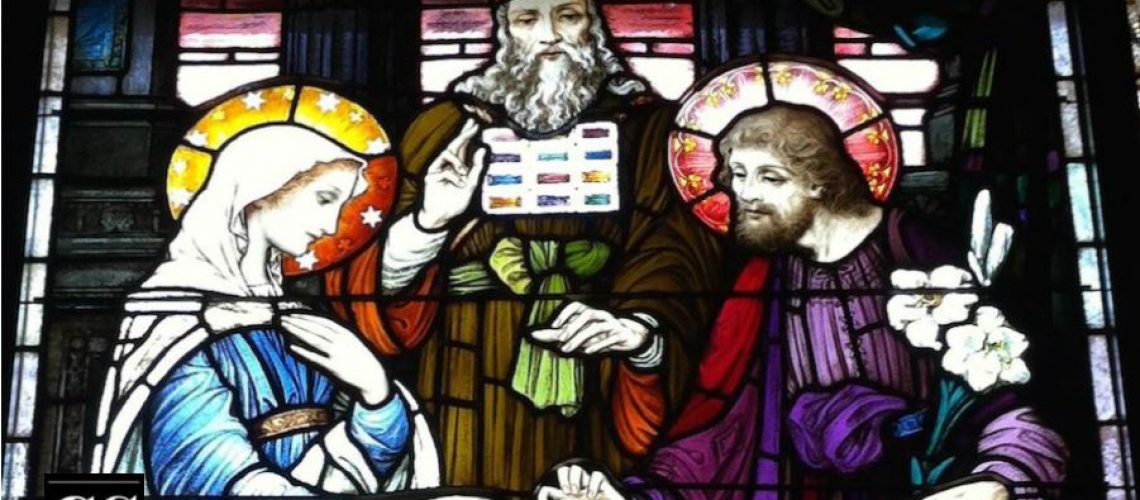
We can trust in Joseph and Mary, as the epitome of the married man and woman, to help us in that.




22 thoughts on “Government Involvement in Marriage is Ridiculous”
“When 2 sacramentally married divorce, Is child custody Caesar’s or God’s?”
It is God’s. For it was God who CREATED that child. It will be Cesar’s when Cesar starts to create children.
The author plainly makes out the case for marriage equality. It is not up to the state to tell religious authorities what constitutes a religious marriage and it is not the purview of religious entities to tell the state what a valid civil marriage should be. The American system is somewhat unique in that clergy act as agents of the state for civil marriage purposes while doubling as the religious celebrant. In most European countries, there are two marriages – first civil, then religious – each in a different space.
Nearly everyone forgets, or never knew, that it was only in the 19th century that governments, beginning with England’s, began their involvement with marriages. Before then it was entirely the purview of religious authorities. Then the government decided it needed to REGISTER the fact that a man and woman were married. Unfortunately in most people’s minds this has degenerated into thinking that it’s the government that MAKES people married.
Very good point Peter, and actually the basis of my article
Somehow we lost track of the fact that marriage is just a sacrament and governments have no role there
And I would not be surprised if, with the idea of just “registering” as it happened with marriages, governments start messing up with baptisms and we end baptizing our pet iguana
Keep in mind that church and state weren’t really separated in most places prior to the 19th century. So it’s not really fair to say that the government only got involved in marriage in the 19th century because the government also ran religion prior to that. In that sense, the government was completely involved in marriage prior to the 19th century. As the idea of freedom of religion spread around the western world, certain aspects of marriage stayed with the church and certain aspects stayed with the state. Unless you are an integralist, this split should make sense.
“The intimate community of life and love which constitutes the married state”
This is not a legal definition. The 83 code and the CCC do not and cannot define marriage because neither identify the primary purpose of marriage as primary. Therefore, the contract defaults to the state whenever there is a break-up of said “intimate community.” The root problem is the spirit of Vatican II defining the object of consent.
Pingback: VVEDNESDAY EDITION – Big Pulpit
I’m glad there was some pushback because the idea that the government shouldn’t have a part in marriage is ridiculous. Part of marriage is a contract, and that is where the government comes in. Marriage confers the rights to make certain decisions for one another such as on medical treatment or end of life care. It also ties one spouse to the other in terms of financial decision making and provides the couple with a level of support through alternate tax rates. If there are children, marriage gives the both partners equal opportunity to care for their children. Civil marriage is an absolute must, but that doesn’t mean it is the same thing as the religious version of marriage. And that is ok.
Additionally, sometimes a legal marriage must be ended to protect one of the spouses. That is just a reality. As a contract, it can be broken by one party against the other party’s wishes. The government has to deal with this situation to protect the victimized party even if the church has different rules. One party to a marriage should not be able to destroy the other’s life without any legal recourse.
You are absolutely right. The article is silly.
“To Cesar what’s Cesar’s and to God what is God’s.” As simple as that.
When 2 sacramentally married divorce, Is child custody Caesar’s or God’s?
Ask your local law school if you can audit a course on Domestic Relations. You’ll see that, whatever else it is, marriage is a contractual relationship, the incidents of which are regulated by the state. That hasn’t changed for 2000+years.
2 thousand years ago there was no baptism. 2000 years ago people believed in gods such as Osiris. 2000 years ago jews did not believe in a trinity.
Christianity came to change all that, including the notion taken from mosaic law that divorce was ok.
To think that marriage should stay because it has been like that for 2000 years we may as well start worshipping Osiris.
Another overlooked aspect are the vows. To enter a religious community there is a series of
steps, from simple to solemn that must be met. Before that final promise is made it is valid
to rethink and reverse the lifelong course. It should be the same with two people who are
‘taking the plunge’. Today, what is becoming acceptable is the prenup or 3 – 5 year pledge to see if any underlying faults will be discovered that would be a disaster after children are
brought into the world. Of course, this is a secular notion has both merit and peril.
Mr. Costa,
You have some great diagnostics and great quotes, but you miss some crucial points. I absolutely agree that people should be marrying in the Church, but there is more to this topic; we cannot separate ourselves that easily.
The Church teaches that we should DEMAND that the government properly define/regulate marriage. It is not in our interest to walk away and let the government make up rules out of thin air.
As per the Compendium of the Catechism,
“463. How should authority be exercised in the various spheres of civil society?
Authority should always be exercised as a service, respecting fundamental human rights, a just hierarchy of values, laws, distributive justice, and the principle of subsidiarity. All those who exercise authority should seek the interests of the community before their own interest and allow their decisions to be inspired by the truth about God, about man and about the world.”
“494. What is the responsibility of civil authority in regard to chastity?
Insofar as it is bound to promote respect for the dignity of the person, civil authority should seek to create an environment conducive to the practice of chastity. It should also enact suitable legislation to prevent the spread of the grave offenses against chastity mentioned above, especially in order to protect minors and those who are the weakest members of society.”
God bless,
Joe Tevington
Hi Joe,
Check out the resources at Mary’s Advocates. https://marysadvocates.org/resources/defending-marriage/
Bai Macfarlane
Bai, I have long been a fan of your work. I am sure that you would agree with Church teaching that the government has the role to uphold authentic marriage.
” It is not in our interest to walk away and let the government make up rules out of thin air”
Actually, it is EXACTLY because we let the government get involved in marriage that we now have for example the german church claiming it’s ok to marry same sex people.
The harsh reality is that the government WILL create rules out of thin air with or without our intervention, and having it around will mean US having to accept whatever it comes up with and not the other way around as you wishfully think.
Either way, thank you for your comments and God bless 🙂
Mr Costa,
I think you are misunderstanding the comment by “Bob,” as well as my own. Just as the government SHOULD be defending the pre born, it SHOULD be defending authentic marriage/ family. You certainly don’t believe that the government should go on reinventing marriage. We lay people are called to bring the Truth to the public square.
God bless,
Joe Tevington
So Joe, I was wondering, in this the government has a responsibility to promote chastity and such. Do you think it’s good idea to ban contraception, condoms, cohabitation and make premarital sex a misdemeanor because it threatens the mores, values and morals of our society as envisioned by the founders ?.
Very well said, Mr. Costa.
In reply to the question posed to me by “an ordinary papist”: Would I like to see cohabitation and contraception – and I will add pornography – banned. Sure! We have too often bought into the lies that they are not so bad.
As per #494 of the Compendium of the Catechism, “civil authority should seek to create an environment conducive to the practice of chastity. It should also enact suitable legislation to prevent the spread of the grave offenses against chastity…, especially in order to protect minors and those who are the weakest members of society.”
There are also some lines that I particularly love from Princeton’s great Catholic professor Robert George: “people who suppose that prostitution, adultery, fornication, & the like are morally innocent are profoundly mistaken…. Laws against intrinsic evils such as prostitution, pornography, drug abuse, & the like, as well as those regulating gambling & alcohol, are justified, in part, by a concern to protect the public environment” (The Clash of Orthodoxies, 2014, pp. 101 – 108)
Thanks.