

“How do I love thee? Let me count the ways.” This quote from Elizabeth Barrett Browning speaks to the myriad ways love can be communicated. The poem goes on to say, “I love thee with the breath, smiles, tears of all my life”. To communicate love in human terms involves “love language” that draws from human emotion and means that are finite. Traditionally words have been spoken or written and transmitted in person or via letters. If neither of these could be accomplished, more creative means could be employed. The invention of the telegraph, the telephone, e-mail, and smartphones have provided many more opportunities than were available in earlier times.
What if the object of your affection lived inside your house? Or, in the case of God, within you? Ronald Rollheiser addresses our relationship with God in his book, The Holy Longing, by comparing a Theist to a Christian:
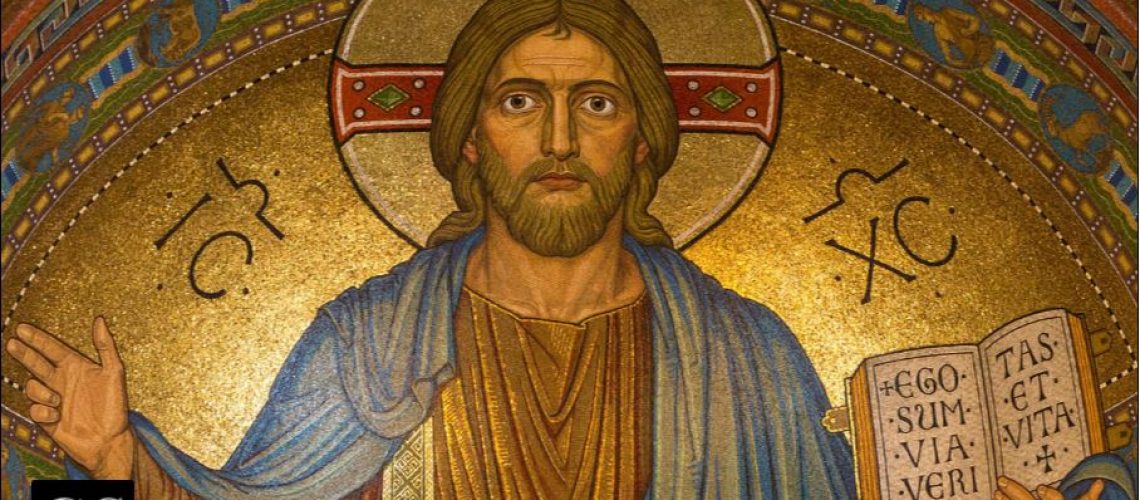
A theist believes in God. A Christian believes in God, but also in a God who is incarnate. What is the difference? To put the matter into street language, one might say: A theist believes in a God in heaven whereas a Christian believes in a God in heaven who is also physically present on this earth inside of human beings. The theistic God is transcendent and, if not wholly so, present in matter only as some vague ground of being. The Christian God is also transcendent, is also the ground of being, but has a physical body on earth. The Christian God can be seen, heard, felt, tasted, and smelled through the senses. The Christian God has some skin (The Holy Longing p.163).
The “Christian God” is infinite and omnipresent, and a case could be made that God has “bigger fish to fry” in our universe and beyond. The “why” of the Incarnation of Christ is addressed by Rollheiser in the following excerpt from the same book:
Why would God want to take on human flesh? Why would an infinite power want to limit itself within the confines of history and a human body? Why incarnation?
There is a marvelous story told about a four-year-old child who awoke one night frightened, convinced that in the darkness around her there were all kinds of spooks and monsters. Alone, she ran to her parent’s bedroom. Her mother calmed her down and, taking her by the hand, led her back to her own room, where she put on a light and reassured the child with these words:
You needn’t be afraid, you are not alone here. God is in the room with you.” The child replied: “I know that God is here, but I need someone in this room who has some skin! (p.172).
Early on, in diaconal formation, we were led to do a kind of circle dance while we bowed to the “God within us”. Although it made us all feel a little uncomfortable, it was an action that pointed to the reality of God’s presence in every person in the room. Without actually knowing how God operates within us, we can acknowledge our Christian belief that God indeed “has some skin”, and comes to us from within our interior sanctuary, and from without in the form of others. St. Paul provides some guidance as to how communication is affected by the Holy Spirit:
In the same way, the Spirit too comes to the aid of our weakness; for we do not know how to pray as we ought, but the Spirit itself intercedes with inexpressible groanings. And the one who searches hearts knows what is the intention of the Spirit because it intercedes for the holy ones according to God’s will (Romans 8: 26-27).
Let us make the following quote from Ephesians our prayer to be more aware of God within us, Father, Son, and Holy Spirit, as we journey toward Heaven. May we:
have the strength to comprehend with all the holy ones what is the breadth and length and height and depth, and to know the love of Christ that surpasses knowledge, so that you may be filled with all the fullness of God. Now to him who is able to accomplish far more than all we ask or imagine, by the power at work within us, to him be glory in the church and in Christ Jesus to all generations, forever and ever. Amen (Ephesians 3:18-21).





2 thoughts on “God’s Infinite Communication of Love”
Pingback: VVEEKEND EDITION – Big Pulpit
The man Christ Jesus is now in heaven as our High Priest intercessor for our salvation (cf. Hebrews 4:14-16; 7:24-25; 9:7). His Spirit became available for us at Pentecost to dwell within us. Christ’s Spirit is the means by which the agape love of God is able to fill us.