

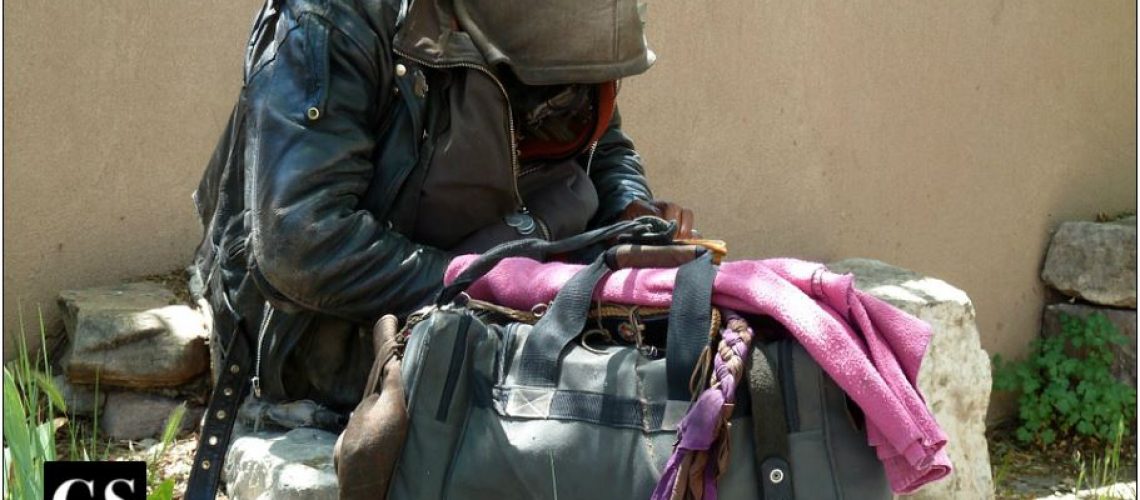
The Christian duty to provide for the poor and the needy is conditioned only by our own capabilities. Whether the poor person “deserves” to be poor through some moral fault is irrelevant to that duty; within the Judeo-Christian ethos, no one “deserves” to be poor. The existence of poverty is a consequence of original sin, but an individual’s destitution isn’t necessarily a consequence of their personal failings. So, we must be instantly skeptical when a professedly Christian organization claims that government assistance for the financially struggling “violates biblical morality.” They must be reading Scripture through objectivist glasses.
Poverty and Government Intervention
While it’s certainly the Christian community’s duty to provide support for the poor, it doesn’t necessarily follow that such support should be provided through tax dollars or government intervention. (See Compendium of the Social Doctrine of the Church 1.4.4.185-188.) Christians have an equal duty to “pay taxes to whom taxes are due” (Romans 13:7). But we also have a reasonable expectation that the government spends tax revenues with prudence and an eye to the common good. On this subject, Christians of equal goodwill may disagree whether or how the government may address poverty and economic injustice.
The most recent case in point is Pres. Joe Biden’s executive order forgiving certain government-backed guaranteed student loan (GSL) debts. Full disclosure: I have a GSL debt. Pres. Biden’s initiative would potentially wipe out most of my remaining balance. However, I’m concerned about the additional inflationary strain on the economy as well as the increased tax burden on the middle class the initiative would create. I’m also concerned that it really does nothing about GSLs or the spiraling cost of college tuition. In short, I have a dog in the fight, but the dog isn’t sure what side he’s on.
In other words, so far as I do object to Pres. Biden’s student loan initiative, the objections are based on economic, political, and prudential considerations. We can say “It’s a bad idea” without any need to go all Jonathan Edwards about it. A full Christian case against it, however, must reflect what the Church has historically taught about the poor, lending, and debt, filtered through the gospel message’s emphasis on mercy and charity. Otherwise, scriptural citations are just so much sheep’s clothing draped over something decidedly non-Christian.
False Witness
Recently, the Family Research Council retweeted a meme created by The Washington Stand, stating that Pres. Biden’s plan “victimizes the innocent, rewards the guilty, and violates biblical morality [emphasis mine] in a plethora of ways.” Among those ways the plan supposedly violates biblical morality are:
- Incentivizing borrowers’ bad behavior,
- Rewarding college administrators’ bad behavior,
- Intensifying the government’s bad behavior,
- Discouraging virtuous behavior, and
- Forcing the innocent to pay for the guilty.
Any one of these contentions is factually disputable, and all but the fourth verge on criminalizing entire groups of people. By presuming universal bad behavior and guilt, the accusations imply a moral deficiency among struggling student loan borrowers that is neither necessary to explain their condition nor charitable of the accuser(s). Indeed, the author(s) seem to demand that prospective borrowers possess not merely 20/20 foresight but rather superhuman foreknowledge. This is not “biblical morality” but rather false witness (Exodus 20:16; Deuteronomy 5:20) in its aspects of rash judgment and calumny (Catechism of the Catholic Church 2477-8).
From my experience in the financial sector, I can tell you that people default on loans for many reasons. Many of those reasons require no intent to defraud, no lack of education, and no lack of reasonable foresight or fiscal self-discipline. The American status quo still treats money management and financial planning as optional areas of knowledge people may acquire if interested, rather than life skills vitally necessary to survival in our complex economy. And the sector’s tight regulation still provides plenty of room for sharks to prey on customers’ ignorance. There’s no warrant for a presumption of sin or even fault.
The Judeo-Christian Tradition and Poverty
Quick story:
The rabbi came to a rich Jew and asked for a contribution to the poor.
The alrightnik refused. “They are nothing but lazy loafers! Their poverty is their own fault!”
The rabbi said, “Come to the window. Look out. What do you see?”
“I see—people,” said the alrightnik.
“Now look into that mirror,” said the rabbi. “What do you see?”
“Why, myself.”
“Isn’t it astonishing,” sighed the rabbi, “that when you cover a clear glass with a little silver, you see only yourself?” (Leo Rosten, The New Joys of Yiddish [ed. Lawrence Bush], 12)
The Jews have known for ages that with wealth and success come self-satisfaction and arrogance: “My power and the might of my own hand have gotten me this wealth” (Deuteronomy 8:11-20, esp. 17). The Law of Moses is at some pains to remind the Jews that once they were slaves, that they were once aliens in a foreign land. Their own history reminds them that, no matter how wealthy and successfully mainstreamed they are today, tomorrow may find themselves dispossessed and oppressed. Jewish theology thus has no room for the “just-world fallacy” behind victim-blaming.
Christianity is the inheritor and successor of Judaism. As such, our tradition has incorporated the Jewish understanding that life isn’t fair, that what we get is often disproportionate to what we deserve—if, indeed, we “deserve” anything. Neither the Jewish nor the Christian tradition asks whether the poor deserve their poverty (or, for that matter, whether the wealthy deserve their wealth). Instead, in both traditions, providing for the needs of the poor is an act not simply of charity but also of justice, of giving to the poor that which is their due:
… I beg that, chiefest of all, you will remember constantly that not to share our own riches with the poor is a robbery of the poor, and a depriving them of their livelihood; and that that which we possess is not only our own, but also theirs. (St. John Chrysostom, Homilies on the Rich Man and Lazarus 2.6.4)
Justice and Taxation
So, let’s take the question of sin off the table. Let’s also presume (not unreasonably) that Biden’s executive order can pass judicial review. The question remains: Is it just to coerce some taxpayers into bailing out struggling student loan debtors against the taxpayers’ will? We live in a republic, which means we have implicitly assented to have both justice and mercy defined and operationalized in law by democratically-elected representatives according to majority rule. It is not a perfect government; indeed, minding Winston Churchill’s quip, we can say it’s the least worst government possible. It’s certainly not a Christian government.
As Christians, we must not do what God has forbidden. However, God has not forbidden debt forgiveness. In fact, in the Law of Moses, God mandated debt forgiveness once every seven years (Deuteronomy 15:1-3, 12) and forbade exacting interest from the poor (Exodus 22:25). In the parable of the Unforgiving Servant (Matthew 18:21-35), Jesus compared forgiveness of sins to forgiveness of debts. In the Matthean version of the Lord’s Prayer, the Greek noun opheilēma can be translated as either “sin” or “debt”: “Forgive us our debts as we also forgive our debtors” (Matthew 6:12 DRA). Forgiving debt is not unbiblical.
Justice is often in the eye of the beholder. Even in a perfect system (run by angels, perhaps), there would be many people who feel unfairly burdened or inconvenienced by laws that the majority believe are good and necessary. In accepting residence and citizenship, we accept our share of the tax burden even though we may object to the programs on which the revenues are spent. Federal intervention in poverty may not be the best way to support the poor. But it is a licit use of taxpayer funds. And it’s more just than pretending the poor deserve their condition.
Conclusion
A Christian argument against forgiving student loan debts can’t begin with the premise that people deserve poverty or financial struggles, no matter how many “proof texts” it cites. It can’t begin with the presumption of bad faith or malicious intent on the part of borrowers, administrators, or the legislators who enacted the GSL program. Christian charity can easily admit the good intentions of all these parties even while criticizing the program’s failures and Pres. Biden’s Band-Aid-on-a-cancer-lesion initiative. You can be wrong, even wrongheaded, and still mean well—which is the great tragic quality of humanity.
Working inside the mortgage industry, I know first-hand how many people’s hopes, plans, and lives are shattered by the unexpected, by decisions and phenomena they can’t reasonably be expected to anticipate—for example, a pandemic-related economic shutdown. Paying off debts can be difficult even when nothing dramatic happens. Have you paid off your student loan? Give thanks to God. Is your current financial status healthy? Count your blessings. But don’t make the mistake of thinking that your wealth has anything to do with your righteousness, or that the poor deserve to be poor. That would truly violate biblical morality.



29 thoughts on “Forgiving the Debt of the Poor”
this is intresting
Anthony: “But it can be questioned with charity, without unnecessary slurs against the intelligence or intentions of those who disagree with us.”
You mean like writing the following from one’s glass house:
Anthony: “It becomes apparent to me that you don’t understand the mechanics of student loans.”
Anthony: “Your objection, then, rests on a false premise.”
Ah, hypocrisy. The way of the pharisee.
____________________________________________________
As the saying goes, you drew first blood with your cheap shot at my alleged lack of understanding (again, even if the mechanics were not understood, mechanics alone do not make any act moral because all aspects of an act must be moral for the act to be moral, which is basic Catholic Morality, yet you emphasize the mechanics of how something is done as if that alone constitutes its morality; otherwise you wouldn’t have uncharitably made a false claim about my understanding of the mechanics, wrongly believing you had made a solid claim instead of the irrelevant one that it is), and your false claim that my objection rests on a false premise, which it clearly doesn’t (but your defense of such loans does rest on a false and immoral premise), and you continue to evade my primary points regarding the objective immorality of the recent proposal IN and OF ITSELF based on the application of sound Catholic Moral Principles….and regardless of whether or not the government did such things frequently in the past.
On a related note, it is readily observed that, despite the overturning of Roe v Wade, the federal government and various state governments still engage in various practices (and governmental mechanics) that support the immorality of abortion. Is this ongoing practice of something truly immoral a matter of debatable prudence or justice…….or justice alone? The latter, of course, because something is either moral or immoral or just or unjust regardless of how long or how short it may have been practiced and by whom or “what” practiced it.
It should also be kept in mind that you chose to try to make some kind of a connection between the Biden proposal and how to treat the poor, etc., but it doesn’t hold up because of the objective immorality of the proposal itself that is not based on providing extra assistance only to the very poor that are truly in need.
Last but certainly not least, also look for some solid wisdom in the comments of G. Poulin and Sean. They rightly perceive the most fundamental reality of what’s involved in wrongly “cancelling” the personal obligations of others, and they also don’t get bogged down with rationalizations involving mechanics, what the government did in the past, and so on. They are indeed properly focused on the Biden proposal regarding whether or not the government has the moral authority to cancel personal obligations of thousands or millions of people (it doesn’t), the overwhelming majority of whom are not destitute and truly in need. They also appreciate, like Pope John Paul the Great appreciated, that personal obligations which can be fulfilled by the individuals so obligated should NEVER EVEN BE CONSIDERED for “surrender” to the State simply because the obligations are inconvenient or difficult. People act immorally whenever they shirk their personal duties to others because somebody without the moral authority to do so says they don’t have to perform their duties. They also double down on the immorality of their duty shirking by any attempts to rationalize their shirking behavior.
QED
Wow, Anthony. I thought you were a bit more astute than what your writing on student loans clearly manifests to the contrary, but, thankfully, I am encouraged by some of the other commenters who understand at least some of the basic immorality involved in Biden’s debt cancellation proposal that completely eludes you.
When you state the laughable (and regarding the recent debt “cancellation” proposal, not even close to being true) “Lenders are insured against loss by the government, which means that if the borrower defaults, the government satisfies the debt and becomes the debtholder,” you fail to recognize a very basic reality that the government in this respect consists of the taxpayers and their tax dollars, and so “the government satisfies the debt” means the taxpayers satisfy the debt, which is simply unjust since the debt is owed to the taxpayers.
Basic political economy 101 reveals the fundamental truth of the government relying on taxing citizens for the vast majority of the money it makes use of, yet you write as if the government is a separate business entity in the market “earning” it’s own money instead of compelling people to fund its operations via taxes, and you also believe the government has the moral authority to cancel personal moral obligations by fiat, which is ludicrous as well as being extremely harmful to many.
Accordingly, with respect to the recently proposed “cancellation” of personal debts by the government, my premise that such is immoral based on Catholic principles of morality is completely accurate, while your objection to my objection is based on a serious misunderstanding of our republican form of government, and that government funds (which morally must be used for the common good and demonstrably so; not just claimed to be so) are provided primarily by taxpayers. Moreover, fundamental Catholic morality makes it crystal clear that “cancelling” the loans as proposed by Biden et al. is immoral, and that wrongly accepting the “cancellation” of a personal debt that is Still owed to others is an immoral action by the borrowers. It is equivalent to a person in neighborhood X borrowing $20,000 consisting of $1,000 individual contributions provided by 20 neighbors; the local government monitors this borrowing arrangement; the borrower has PERSONALLY PROMISED to honor his PERSONAL debt obligation via payments over time; he makes let’s say $3,000 in payments over a few months time spread out amongst his neighbors. Then, acting without any moral authority to do so, a government agent (call him Tony) proudly declares that the 20 lending neighbors will no longer receive any more payments because the government has now (immorally) “cancelled” the borrower’s debt. In the process of taking this immoral action the government has also helped to compromise the borrower’s moral integrity by basically telling him that his personal promise/moral obligation does not have to be fulfilled, and to hell with acting virtuously. The almighty government has spoken.
Also keep in mind a basic Catholic Principle of Morality: Just because an action may be or is legal (we can add ‘or it’s the way the action works’) Does Not Make the Action Moral. Regarding the recent proposal that will simply “cancel debts” owed to others (also, without any compensation to the lenders), it does not matter if it is declared legal or it’s the way things have been done, it is still completely immoral for the reasons set forth above and in greater detail in my blog article that relies on the moral wisdom of great Catholic Moralists that include a few Popes not buffaloed by the “this is the way these things work” claptrap as if procedure alone determines the morality of an action.
This will be my last reply on the subject. I treated the government as something separate from the taxpayers because it is something separate from us. In fact, the government is rather analogous to a business, like an insurance company whose policyholders are also stockbrokers (e.g., Mutual of Omaha). Like a business, it provides a range of specialized services for its customers (the people of its jurisdiction) and passes on the cost of providing those services to those who consume those services—us. And much like the business, our actual influence on its operating decisions is indirect at best. The analogy isn’t perfect; for instance, an ordinary business would try to run a profit. But it is an institution separate from us just as any business is something separate from its customers or even the people who run it … just as the Church as an institution is separate from the Church as the People of God. As such, the government can within certain specified limits spend its income (taxes) as it deems fit. Including paying off some citizens’ debts. The government represents us—in theory, at least—but it is not us.
I thought I made clear at the beginning of the article that I have my own issues with the proposed means of forgiving the debt, even though I stand to benefit from it. I agree heartily that “legal” does not equal “moral,” any more than “legal” means “good” or “beneficial” or “healthy” or “prudent.” The intent of my article was to argue that within our moral tradition it is uncharitable to presume wickedness or sloth of those who are poor and that forgiving debts is squarely within that tradition. Whether it is prudent or just for the government to do so is questionable. But it can be questioned with charity, without unnecessary slurs against the intelligence or intentions of those who disagree with us.
OK, fine. Be as generous as you can to the poor. Do not be stingy, do not be ungrateful for what you have. But what I have has nothing to do with my righteousness or my lack of righteousness. I am grateful for it all
The author seems to believe student loans are forgivable. They most certainly are not. They will be paid for on the back of the working class taxpayer, in full. The upper classes will be subsidized for their mistakes by the working class. Thanks.
Sean. You are absolutely correct. For a fairly detailed but still short review and application of the Catholic moral principles involved, see my https://vlogicusinsight.wordpress.com/2022/08/25/the-immorality-of-debt-forgiveness-relief-by-the-federal-government/
There is no Christian obligation whatsoever to “the poor” as a socio-economic class. The obligation is to our poorer brethren, i.e., to those members of the covenant community who are entitled by their membership to support from the larger community. This is exactly the same principle that ordered almsgiving in the Old Testament. Except for special cases such as the “sojourners” (legal aliens who respected the Jewish Law and assimilated to its norms), there was no universal obligation to the poor-in-general. If you had told a Jewish person that he owed something to poor pagans living in the next country over, he would have laughed you right out of the synagogue.
It is a serious violation of Catholic Moral principles for both the government to “forgive” the debts of some owed to others (taxpayers), and for those who willingly “receive” such “forgiveness” of their personal debts and act as if the debt obligation has been properly “erased.” In short, the government does not have the moral authority to cancel the personal debts freely entered into by others even it monitors/coordinates the debt arrangements, and, since the debts are not really cancelled by government decree, they are still owed by the individuals who freely accepted their personal debt obligation. To understand in greater detail the Catholic moral principles and reasoning involved, please see https://vlogicusinsight.wordpress.com/2022/08/25/the-immorality-of-debt-forgiveness-relief-by-the-federal-government/
It becomes apparent to me that you don’t understand the mechanics of student loans. Lenders are insured against loss by the government, which means that if the borrower defaults, the government satisfies the debt and becomes the debtholder. (The federal government currently owns an astonishing 37.9% of American household debt.) Certain student loans, particularly those granted to students who are or become public servants, have long qualified for forgiveness, which means the government satisfies the debt on behalf of the student if they have fulfilled certain conditions. When the government becomes the debtholder, the government is within its authority and right to forgive the debt. Your objection, then, rests on a false premise.
I don’t remember anyone here objecting to canceling student debt when Trump proposed it. (Yes, I know, whenever a Democrat does something it’s always presumed to be unChristian.)
To be honest, I don’t remember Trump proposing it. I can only presume that his advisers and the GOP were quick to get him back on message. I‘m sure that if he had gone past the proposal stage, we would have been having this discussion earlier.
https://www.forbes.com/sites/adamminsky/2020/10/11/trump-includes-student-loan-forgiveness-in-latest-stimulus-proposal-signaling-its-broad-appeal/?sh=3e51f33d7707
I didn’t mean to get snarky with you, Anthony, since your posts are always well considered. However this was part of a comprehensive proposal; it wasn’t Trump shooting his mouth off.
Quite alright. Thanks for posting the link. My reply might have come off with more asperity than I intended. I look at the date of the article and, given how late into the election year it was run, I have to think that by October 2020, he could have proposed wiping out all public debt and no one would have taken him seriously.
I lost you after the colon – but that’s alright, you’re always a good read.
Anthony and all others of good will: Please see my blog post that more fully addresses the serious immorality of cancelling government debt as proposed by Biden:
Check https://vlogicusinsight.wordpress.com/2022/08/25/the-immorality-of-debt-forgiveness-relief-by-the-federal-government/
As set forth in my post, even if the government “cancels” your debt, you still owe a full payback to the people, which can be done via a contribution or contributions to the general fund.
Instead of a free-for-all forgiveness of loans, why not a type of work-study forgiveness. Then, the debtor can feel good about “working” off their loan instead of getting something for nothing. That would be a win-win if those that can’t pay their loans in cash can pay in working at soup kitchens, picking up trash on the street, volunteering in libraries and parks, etc. My husband and I both paid off our loans before buying anything new. We had used vehicles and furniture and clothes while raising eight children on one income because we wanted to be responsible and be an example to our children of whom the eldest four have graduated with little to no loans and have paid them off before the age of 25.
There’s much to say in favor of work-study programs. My older brother worked his way through a Jesuit high school through one such program and earned his BS in electronic engineering via the USAF. However, I think the deeper problem is that our entire education process — I dare not call it a system — is outdated, suffering from excessive expectations, and bloated beyond belief. But that topic goes well beyond a single column and really exceeds the scope of Catholic Stand.
It would be interesting if you would take debt forgiveness and ‘the poor’ who seem to be majority, then run it parallel to parole boards that drastically cut the debt owed to society. thereby allowing those who make up (esp. the violent) the consistent 45% recidivist rate to victimize (again) at the risk of life or limb in the name of Christian justice and charity..
@ordinary papist: I’m not sure what you’re asserting here other than that you can throw disparate groups into a word-pile.
Good description, Anthony. Most people in prison are poor. Parole boards cut their DEBT
before they have completed the sentence at the expense that almost one of two will again
victimize others. Taking the crux of your essay on Christian justice and charity would you
consider penning another essay that explains, if possible, why Christian charity in this case, should or not “begin with the premise that people deserve ” their fate.
I don’t see why, since I’ve already stated it above. But if you want its essence: A just world in which everyone deserves their fate would have no need for Christ’s redemptive sacrifice. No need for his emphasis on mercy and forgiveness. The belief that the world is invariably fair and that people get what they deserve is a fundamental denial of Christ.
” So take the talent from him and give it to him who has the ten talents. 29 For to everyone who has will more be given, and he will have an abundance. But from the one who has not, even what he has will be taken away.” Matt 25 There are, wicked and slothful servants.
AOP, I believe the author (and I) agree with you that there are wicked and slothful servants, but “A Christian argument against forgiving student loan debts can’t begin with the premise that people deserve poverty or financial struggles”. Furthermore, we cannot assume they are even poor (let alone slothful) since companies match contributions on 401Ks! It makes sense (no pun intended) to take out loans in such circumstances, but does not make one poor.
Perhaps the appropriate passage is, “whoever receives a righteous man because he is righteous will receive a righteous man’s reward.” If we assume they are righteous, we will be rewarded – whether or not they are wicked.
Yes, there are. Some show their wickedness and sloth by withholding from the poor, hanging on to every dime they have, and rationalizing their meanness of spirit by telling themselves that the poor don’t deserve help. And the money they clutch so graspingly will be torn from their hands at the end of days.
Anthony, Congratulations on a thought provoking post about the Christian approach to poverty, an application in the student loan context, and enough personal disclosure to win some credibility. Someday, I would find interesting your view on the difference (if any) between “poor” and “poor in spirit” in the two Gospel accounts of the Beatitudes. The complexities of cause and effect in the human world, to me, largely explain the disputes among those of good will about correct means if the people have agreed on the goals. With “student loans,” one problem is the “assumption” that all agree loans to pay for a basic high school education, for a liberal college education, for a vocational training as a mechanic, nurse, or medical technician, or for a professional degree (lawyer, doctor, or Indian chief), should be treated the same. Another problem has been the “greed” of, and overpricing bubbles at, receiving institutions. There is much fodder for prudent debate and decision about matching means and goals.
Thanks, Thomas. The concept of spiritual poverty could use some drilling. But where education is concerned, I’m 95% confident that unity of goals is radically absent. On one extreme, I think there’s a vague idea that education exists to produce Homo oeconomicus, the perfect worker/consumer, while the other extreme regards education as little more than an assembly line for radical activists.
Pingback: MONDAY EDITION – Big Pulpit
There is no such thing as judeo-christian and Christianity is not the inheritor and successor of Judaism. The Church does not teach these ideas. The law of Moses was abolished and replaced by the new covenant (this is a teaching of St. Paul, Church Fathers and the council of Florence), and it was not judaism. Judaism is an anti-christ religion that was developed after the destruction of Jerusalem.
How would you square your statement with Jesus’ words in Matthew 5: 17-19? * “Do not think that I have come to abolish the law or the prophets. I have come not to abolish but to fulfill.
18
Amen, I say to you, until heaven and earth pass away, not the smallest letter or the smallest part of a letter will pass from the law, until all things have taken place.m
19
Therefore, whoever breaks one of the least of these commandments and teaches others to do so will be called least in the kingdom of heaven. But whoever obeys and teaches these commandments will be called greatest in the kingdom of heaven.*