

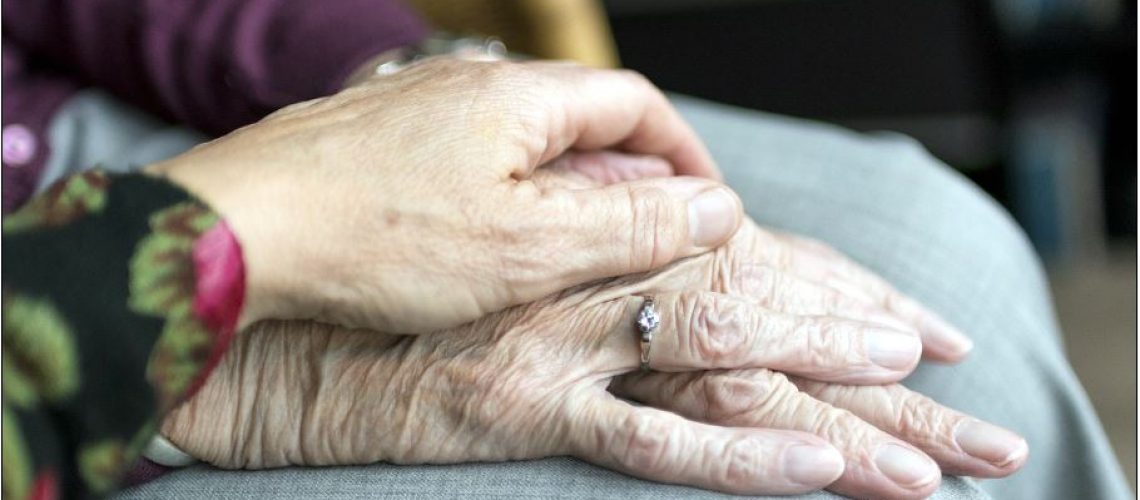
I recently talked to an elderly friend who has been in a nursing home for two years. Her words struck a chord in me: “You’ll find this hard to believe, but I feel lonelier here than when I was alone at home.” I answered, “I find it easy to believe. These people are not your friends or family.” While nursing homes might be necessary and useful for some specific situations, I find it hard to believe they are necessary for such a widespread phenomenon.
Wouldn’t it be better for my friend to be in a home with her family, surrounded by people she cares for and has known her whole life, to spend her last, painful years while she faces death? I am sure it would be better for her and for most elderly people in nursing homes. Why don’t they have family homes available to them? One reason I would put forward is because both spouses are working all day and children are at school all day. Homes are hotels for sleeping in, not places for young children and elderly during the day and places for creating a family culture of care.
What Is the Cutoff Point?
My friend wears slippers instead of shoes. She says even the slippers hurt because her feet are constantly sore and swollen. “I could have never imagined old age would be so bad,” she confided to me. My friend feels forgotten and abandoned by her son and grandchildren. She cried in the five minutes we talked briefly and I got the impression she was depressed.
This got me to thinking about the law allowing for euthanasia recently proposed in Portugal. It is all in the name of “alleviating suffering” for people on their death beds. When I think about my friend, I can’t imagine how her suffering now could be worse than her suffering closer to the moment of death (which we can’t predict, of course). Emotionally, her suffering might even get better because sometimes there are family reconciliations and visits from family and friends when death is imminent. Most physical suffering may be alleviated by modern medicine.
If the proponents of euthanasia think they will “alleviate her suffering” closer to death wouldn’t they also alleviate it if they gave her a lethal injection now? What is the cutoff point?
A Place for Family
There is a natural connection and equilibrium between the elderly and children. The elderly love watching the energy and playful antics of children. Children seem to appreciate the calm and are able to listen to their grandparents or great-grandparents. There are some projects that put daycares and nursing homes side by side or in the same building. I would propose a novel idea that the perfect place for both these dependent factions of society to be taken care of with dignity and love in the home.
Gordon Neufeld writes in his book Hold On to Your Kids that our current society is organized exclusively into peer groups and we have lost the intergenerational natural organization of a village. Babies are with babies at daycare, preschoolers with preschoolers, there is no one-room schoolroom anymore and children are in classes exclusively with students the same age, young people work together, old people work together and finally the elderly are “classmates” at nursing homes.
A place for caring
I prefer to leave my children with grandparents when necessary instead of daycare because despite all the drawbacks I know they love each other. My children are at home instead of preschool and some might think they will be at an academic “disadvantage” and might learn numbers and letters better at preschool. Even if that were true, which is not, but even if it were, how could you compare my love for them and who I am in their life to a teacher’s love for them? During a homily on the Feast of the Holy Family, I heard “a job will not love you back. Every time you invest in your family you will be repaid.” So also I would add: a job will not love you back, a school will not love you back, a nursing home will not love you back, a hospital will not love you back. The place for giving and receiving love is par excellence in the home and in the family.
Mothers are the key players in making a home, creating a family culture and showing their own family and especially the world what caring looks like and what self-sacrificial love looks like.
“Pope Francis started the New Year [January 2019] heaping praise not only on the Virgin Mary but on all mothers, saying their love is the foundation of humanity and the cure for a world often divided and filled with bitterness.
He praised mothers for the “heroism” they show “in self-giving, strength in compassion, wisdom in meekness,” saying they are people who know how to take their children by the hand and “lovingly introduce them to life.”
At times children can take the wrong path and, believing they are strong and free, they become lost and enslaved, forgetting the love of their mother and living in anger and bitterness, he said, noting that while being “malicious” might at times seem to be a sign of strength, “it is nothing more than weakness.”
“A world that looks to the future without a mother’s gaze is shortsighted. It may well increase its profits, but it will no longer see others as children. It will make money, but not for everyone. We will all dwell in the same house, but not as brothers and sisters,” the pope said.
Humanity “is built upon mothers,” he said, adding that “a world in which maternal tenderness is dismissed as mere sentiment may be rich materially, but poor where the future is concerned.”” (https://cruxnow.com/vatican/2019/01/on-new-years-day-pope-says-theres-nothing-like-a-mothers-love/)
Facing Suffering
There is usually pain and suffering throughout life, but especially at the beginning of life (birth) and at the end of life (death). It seems to be built-in. There are medical ways to alleviate the physical pain at these extreme points of life, but euthanasia is not one of them. That eliminates the person, not the suffering. Perhaps one of the reasons people (and lawmakers here in Portugal) seem so eager to “alleviate” people’s suffering and bring on death a little quicker, is because they are scared of facing that suffering that comes a little clearer closer to death. They have forgotten how to alleviate someone else’s suffering who is facing death, which is sometimes just listening to them talk.
They have forgotten what it looks like to care for the emotional and physical needs of others, which is the sweet spot of the Gospel: “Whatever you did for one of these least brothers of mine, you did for me” (Matthew 25:40). They have forgotten what it looks like for family members to care for their most dependent members in the homes. They have forgotten what self-sacrificial love looks like. They have forgotten what motherhood is. They have forgotten what we are all here in this world for we belong to each other.




4 thoughts on “Euthanasia Circles Back to Mothers”
We struggled in trying to get my husband’s mother (86 yrs.) to stay with us. She considered it a burden and had only painful memories of her own mother’s stay years ago. Every family faces difficulties in finding out how ‘honor your father and your mother’ will play out as their parents age and may need more medical care than we can give. We are blessed that she is in a lovely Catholic nursing home with daily Mass and Rosary. We plan regular visits (we are an hour away) as do the other siblings. Phone calls and letters help with the distance but still…..
Good, True and Beautiful!
Thank you for your article Julie
Thank you from a stay at home mom:)
A young man I know said he wasn’t even a good person till he had three children. Now, in truth he had been a good person as long as I’d known him, which was since his childhood. But he had learned that taking care of each other is what it is all about. When we dispose of those we should be caring for, we cheat them of life and us of the growth / lessons we achieve in giving care to another.
So true, Jeanne! Good to hear from a fellow work colleague 😉