
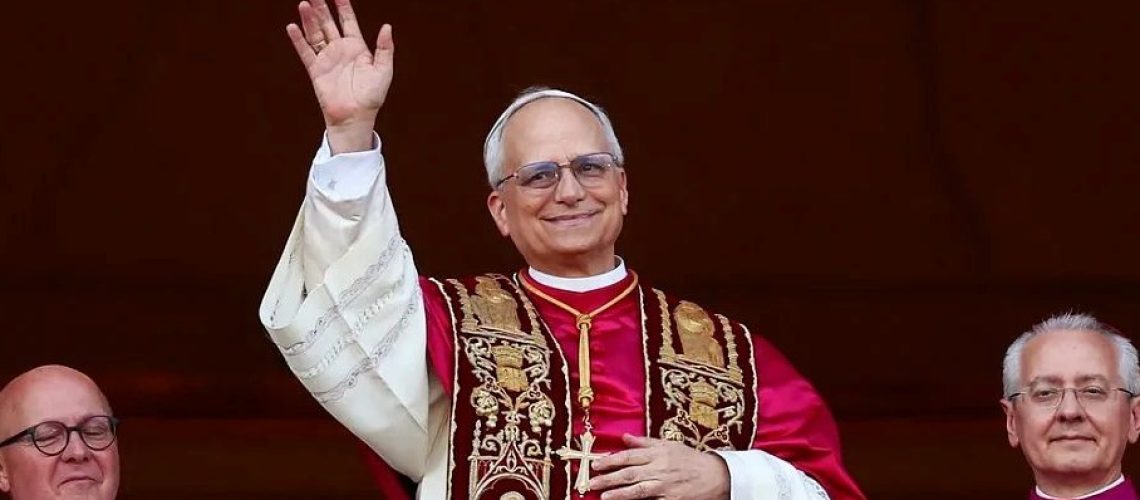
Pope Leo XIV’s Lenten message offers a novel approach toward peace on earth. Whereas world leaders hold international conferences to reduce nuclear arms and secure treaties, Pope Leo’s exhortation strikes at the place where discord begins. He asks for the disarmament of language.
A Practical Lenten Fast
In his February 13 message for Lent, 2026, Pope Leo says, “I would like to invite you to a very practical and frequently unappreciated form of abstinence: that of refraining from words that offend and hurt our neighbor.” He then recommends a strategy in implementing this form of abstinence: “Let us begin by disarming our language, avoiding harsh words and rash judgment, refraining from slander and speaking ill of those who are not present and cannot defend themselves. Instead, let us strive to measure our words and cultivate kindness and respect in our families, among our friends, at work, on social media, in political debates, in the media and in Christian communities.”
With reports of violence and acts of war in so many places on earth, the Holy Father could have made his Lenten message to the world’s Catholics an exhortation to offer prayers and sacrifices for world peace. Certainly, Pope Leo has asked us to pray for peace in areas of unrest and injustice such as Ukraine, the Holy Land, and regions where Christians are persecuted. Still, in the suggestion that our Lenten fast be from offensive words, he appeals to individuals to make a change in their own behavior. He asks the People of God to adopt a strategy for peace in their interactions with others. We can hope and pray for peace in a war-ravaged world. But we can directly foster peace in our communications with friend and stranger.
Disarming Our Language
How do we do this? Pope Leo has us begin by “disarming our language.” The idea of language as a weapon is not far-fetched. Words have power for both good and evil. News reporters know that a well-turned phrase makes all the difference in how a story is perceived. Rules of civility recognize the importance of politeness and respect in verbal communication. Calling to mind the Lord’s command to love our neighbor, Christians can usually summon the strength and restraint to avoid insults and injurious comments. And when we fail through anger, hurt, or weakness, we offer words of apology and reparation.
Pope Leo’s message mentions the source of some hurtful words: rash judgment. As we fast from offensive speech, we might meditate on the way we judge others. To control words is one goal. A more challenging goal is to control thoughts and judgments. If words are the fruit of thoughts, it follows that kind thoughts produce kind words. Giving an erring neighbor the benefit of the doubt, as we would like to be excused from our mistakes, is difficult, but it will protect us from rash judgment.
St. Thomas Aquinas’ “Shield of Good Will”
St. Thomas Aquinas offers help for those who struggle to change judgmental attitudes. In a post-Communion prayer attributed to him, St. Thomas says, “May [this holy communion] be unto me the armor of faith and the shield of good will.” Goodwill creates a shield through which imagined insult cannot go. Having goodwill toward others, one interprets others’ behavior in as positive a light as possible. Thus, one is less inclined to be offended, less in need of defensive reactions, and more likely to respond in pleasant, disarming ways. St. Thomas’ image of goodwill as our shield neatly complements Pope Leo’s Lenten message for fasting from harsh words.
A Comprehensive List for This Fast
Another challenge the Holy Father offers is to refrain from unflattering speech about those who are not present. Most people have natural inhibitions against speaking unkindly in face-to-face encounters. Conversely, critiquing an absent party seems safe, harmless, and even entertaining. Like all fasts, fasting from this kind of gossip requires that we pray for grace to succeed.
In the Holy Father’s comprehensive list of people and situations in which we need to measure our words and cultivate kindness, we see examples of interactions between acquaintances as well as strangers. Both matter. Like speaking unkindly of absent parties, making quick and harsh retorts on social media may appear harmless. We will never meet the individual whom our comment offends. Besides, we are certain that we are in the right, and the other party is mistaken.
This kind of thinking produces shocking examples of offensive language. Anyone who has spent time on social media in the last decade has most likely noted the readiness with which total strangers accost one another with vitriolic verbiage. Imagine the damage done to a society which acts and reacts in this manner. Not only the receiver of the insult but also the creator of it suffer a degree of anger and indignance. A multitude of social media viewers then see the offensive exchange while scrolling, and rudeness becomes normalized in society’s collective experience.
Advancing World Peace with Our Words
It may be a stretch to blame harsh words for the violence that plagues various regions today. But one cannot dismiss the fact that as common courtesy decreases, we become less surprised when the nightly news includes public figures using curse words, and politicians making profane gestures in public. Perhaps the violence we see on our screens these days does result, at least in part, from the breakdown of civility that once fostered respectful communication. Long-standing treaties are no longer honored. Religious factions bomb one another. Pain and poverty are not addressed. These regrettable realities seem suitable in a society that makes little effort to measure words or cultivate kind thoughts.
Will refraining from slander, gossip, and hateful comments on social media resolve military strife in far-away lands? Not immediately, perhaps not even in this lifetime. But in his Lenten message to fast from harsh words, Pope Leo offers one action that the faithful can do within their own encounters to advance the cause for world peace.


[…] XIV Embraces Serene Order’s Reign:Disarming Words & World Peace – Mary Ennis Meo at Catholic Stand MagazineI Think This is Yet More Good News Reversals […]
I want to be in harmony with LeoXIV. But I trust him only with great caution in areas outside of the his Catholicism. Leo’s statements about Christians getting along with Muslims are the stuff of college sophomores. The Muslims seek to conquer all things non-Muslim. They are very violent and they have a fourteen hundred year history which confirms this.
I don’t ask Trump to be my spiritual leader and I don’t ask the Pope to defend a constitutional republic or my children’s well being..
Leo can have his suicidal empathy. TYVM.