

In the sixth chapter of Matthew’s gospel, the disciples asked Jesus to teach them how to pray. His response was The Lord’s Prayer in its nascent form, along with teachings on fasting and almsgiving. In his book The Holy Longing, Oblate Fr. Ronald Rolheiser unpacks the words Jesus spoke to the disciples to allow for a broader interpretation in the present day:
At one point in his ministry, Jesus specifies three clear components to discipleship: prayer, fasting, and almsgiving. For him, these were the pillars of the spiritual life. However, we must understand these prescriptions in the way Jesus meant them. For him, prayer meant not just private prayer, but also keeping the commandments and praying in common with others; fasting meant a wide asceticism that included within itself the asceticism demanded by living a life of joy; and almsgiving meant, among other things, justice as well as charity. (The Holy Longing, 120)
Prayer and Grace
Just as communication is the essential sustaining element in marriage, prayer is the means by which discipleship in Christ can be accomplished and maintained. The petitions of The Lord’s Prayer indicate our closeness to God and an intimacy that can only be realized through His only begotten Son within the context of family. In the Gospel of John, Jesus offers an illustration of how God’s paternal love flows in and through us in a fashion easily understandable to the initial hearers, as well as the generations to follow:
I am the vine, you are the branches. Whoever remains in me and I in him will bear much fruit, because without me you can do nothing. Anyone who does not remain in me will be thrown out like a branch and wither; people will gather them and throw them into a fire and they will be burned. If you remain in me and my words remain in you, ask for whatever you want and it will be done for you. By this is my Father glorified, that you bear much fruit and become my disciples. (John 15:5-9 NABRE)
To “remain” in Christ is to be in a state of grace. Only mortal sin has the potential to cause a separation like that of a branch being severed from a tree. The remedy for being cut off from God’s grace lies in the Sacrament of Reconciliation. Once confessed and absolved, mortal sin allows us to be “grafted in” and restored to a right relationship. Saint Paul utilizes the motif of the vine and branches to illustrate the damage sin can cause, and the restorative healing power of forgiveness and redemption that is available to all who turn to Christ:
See, then, the kindness and severity of God: severity toward those who fell, but God’s kindness to you, provided you remain in his kindness; otherwise you too will be cut off. And they also, if they do not remain in unbelief, will be grafted in, for God is able to graft them in again. For if you were cut from what is by nature a wild olive tree, and grafted, contrary to nature, into a cultivated one, how much more will they who belong to it by nature be grafted back into their own olive tree. (Romans 11:22-24)
Fasting and Joy
Fasting, usually associated with the season of Lent, has much broader implications for the whole of Christian life. However, “giving up” something for Lent and beyond is only half of the equation. The other half is to fill the newfound time and space with prayerful acts of love. The void created by fasting must be filled with a degree of joy and cheerfulness, and not grudgingly. Jesus addresses the proper disposition and appearance of the believer while practicing this discipline:
When you fast, do not look gloomy like the hypocrites. They neglect their appearance, so that they may appear to others to be fasting. Amen, I say to you, they have received their reward. But when you fast, anoint your head and wash your face, so that you may not appear to others to be fasting, except to your Father who is hidden. And your Father who sees what is hidden will repay you. (Matthew 6:16-18)
Almsgiving and Stewardship
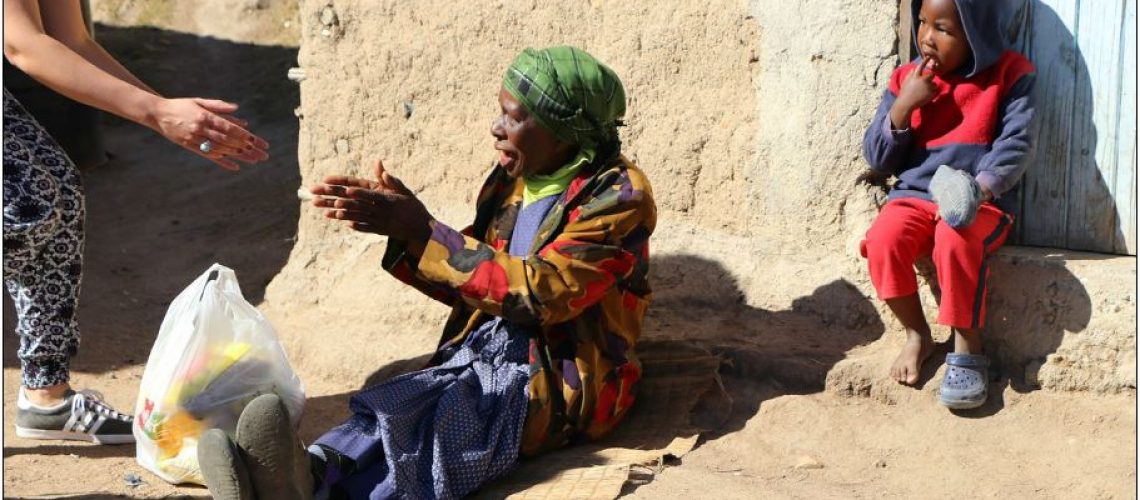
Almsgiving, by strict definition, refers to “something (such as money or food) given freely to relieve the poor.” Placing money in the poor box and giving to the person on the street corner are commendable acts and have true value in God’s economy, but there is much more to be considered in the realm of social justice. Pledging our time, talent, and treasure to advocate for the poor and marginalized is incumbent on all Christians according to their gifts and means.
Our stewardship in almsgiving begins and ends with prayer and relies on the sure guidance of the Holy Spirit. With God’s help, we can address the stark reality that many of our brothers and sisters in Christ experience daily. Father Rolheiser underscores how our lives and the lives of others are connected in Christ and the responsibility we have for one another:
God cannot be related to without continually digesting the uneasiness and pain that are experienced by looking, squarely and honestly, at how the weakest members in our society are faring and how our own lifestyle is contributing to that. This is not something that a few liberation theologians, feminists, and social justice advocates are trying to foist on us. This is not a liberal agenda item. It is something that lies at the very heart of the gospel and which Jesus himself makes the ultimate criterion for our final judgment. (The Holy Longing, 145)
Let us pray for the grace and strength to live out the gospel imperatives of prayer, fasting, and almsgiving in our daily lives and to be good stewards of God’s mercy in the world.





4 thoughts on “Christian Spiritual Essentials: Prayer, Fasting, and Almsgiving”
“Our society” is the church of Christ. It is to our fellow-members that we owe assistance; we are not responsible for meeting the needs of every person on the face of the earth. So no, this stuff is not “at the heart of the gospel:”. It’s at the heart of the false gospel that has overwhelmed many of the churches in the modern era.
Which of these three, in your opinion, was neighbor to the robbers’ victim?” He answered, “The one who treated him with mercy.” Jesus said to him, “Go and do likewise.”
Pingback: FRIDAY EDITION – Big Pulpit
Giving to needy people on the street is nice, and it makes one feel good for a while (the giver, that is), but its real help to them is minimal. They will shortly be hungry again, and still will be un- or under-employed or homeless, or pregnant or ill without resources.