

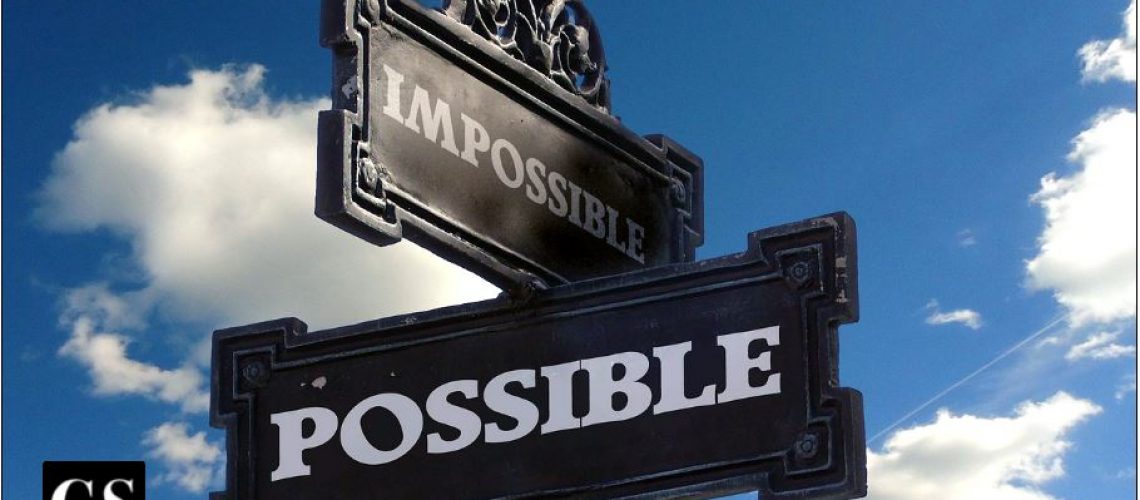
Another article on the Synod? Well, somewhat, but not entirely. The purpose of this article is to consider basic principles of the concepts of agency and change.
Both of these concepts are important to our own spiritual lives. So, by extension, that means these concepts are also important to what is going on at the Synod.
Agency
Agency has become something of the buzzword of the moment. From a Catholic perspective, agency is our ability to act in accordance with our free will.
Both our free will and agency have much to do with whether or not we’re responsible (or, culpable) for committing sin.
This becomes very important, for example, for people in “irregular relationships” (to use Pope Francis’ terminology). Whether they are responsible for committing serious sin depends on whether they are sufficiently knowledgeable of the error they are committing. In other words, are they capable of acting as independent agents? Or is ignorance, misinformation, or woundedness impairing their judgment? If so, are they truly responsible for their actions?
These are very sensitive issues to be certain. Therefore they merit deep consideration by the people charged to watch over the Church and Her flock.
Agency and Our Prelates
This statement from Pope St. John Paul II (“Reconciliation and Penance”) shows just how complex and sensitive these situations can be:
“This individual may be conditioned, incited and influenced by numerous and powerful external factors. He may also be subjected to tendencies, defects and habits linked with his personal condition. In not a few cases such external and internal factors may attenuate, to a greater or lesser degree, the person’s freedom and therefore his responsibility and guilt … Clearly there can occur situations which are very complex and obscure from a psychological viewpoint and which have an influence on the sinner’s subjective culpability.”
The Dubia submitted to Pope Francis in advance of the Synod, included this question:
“We ask: can the Church deviate from this “principle,” considering it, in contrast to what was taught in Veritatis splendor, 103, as a mere ideal, and accept as a “possible good” objectively sinful situations, such as unions with persons of the same sex, without departing from the revealed doctrine?”
Pope Francis’ response includes a reference to the above-quoted document by John Paul II.
“f) On the other hand, although there are situations that are not morally acceptable from an objective point of view, the same pastoral charity requires us not to simply treat as “sinners” other people whose guilt or responsibility may be mitigated by various factors affecting subjective accountability (Cf. St. John Paul II, Reconciliatio et paenitentia, 17).”
A major problem arises if members of the Church’s leadership become a source of confusion rather than clarity.
Agency and Our Shepherds
Today we have certain priests and bishops going around and, essentially, celebrating irregular lifestyles without teaching the fullness of truth. How can this not lead people deeper into confusion and compromise their ability to make well-informed decisions?
Who’s to say which individuals in “irregular relationships,” if they had the truth proclaimed to them in a loving and unambiguous way, would change their lifestyle? The freedom to make that choice (to fully exercise their “agency”) is being taken from them by misguided prelates who are trying to make the Church into little more than an NGO with incense.
Ezekiel Chapter 33 provides a stern warning. God, through Ezekiel, reminds Israel that their job is to be watchmen (or sentinels). If they fail to be a good example and proclaim the truth to others, then they will bear the blame for people who go against God’s teachings.
Agency and Us
We encounter an interesting paradox when we consider agency in our own lives. Our freedom (our agency) actually increases the more we conform ourselves to God’s will for us.
An analogy is to consider an expert stock trader. If you knew of someone who never missed a stock pick – a person with a 100% success record of buying at the lowest low and selling at the highest high – what would you do? You would choose (exercise your agency) to do exactly what that individual did.
While it delivers the gist of the issue, this is an almost hopelessly cartoonish analogy. God isn’t simply betting on the stock market for His own gain. He is actually ordering the universe around each of us – for our own gain. He provides us the grace to know His will for us (if we listen attentively) and then choose it.
Change
“Change” is another loaded word for the Synod.
Some people, including me, are concerned that some in the Church will try to use the synod to smuggle in many worldly agenda items.
The Synod’s working document is chock-a-block with highfalutin language that might be harmless or might be hemlock. Who wants the first sip?
Consider this sample: “The fact that questions continue to emerge on issues (where there is already magisterial teaching) should not be hastily dismissed, rather, it calls for discernment … For example, if the block stems from a general lack of information, then improved communication will be needed … Another instance could be the reappearance of a question which emerges as a sign of a changed reality or situations where there is a need for an ‘overflow’ of Grace. This requires further reflection on the Deposit of Faith and the living Tradition of the Church” [my emphasis].
Are the “changed realities” associated with the worldly outcry to normalize same-sex marriages? Is it the Church’s unbroken teaching on sexuality part of the “living Tradition” that needs “further reflection? Is the “further reflection” simply to find new ways to articulate timeless truths, or is it to “change the truth?”
Change vs. Development
Of course, it’s always meritorious to consider how to reach out to people in very troubling situations. However, history has shown there are more than a few people in the Church who would like to take language like the above quote and run with it. And they seem to want to run very, very far.
On the topic of change, more than a couple of people have quoted St. John Henry Newman, “In a higher world it is otherwise, but here below to live is to change, and to be perfect is to have changed often.”
That quote comes from the first part of Newman’s “Essay On the Development of Christian Doctrine” The essay opens with the topic of “the development of ideas.”
In this section Newman broadly considers the development of ideas throughout the history of philosophy and society. From there on, he focusses on doctrine (teachings about who God is, who we are, and God’s plan for us). When it comes to doctrine (and not generic ideas) Newman makes a clear distinction between “change” and “development.”
“A true development (of doctrine) is that which is conservative of its original, and a corruption (change) is that which tends to its destruction.” (words in parentheses are mine)
Doctrine can develop – like an acorn developing into a tree.
Doctrine should not be destructively changed – like an acorn being put through a sausage grinder.
True Development
In the history of the Church, doctrine almost always develops in response to false teachings. Pope John Paul II created his “Theology of the Body” largely in response to the lunacy of the sexual revolution. “Theology of the Body” didn’t change the Church’s teaching on human sexuality into something different, it developed that doctrine by delving deeper into what it already was.
So, to beat a dead synodal horse, most often the Church develops doctrine in response to errors of the world. My concern is that some people want to use the synod to change doctrine to make the Church look more like the world.
It’s all so Old Testament.
In 1 Samuel the ancient Israelites cry out, “appoint a king over us, like all the nations, to rule us.” Up to that point they lived with a tremendous amount of liberty. But they wanted their religion to resemble the world around them. And so they get their king – a succession of them, in fact.
How’d that work out? The tally is something like 5 okay kings and 33 duds. One of the most common descriptions of the kings is that they “did evil in the sight of the Lord.”
And here we are, with many in the Catholic Church desiring it to look more like the fallen world, rather than going out and working to convert the world.
It’s a strange, circular situation because “as goes the Church, so goes the world.” But if the Church is trying to be more like the world, what is left but both spiraling downward?
Change and Us
“There’s no standing still in the spiritual life.“ It’s a phrase you may have heard before, it’s common to the point of almost being a throw-away line. Because it’s true.
But as with many clichés we rarely, if ever, hear why it’s true.
The answer is simple. You may already know it, and, if not, you can probably intuit it. It’s the same reason you “can’t go home again,” or stand still in a river and still be in the exact same river.
Life is always changing, and the river is always flowing.
There is no standing still in the spiritual life because life is always coming at us. That is especially true in the spiritual realm.
Our own minds are always going – working on problems, reflecting on the past, and casting out into the future. Worldly events are always coming at us. Even if we are just having a quiet moment in nature, the sights and sounds around us are changing and evoking different thoughts. And then there is the enemy, always scheming, always trying to trip us up.
Standing Still or Moving
The goal of the spiritual life is that we share all these things with God – from the (seemingly) most mundane, to the extraordinary – until God becomes “all in all.”
Any moments of the day that are not part of our relationship with God are moments when we’re moving away from Him. Obviously, there’s a lot to how that unfolds. We don’t need to be humming Gregorian Chant while we trim our nails (not that we can’t – Monks probably have very nice cuticles). Really, this comes down to the art of practicing the presence of God – learning to be in God’s presence in all circumstances.
And so even in those times in life when it seems God is quiet, or when we don’t sense anything other than the same old routine playing out day after day – if we are still bringing all of that to God, and waiting on Him to show us what has been happening from His perspective, we will find that we weren’t standing still at all, but had actually traveled quite far in His company.
In Closing
What’s going on in the Church, and in the Synod, is not all that different from our everyday life – just on a larger scale. We struggle with change and development in our life. The Synod participants have the same struggle. We struggle with agency and making good choices. The Synod participants have the same struggle.
The world needs something good to come from this Synod. The secular culture is swallowing up entire generations of young people. An alarming number of Catholics have no idea of what it means to truly live a beautifully Catholic life. The faith is virtually dead in the first world (that was the judgement of St. Mother Theresa). Where the faith is strong (e.g. Africa) the globalists are trying to kill it.
We don’t need the princes of the Church wringing their hands over non-core issues like carbon emissions and booster shots. We need the Church to boldly proclaim the Gospel and demonstrate the power and beauty of 2,000 years of hard-won Tradition.


3 thoughts on “Change, Agency, the Synod, and Us”
Under Canon Law, a synod has no authority or power, it cannot “resolve” anything, it can issue no “decree,” i.e. re: what matters it can’t do jack squat:
‘Can. 343 It is for the synod of bishops to discuss the questions for consideration and express its wishes but not to resolve them or issue decrees about them unless in certain cases the Roman Pontiff has endowed it with deliberative power, in which case he ratifies the decisions of the synod.’
Still I will never forget hearing, before I got up and walked out of the church, an assistant pastor telling the congregation during Mass, after the amoris laetitia sinod, that “synods are like councils” and ” we must all adhere to and give definitive assent to what a synod proclaims.”
Guy, Texas
Pingback: MONDAY MORNING EDITION – BigPulpit.com
Well said–typed– Mr. Smith. Many of our Church leaders are pointing us toward perdition. We already have Satan’s minions thoroughly engaged in that. We need our leaders to constantly aim us toward our true home. Thank God there are many of the pew occupiers speaking to the truth.